



Identifying Authentic Native American Jewelry: A Guide to Heritage and Artistry

What if the silver against your skin held more than just light? For many, the search for authentic native american jewelry is a journey toward a deeper connection with the earth and the hands that shape its treasures. You aren't just looking for a beautiful accessory. You're seeking a vessel of tradition: a tangible link to a living history. It's common to feel a sense of hesitation when faced with "Native-style" imports or confusing price tags. You want to honor the culture, avoid the sting of a scam, and ensure your investment supports the true stewards of this craft.
We believe that authenticity is the bridge between the physical stone and the ancestral soul. This guide will teach you the essential markers of genuine craftsmanship and the federal legal protections that keep these traditions sacred. We'll explore how to read artist hallmarks, the importance of verified provenance, and the technical standards of sterling silver. By the end, you'll possess the knowledge to choose pieces that carry a verified story, ensuring your collection is as intentional and soulful as the hands that created it.
Key Takeaways
- Learn the legal distinction between "Native-inspired" commercial goods and genuine works rooted in tribal enrollment and cultural heritage.
- Confidently identify authentic native american jewelry by recognizing specific artist hallmarks and verified .925 sterling silver markers.
- Understand the federal protections of the Indian Arts and Crafts Act of 1990, which safeguards both the artist’s lineage and the collector’s investment.
- Recognize the unique signatures of regional artistry, from the bold, heavy silverwork of Navajo smiths to the sacred balance of Zia symbol jewelry.
- Master the art of mindful sourcing by asking for the "Story of the Stone" to verify the origin and natural quality of your turquoise treasures.
What Defines Authentic Native American Jewelry?
Authenticity isn't a trend. It's a lineage. To hold a piece of traditional Native American jewelry is to hold a fragment of a story that began centuries ago. It's a dialogue between the earth's minerals and the artist's spirit. While "Native-inspired" goods flood the market with hollow echoes of Indigenous patterns, authentic native american jewelry remains a legal and spiritual designation. It represents a deep commitment to the truth of ancestry and the preservation of a living, breathing culture. Each piece acts as a vessel, carrying the weight of history and the light of modern creativity.
The Legal Definition of an Artisan
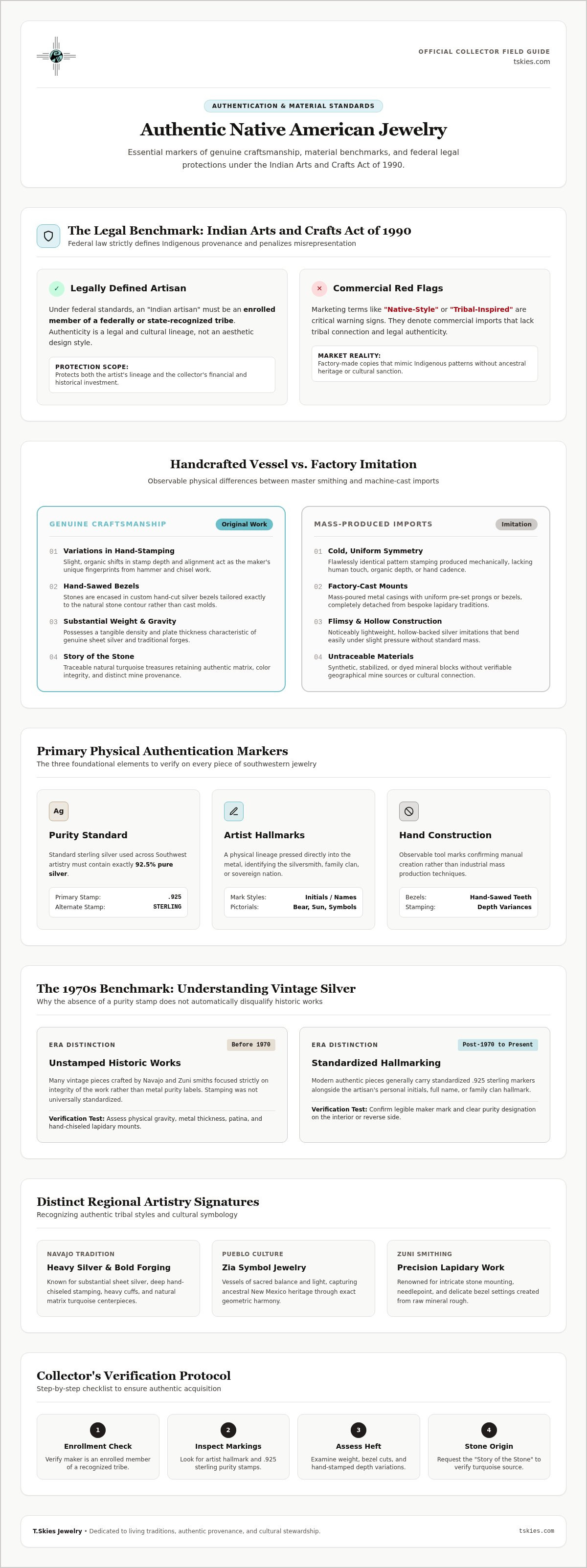
The law is clear, yet the spirit is deeper. Under federal standards, an "Indian artisan" must be an enrolled member of a federally or state-recognized tribe. This isn't just about paperwork. It's a verification of community and shared history. Labels like "Native-style" or "tribal-inspired" are red flags for savvy collectors. They often signal mass-produced items that lack a true tribal connection. A piece crafted by a tribal member carries the spiritual weight of their people's journey. It's a vessel of cultural storytelling where every curve of silver and every shard of turquoise speaks of a specific heritage. When you choose authentic native american jewelry, you're honoring this sacred link between the maker and their ancestors.
Hand-Cranked vs. Mass-Produced
Factories produce objects. Artisans birth vessels. You can feel the soul in the slight variations of hand-stamped silver. These tiny shifts in depth and alignment are the maker's fingerprints. They're the rhythmic marks of a hammer meeting a chisel in a dedicated studio. Mass-produced imports lack this energetic resonance. They're cold, uniform, and disconnected from the landscape. They mimic the form but miss the feeling.
Supporting living traditions through direct purchase ensures ancestral silversmithing techniques don't fade into memory. There is a profound difference in the vibration of a piece that was touched by human hands at every stage of its creation. Every direct connection you make with a reputable studio fuels the fire of a master craftsperson. It allows them to continue their work as cultural stewards. This intentionality is what separates a mere accessory from a piece of Zia symbol jewelry or a Navajo cuff that will be passed down for generations. By choosing the handmade path, you participate in the survival of an artistic legacy that refuses to be silenced by the machine.
Identifying Hallmarks and Material Markers
The back of a silver cuff is rarely silent. It carries the marks of its maker, a quiet testimony to its origin and the hands that shaped it. Identifying authentic native american jewelry requires a keen eye for these subtle markers, which act as a map through the history of the piece. These stamps aren't mere decorations. They are the signature of the soul, ensuring that the story of the artisan remains inseparable from the work itself.
Decoding the Silver Stamp
Standard sterling silver used in Southwest artistry must contain 92.5% pure silver. You'll typically find this marked with a ".925" or "Sterling" stamp on the interior or reverse side. While these marks are common today, many vintage pieces from the early 20th century lack them entirely. Before the 1970s, many Navajo and Zuni smiths focused on the integrity of the work rather than metal purity labels. In these cases, look for the weight. Authentic craftsmanship feels substantial. It has a gravity and a thickness that mass-produced, factory-cast imitations simply can't replicate. If a piece feels flimsy or hollow, it likely didn't come from a traditional forge.
The Artist’s Signature
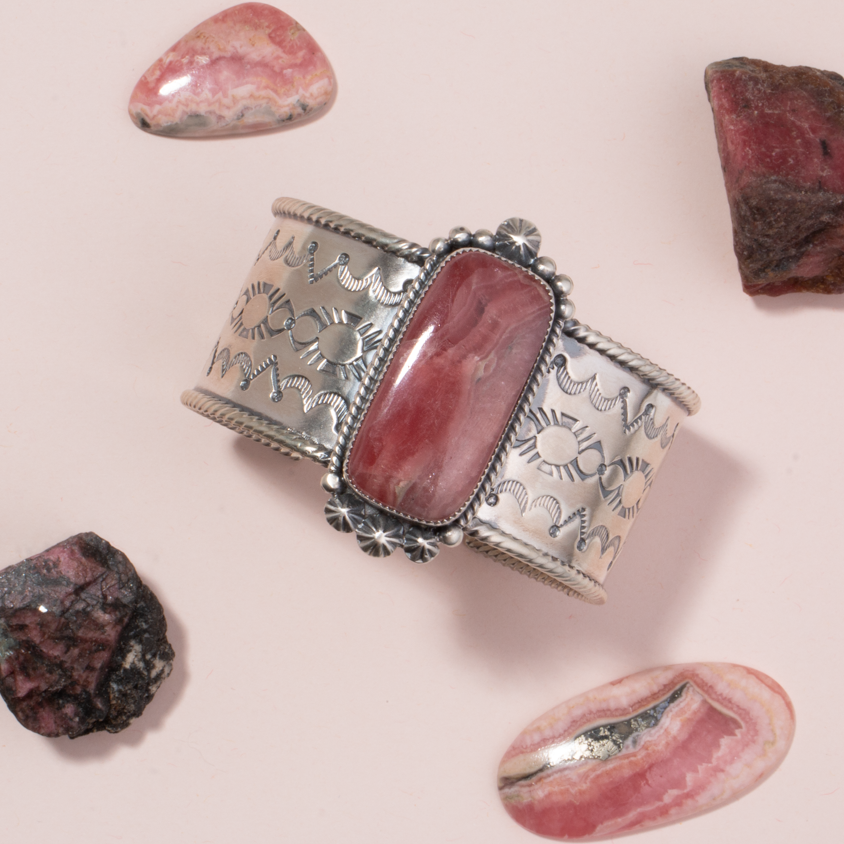
A hallmark is more than a name; it is a lineage pressed into metal. These marks vary between families and regions, ranging from simple initials to intricate pictorial symbols like a wandering bear or a rising sun. Each stamp connects the wearer to the deep history of Navajo jewelry and the generational knowledge passed down through the centuries. If you find a piece that speaks to you but lacks a hallmark, examine the construction techniques. Look for hand-sawed bezels and the slight, beautiful imperfections of hand-stamping.
These markers are protected by the Indian Arts and Crafts Act of 1990, a federal law designed to prevent the misrepresentation of Indigenous art. This legal framework helps ensure that the "signature" you see is a true reflection of the maker's heritage. When you are ready to add to your collection, look for studios that honor these traditions by offering authentic Navajo jewelry with a transparent history.
The Stone’s Story
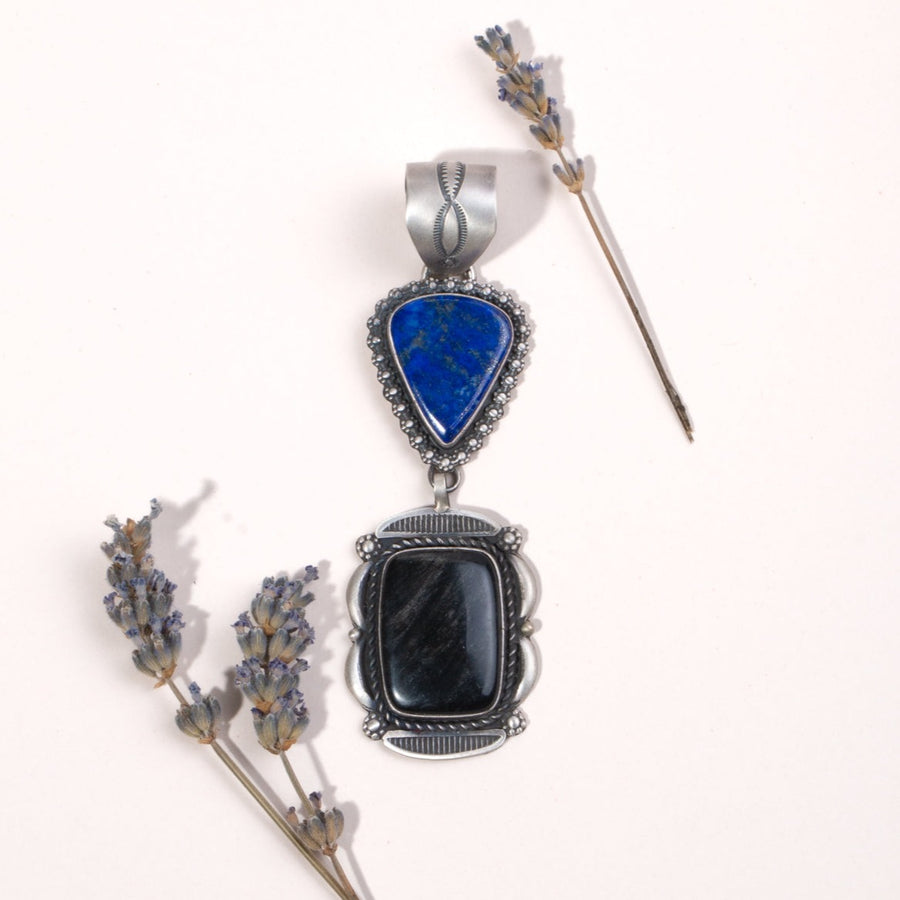
The stone should feel like the earth. Natural turquoise is cool to the touch and possesses an organic, varied matrix that tells the story of the mine it came from. Stabilized imitations often feel like plastic or resin because they've been treated with chemicals to mimic the look of high-grade stone. Genuine turquoise has a tactile depth. It reflects light differently than dyed howlite or "block" turquoise. By learning to feel the difference between the living stone and a synthetic copy, you ensure your jewelry remains a true vessel of the natural world.
Understanding the Indian Arts and Crafts Act of 1990
History isn't just written in books. It's written in law to protect the spirit of the craft. The Indian Arts and Crafts Act of 1990 is a federal truth-in-advertising law. It ensures that when you seek authentic native american jewelry, you receive a piece with a true ancestral lineage. This law acts as a guardian. It stands between the artisan's forge and the factory's cold machine. It prohibits the misrepresentation of jewelry as "Indian made" if it wasn't created by a member of a federally or state-recognized tribe, or an officially certified Indian artisan.
The consequences for deceptive marketing are severe. For an individual, a first-offense conviction can lead to fines up to $250,000 and five years in federal prison. Businesses face even steeper penalties, with fines reaching up to $1,000,000 for a first offense. These strict deterrents exist to protect the economic and cultural health of Native communities. When counterfeit goods flood the market, they don't just steal a sale. They dilute the heritage and livelihood of the true stewards of these traditions.
What the Law Requires from Sellers
Transparency is the hallmark of respect. Under the Act, sellers must be explicit about the origin of their work. If a piece is marketed using a specific tribal name, such as "Navajo" or "Zuni," the artist must be an enrolled member of that specific tribe. You'll often see deceptive sellers use phrases like "Southwest Style" or "Native-inspired." These are legal loopholes. They allow non-Native producers to mimic the aesthetic without claiming Native origin. Understanding these nuances ensures the sacred song of turquoise jewelry remains pure and protected. As a consumer, you have the right to request written verification of tribal affiliation before you invest.
How to Report Counterfeit Goods
Your voice is a tool for preservation. If you encounter deceptive marketing or suspect a piece is a counterfeit import, you can report it to the Indian Arts and Crafts Board. Online marketplaces are often fertile ground for "tribal motifs" that mask mass-produced factory goods. Reporting these fakes isn't just about consumer protection. It's an act of cultural stewardship. It supports the survival of authentic indigenous art by ensuring the market remains a space of integrity. For more details on your rights, consult the FTC guide to buying American Indian arts and crafts. By staying informed, you help keep the market for authentic native american jewelry vibrant and honest for future generations.
Regional Artistry: Recognizing Authentic Styles
The Southwest landscape is a map of diverse voices. While all authentic native american jewelry shares a spiritual connection to the land, each tribe speaks through its own visual dialect. These styles aren't just aesthetic choices. They're deep-seated cultural signatures. To recognize them is to understand the specific relationship between an artisan and their environment. From the heavy, protective silver of the Diné to the intricate balance of Pueblo symbols, these pieces are the physical manifestation of tribal identity. They're visual stories told in metal and stone.
Navajo Silversmithing Traditions
Navajo jewelry is defined by strength. It's a celebration of the forge and the hammer. Diné artists are masters of heavy silverwork, often using sandcasting or tufa casting to create textures that feel as ancient as the canyon walls. This technique involves carving a design into soft volcanic stone and pouring molten silver into the mold. It results in pieces with a unique, grainy finish that factory machines can't replicate. You'll see this power in men’s turquoise rings, where bold, natural stones are cradled in substantial silver settings. Even the silver beads, known as Navajo pearls, require a meticulous hand-finishing process to achieve their characteristic soft glow. These items aren't just ornaments. They're armor for the spirit.
The Symbolism of the Zia
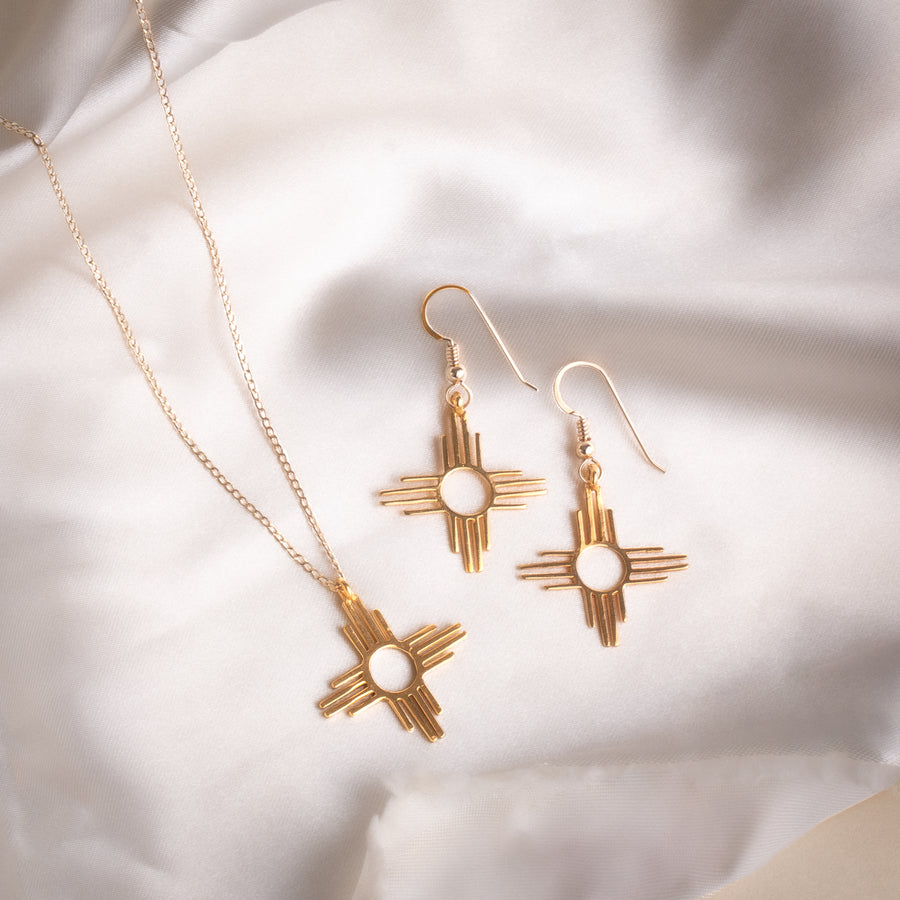
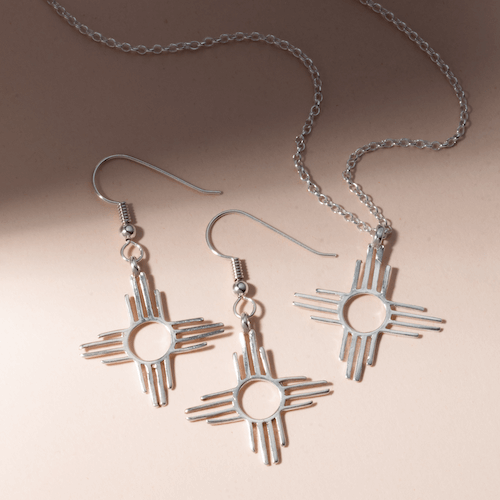
The Zia symbol is a sacred representation of the four directions, the four seasons, and the four stages of life: infancy, youth, adulthood, and old age. It's a motif that demands reverence and balance. In authentic Zia symbol jewelry, the four rays emanating from the central sun represent the harmony of the universe. Authentic Zia pendants honor this light with precision and respect, ensuring the symbol's sacred meaning isn't lost to commercial trend. When you wear a Zia piece crafted by a local artisan, you participate in a legacy of balance and spiritual alignment. It's a reminder of our place within the natural cycles of the earth.
Whether you're drawn to the fluid, elemental curves of sterling silver bracelets or the rhythmic patterns of hand-stamped cuffs, the artistry is unmistakable. Each regional style offers a different perspective on the same ancestral story. By learning these distinctions, you move beyond being a consumer and become a witness to a living heritage. If you feel the call of the Southwest, you can explore our collection of authentic Native American jewelry and find a piece that resonates with your own journey.
Sourcing with Integrity: How to Shop Mindfully
The search for authentic native american jewelry is more than a simple acquisition. It's an act of stewardship. When you choose a piece, you're choosing to support a specific lineage and a living tradition. Trust is the foundation of this connection. Seek out galleries and studios that prioritize deep, long-standing relationships with their artists. Transparency is the light that guides this process. A reputable seller won't just show you a beautiful object. They'll share the "Story of the Stone." They'll tell you if the turquoise was pulled from the depths of the Kingman mine or if it represents the rare, sky-blue legacy of the Sleeping Beauty mine.
Questions to Ask Every Seller
Knowledge is your protection. Before you invest, engage with the seller to uncover the truth behind the craft. A true cultural mentor welcomes these questions. They're signs of a respectful collector. Always ask:
- "Which tribe is the artist enrolled in?" Authenticity is tied to tribal citizenship. A vague answer is a signal to look elsewhere.
- "Is this stone natural, stabilized, or synthetic?" Less than 5% of turquoise is hard enough to remain natural. Ensure you know the degree of intervention.
- "Can you provide a written guarantee of authenticity?" Under federal law, you have the right to documentation that verifies the artist's heritage and the materials used.
Building a Connection with the Artisan
There's a unique magic in the collaborative process. Engaging in custom jewelry design allows you to participate in the creation of a future heirloom. Working with a master silversmith to select a specific stone and a meaningful setting creates a personal ancestral link. It transforms the jewelry into a vessel for your own story. This partnership honors the maker's skill while reflecting your own journey through the Southwest landscape.
Every purchase is a vote. It's a decision to keep the forge hot and the hammer moving. By choosing authentic native american jewelry, you ensure that traditional techniques are passed to the next generation. You aren't just buying silver and stone. You're investing in the survival of a culture that has weathered every storm. This is the reward of shopping with integrity. You leave with more than an accessory. You leave with a piece of the earth’s soul, verified by history and crafted with intention.
Honor the Legacy in Every Choice
Choosing a piece of silver and stone is an act of cultural stewardship. You now understand that authentic native american jewelry is defined by both federal law and ancestral spirit. By looking for the artist's hallmark and verifying the story of the stone, you protect the livelihood of true master craftspeople. These markers ensure your collection remains a vessel of tradition rather than a hollow imitation. Your awareness keeps the fire of the forge burning for future generations.
At T.Skies Jewelry, we are committed to the integrity of the Indian Arts and Crafts Act. Every piece in our studio is handcrafted by local artisans who specialize in Navajo and Zia heritage designs. We invite you to discover our collection of authentic, handcrafted Southwest jewelry and find a story that resonates with your own. Wear your jewelry with the quiet confidence of a guardian. You aren't just carrying an accessory; you are carrying the light and balance of a living heritage.
Frequently Asked Questions
How can I tell if turquoise jewelry is authentic Native American?
Authentic native american jewelry is legally defined by the artisan’s enrollment in a federally or state-recognized tribe. You should look for specific tribal affiliation rather than vague marketing terms like "Native-style" or "Indian-inspired." While visual markers like hand-stamping are helpful, the legal status of the maker remains the ultimate proof. Reputable studios will always be transparent about the artist’s heritage and their soulful connection to their community.
What does the Indian Arts and Crafts Act of 1990 protect?
This federal truth-in-advertising law prohibits the marketing of products as "Indian made" if they weren't produced by a Native American artisan. It protects the economic livelihood of Indigenous communities and the cultural integrity of their ancestral crafts. The Act ensures that collectors receive a genuine vessel of heritage while imposing significant legal penalties on those who misrepresent mass-produced imports as authentic tribal work.
Are all Native American jewelry pieces hallmarked?
Not every authentic piece carries a hallmark, especially those crafted before the standardized jewelry boom of the 1970s. Many early 20th-century Navajo and Zuni smiths didn't stamp their work at all. In these cases, you must rely on construction techniques like hand-sawed bezels and the natural weight of the silver. Modern artisans, however, almost always include a personal signature or tribal stamp to verify the provenance of their creation.
What is the difference between sterling silver and silver-plated jewelry?
Sterling silver is a solid alloy containing 92.5% pure silver, offering a lasting weight and a soul that endures through generations. Silver-plated jewelry is merely a thin layer of silver electroplated over a base metal like copper or brass. Over time, plating wears away to reveal the dull metal beneath. Authentic Southwest jewelry favors the permanence of sterling silver, ensuring the piece remains a timeless vessel of light and heritage.
How do I know if the turquoise in my jewelry is real?
Real turquoise feels cool to the touch and possesses a varied, organic matrix that reflects its life within the earth. You can often identify genuine stones by their slight surface imperfections and the way they absorb light. Synthetic or "block" turquoise often feels like plastic and displays a pattern that's too uniform to be natural. Genuine stones carry the energy of the mine, whether it's the deep blue of Bisbee or the green hues of Royston.
Is it okay for non-Native people to wear Native American jewelry?
Wearing these pieces is a powerful act of cultural appreciation when sourced with integrity. Purchasing directly from Native artists or reputable studios supports the continuation of these living traditions. It's an invitation to participate in a shared heritage and honor the master craftspeople who keep these stories alive. As long as the jewelry is worn with respect and its origin is acknowledged, it serves as a bridge between cultures.
Why is authentic Native American jewelry so expensive?
The cost reflects the scarcity of natural materials and the hundreds of hours required for master handcrafting. Authentic native american jewelry uses high-grade sterling silver and rare, natural stones that are increasingly difficult to source. Unlike factory-cast items, each artisan piece is a unique manifestation of skill, requiring hand-stamping, sandcasting, and lapidary work. You're investing in a living culture and a piece of art that holds its value through time.
What should I look for in a certificate of authenticity?
A valid certificate should provide a detailed breakdown of the materials used and the specific tribal affiliation of the artist. Look for the artisan’s full name and their enrolled tribe rather than generic descriptions. It should also state whether the turquoise is natural or stabilized. This document acts as a written guarantee, ensuring your purchase is a true vessel of heritage that complies with federal consumer protection standards.


