







Turquoise Jewelry


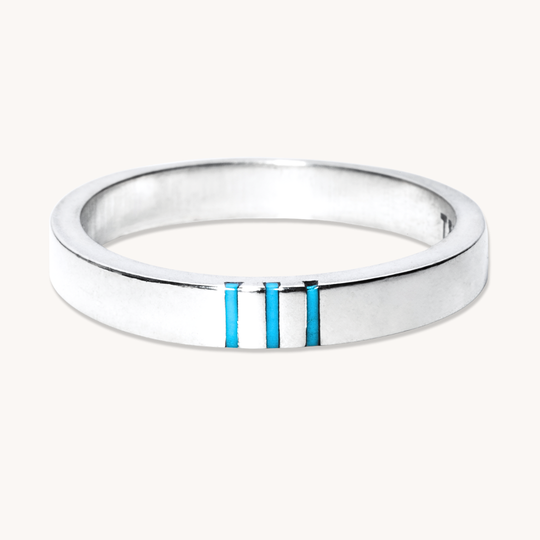
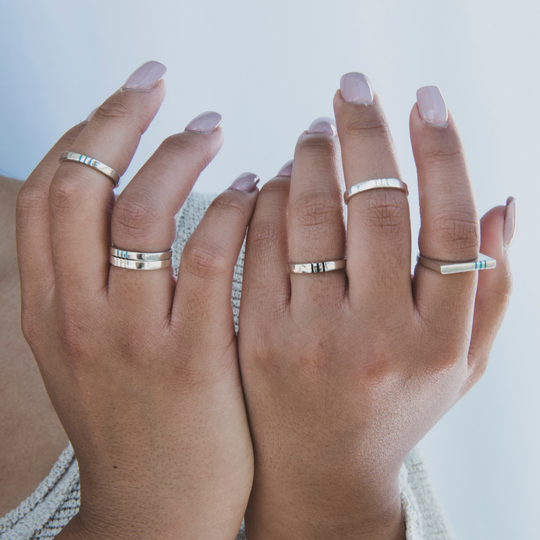


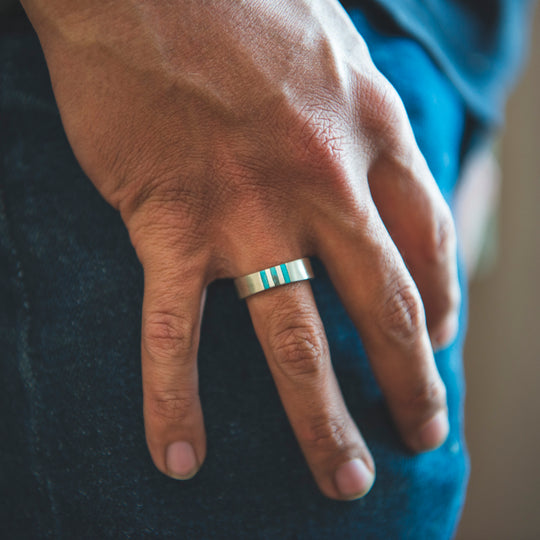


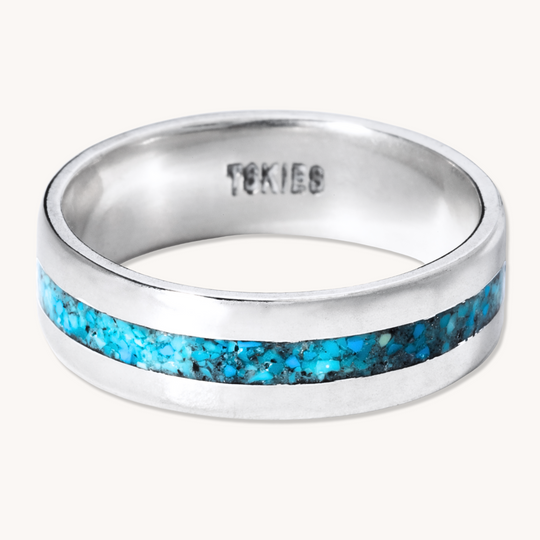
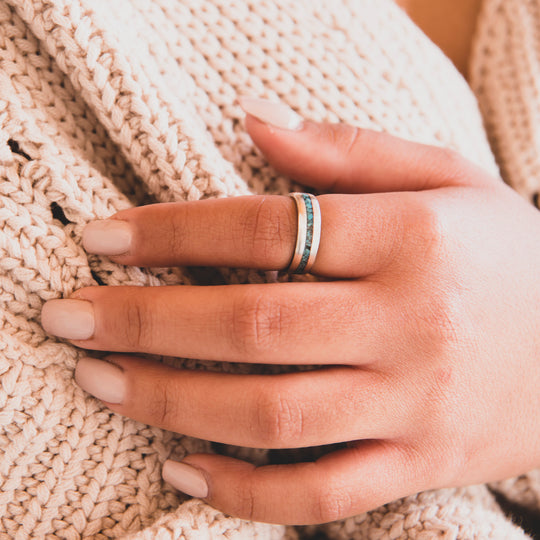


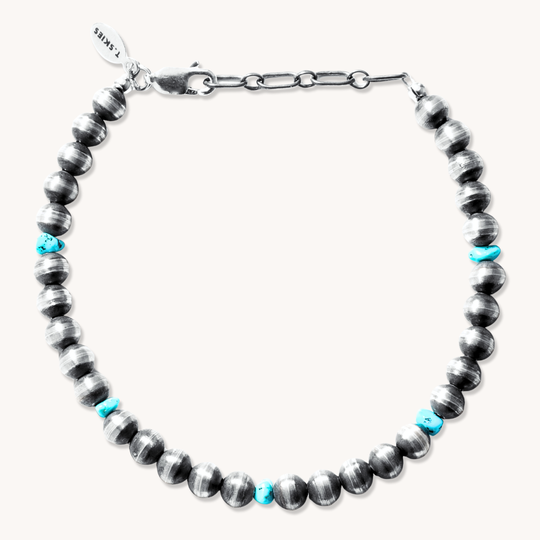
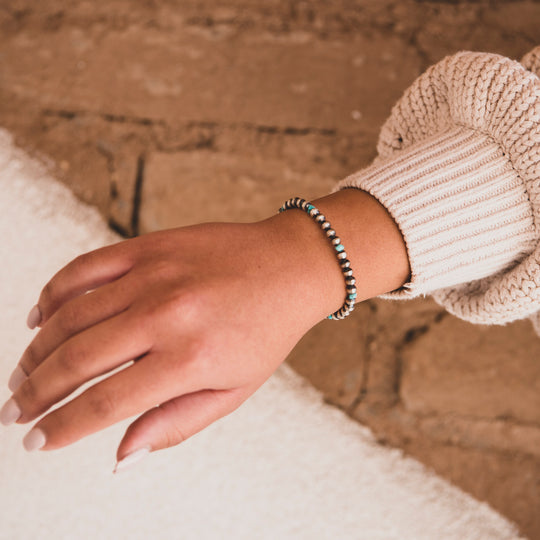


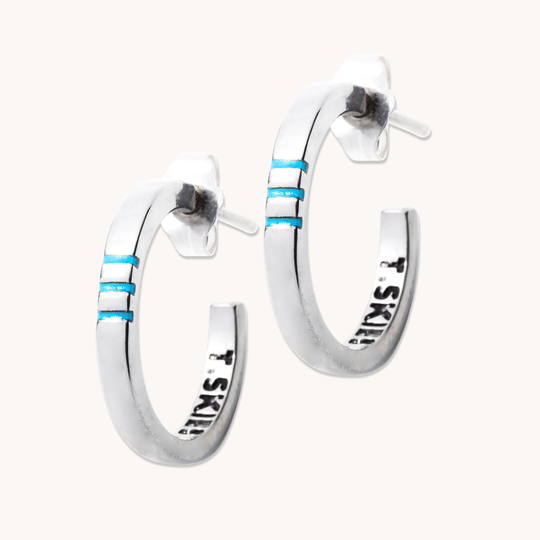
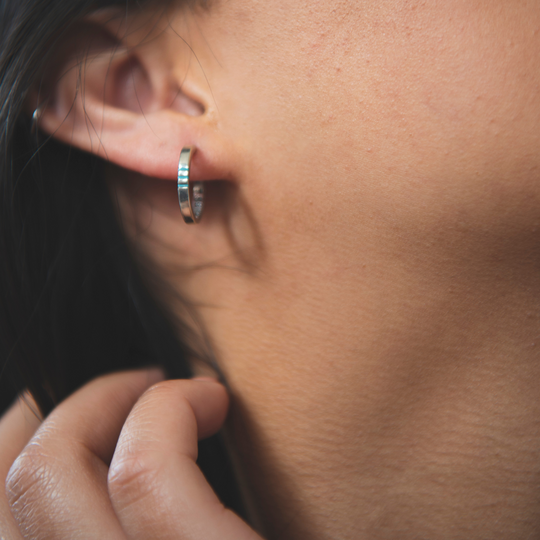


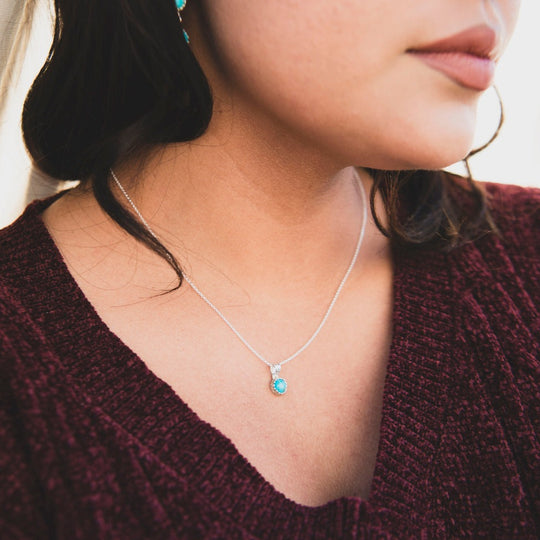


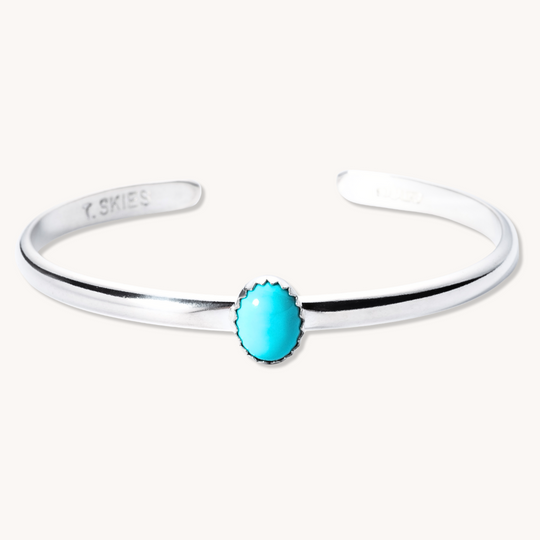
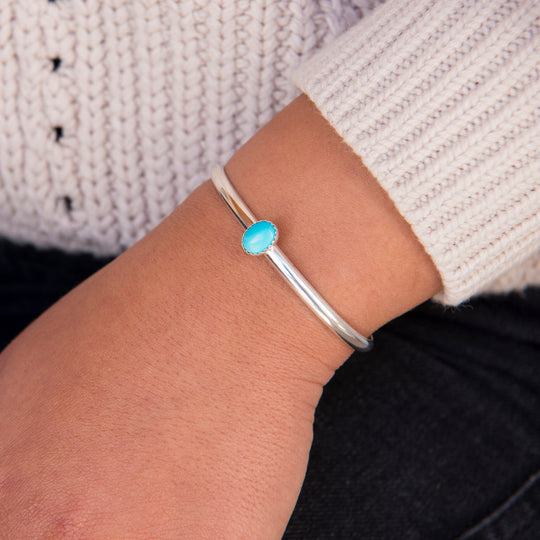


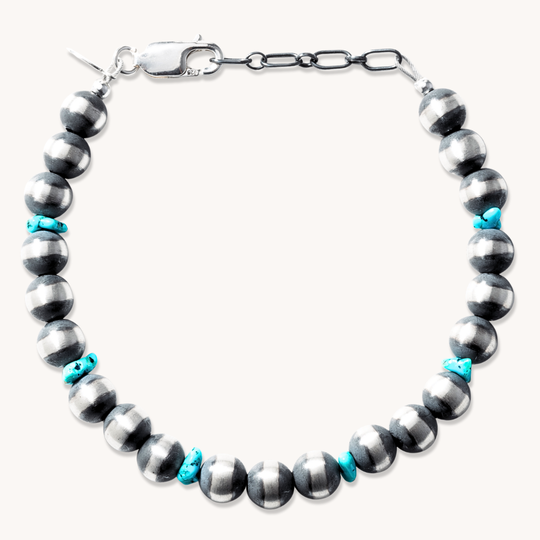
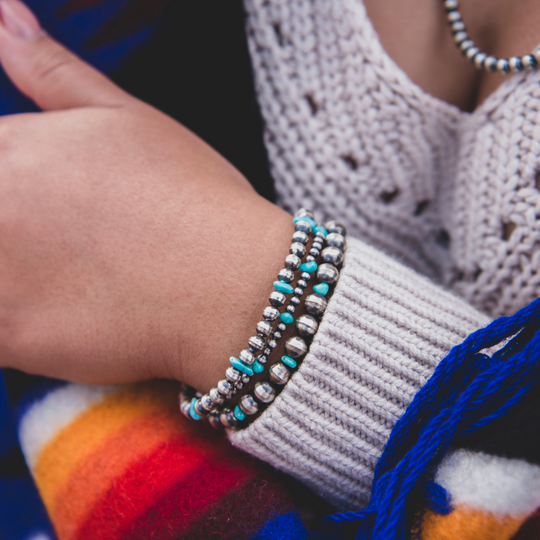


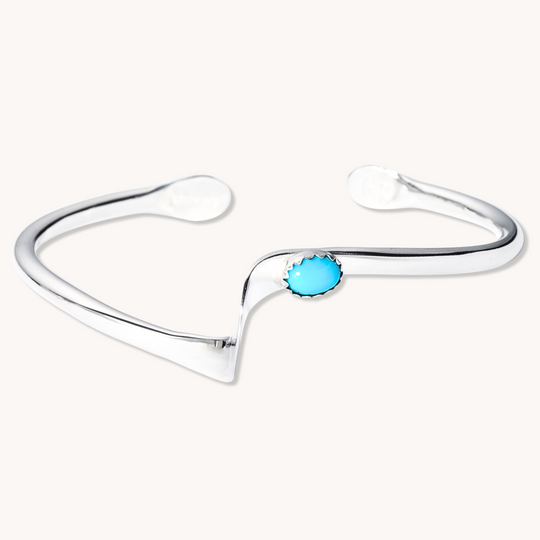
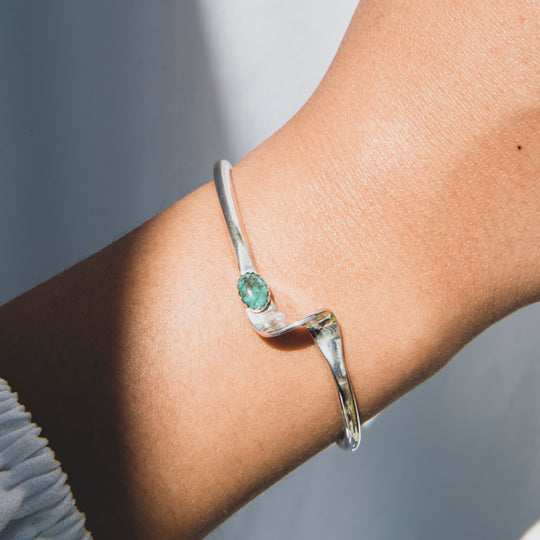


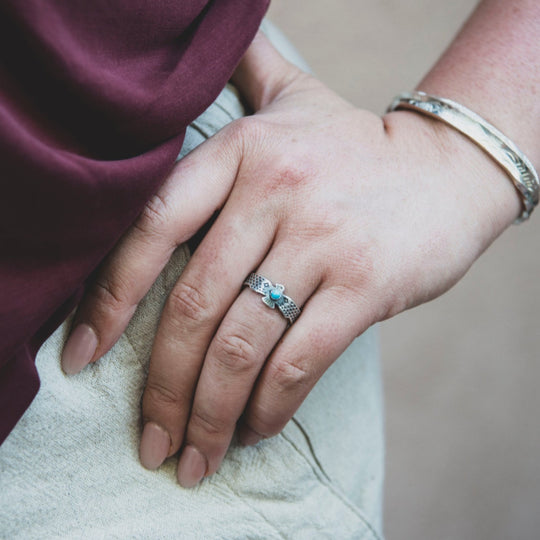


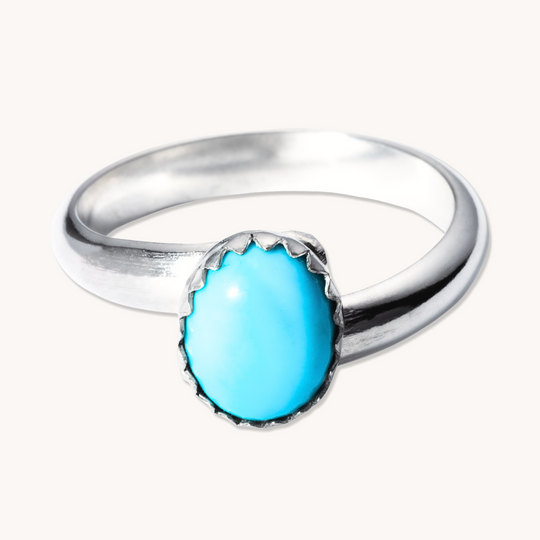
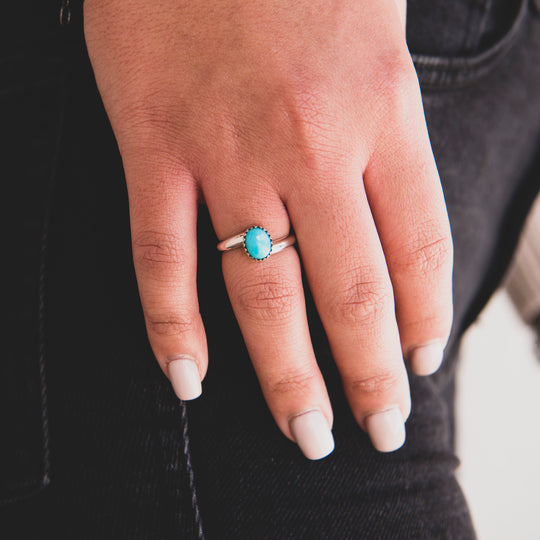


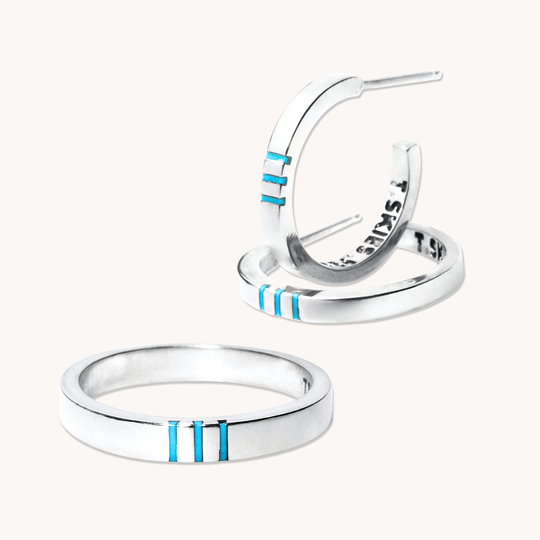
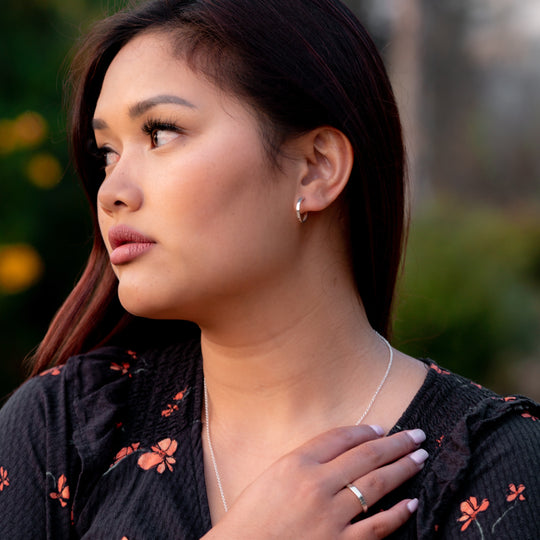


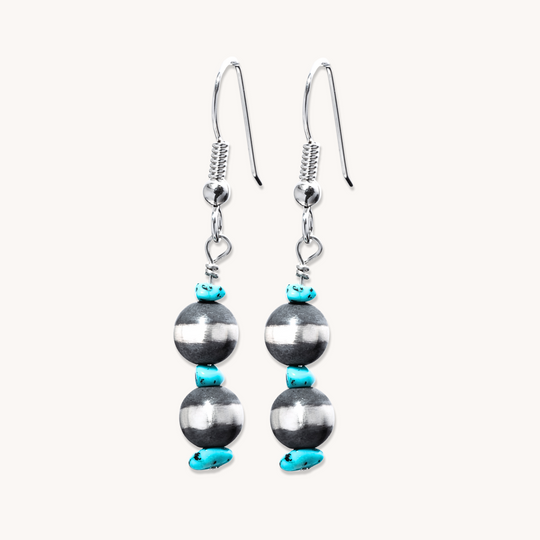
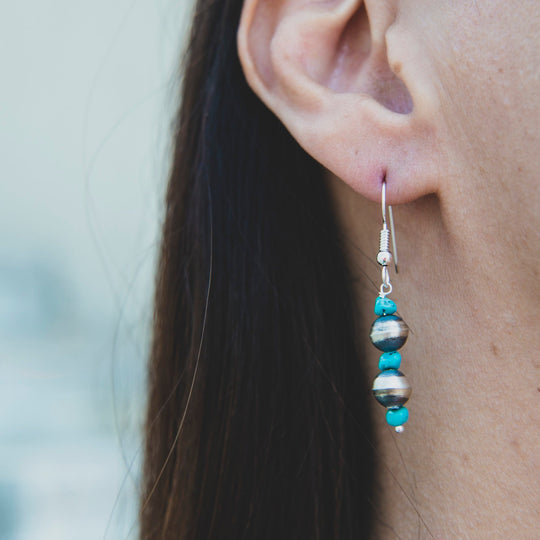


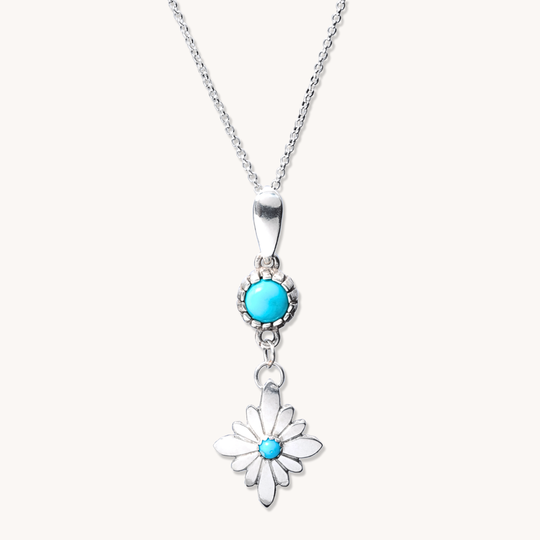
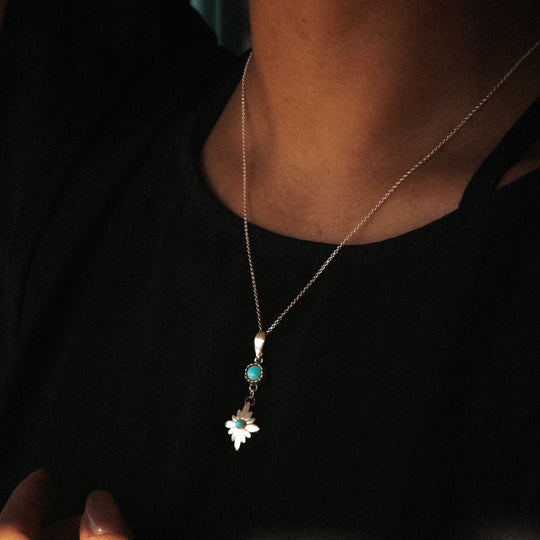


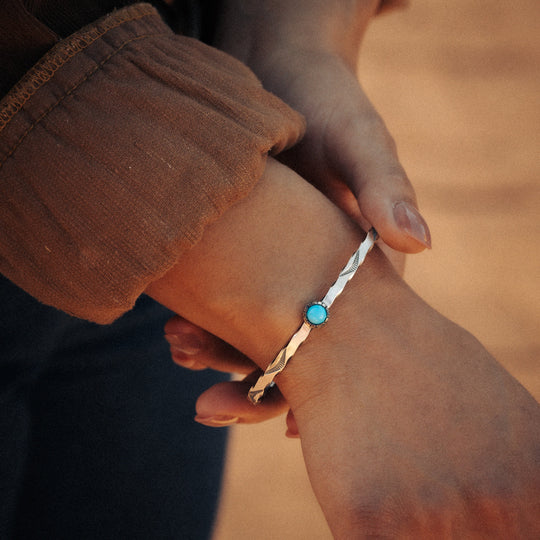


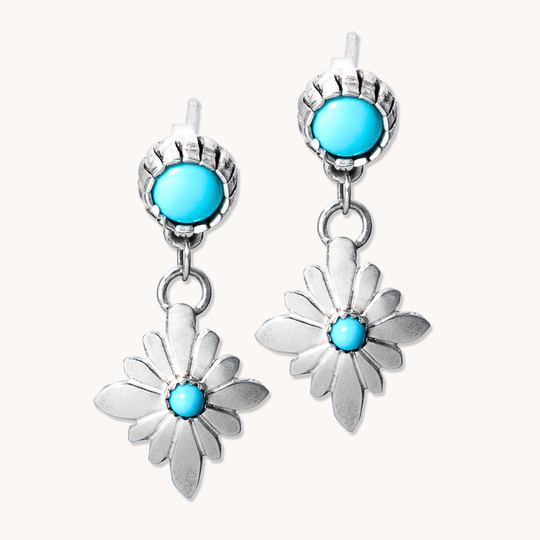
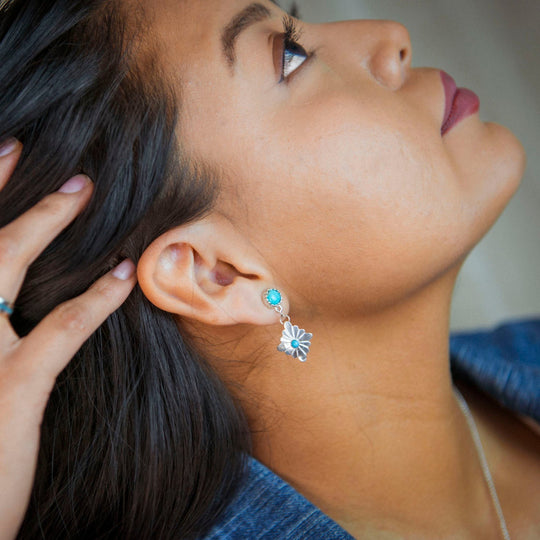


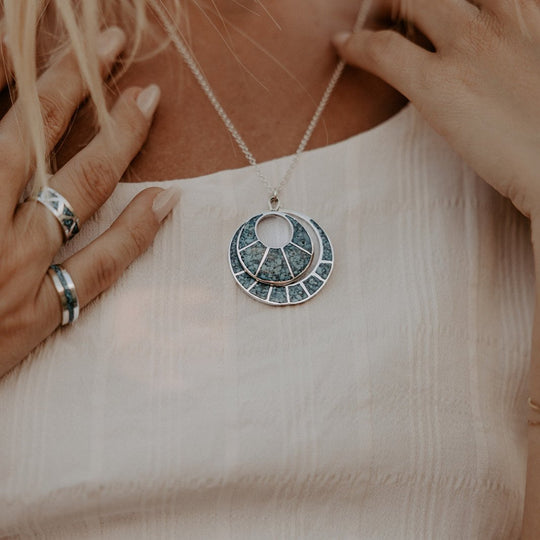


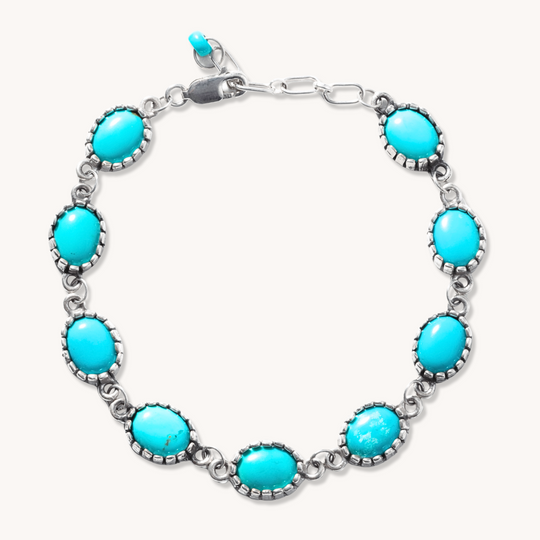
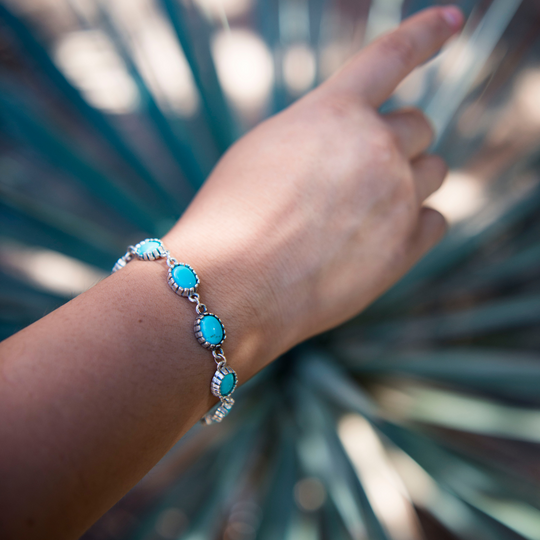


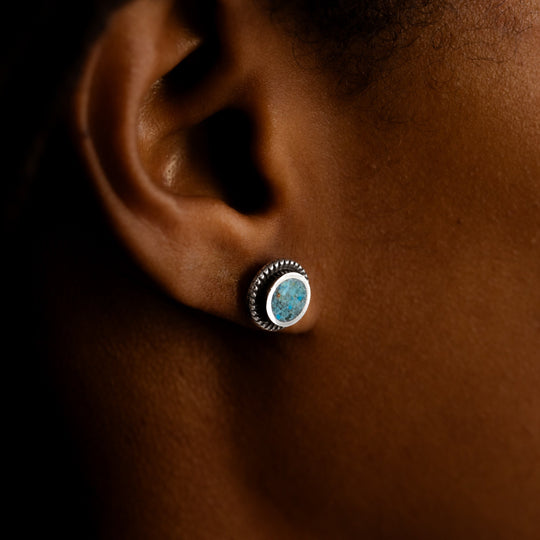


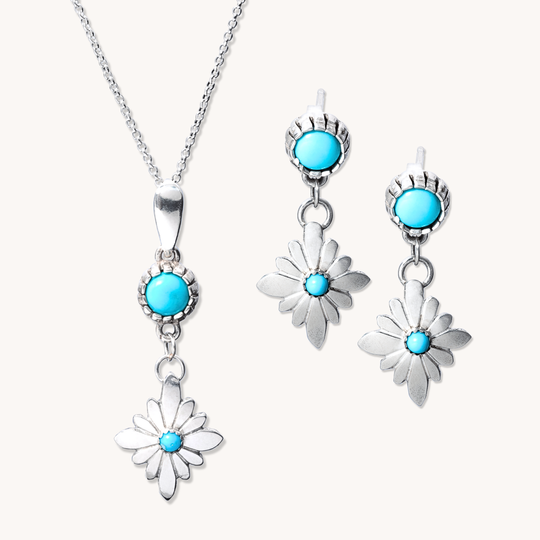



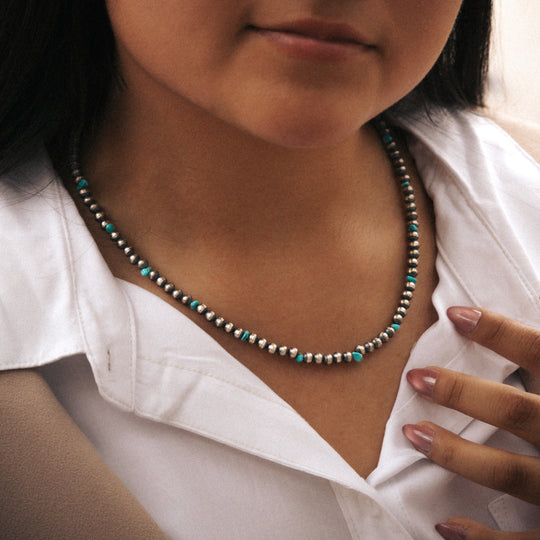


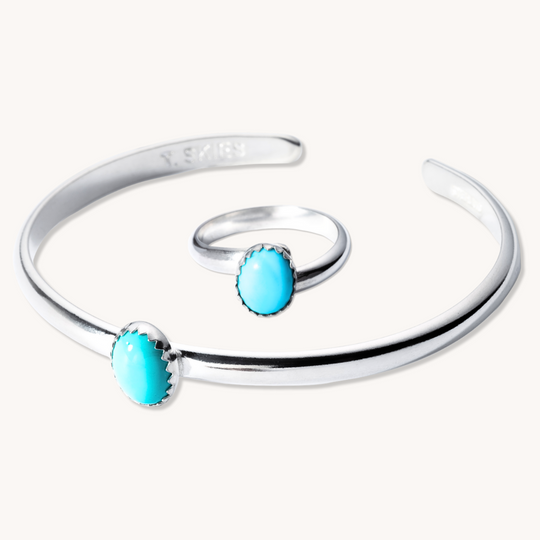
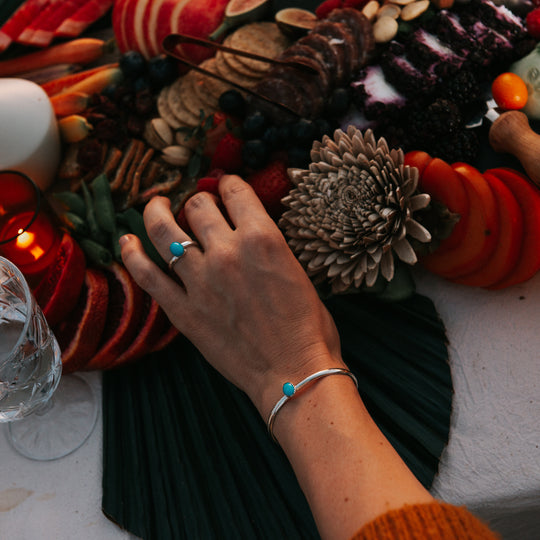


Turquoise jewelry from Turquoise Skies in Albuquerque, New Mexico. We sell two kinds of work: our own Southwest jewelry designs, handcrafted by the artists of T.Skies, and Native American jewelry by named Diné (Navajo), Zuni, Hopi and Pueblo artists, each credited by name. No dyed howlite, no mystery stones: ask about any piece and we’ll tell you exactly what the stone is.
Turquoise has been worked in the Southwest for centuries, and telling real turquoise from fake is the first thing any serious buyer learns. That’s why we publish our silversmiths’ hallmarks, document each artist, and stand behind the authenticity of every stone. When you buy turquoise jewelry from Turquoise Skies, you know exactly who made it and what’s in it.
Explore turquoise rings, bracelets, necklaces, earrings, bolo ties, and concho belts below — or learn how to tell if turquoise is real, meet the Native silversmiths behind the work, and read up on reading a hallmark.
Before you buy, see real turquoise stones documented mine by mine in our Turquoise Stone Study, or explore the turquoise mines of the Southwest.
Turquoise Jewelry: Common Questions
Is your turquoise real?
A better question is whether it’s natural. The turquoise in our signature lines is natural Campitos turquoise from Mexico, unless the listing says otherwise. Pieces with chip inlay use upcycled Kingman and Campitos chip. Native-made pieces by named artists vary by artist, so check the listing, or ask us and we’ll tell you what the stone is.
Where does your turquoise come from?
Our signature lines use Campitos turquoise from Mexico, unless the listing says otherwise. Our chip inlay combines upcycled chip from the Kingman mine in Arizona with Campitos. Kingman is one of the most commonly marketed American turquoises. On pieces by named artists, the artist chooses the stone, so the mine can differ from piece to piece.
What’s the difference between natural and stabilized turquoise?
Natural turquoise is cut and polished with nothing added. The Indian Arts and Crafts Board puts it at about 15% of the world’s supply. Stabilized turquoise is “combined with colorless resins (plastics) under a vacuum or pressure to harden the stone and darken the color.” It’s still turquoise, just treated, and it should be sold as stabilized.
Is T.Skies jewelry Native American made?
We sell two kinds of work. Our signature lines are our own Southwest jewelry designs, and they are not sold as Native American jewelry. Separately, we carry Native-made pieces by named artists, listed under the maker’s name. The federal Indian Arts and Crafts Act makes that distinction a legal one, and we keep it.
How do I care for turquoise jewelry?
Keep turquoise away from oil, detergents and harsh cleaners. Turnbaugh and Turnbaugh warn these “may alter the color and texture of the stone,” and say paste polishes and jewelry cleaning solutions should never be used. To clean the silver, use a jeweler’s rouge cloth. It removes tarnish without damaging the stone or the darkened areas a silversmith oxidized on purpose.