



Turquoise Necklaces
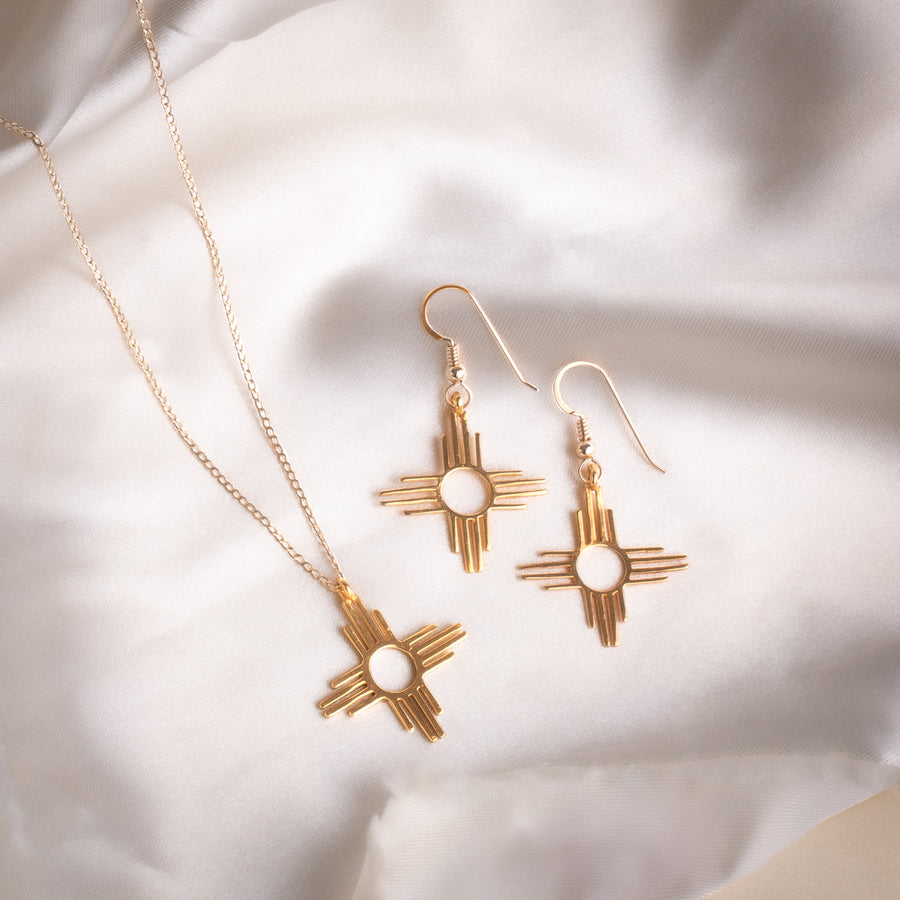
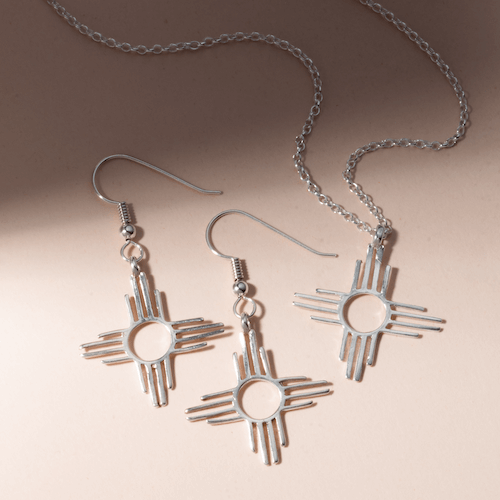
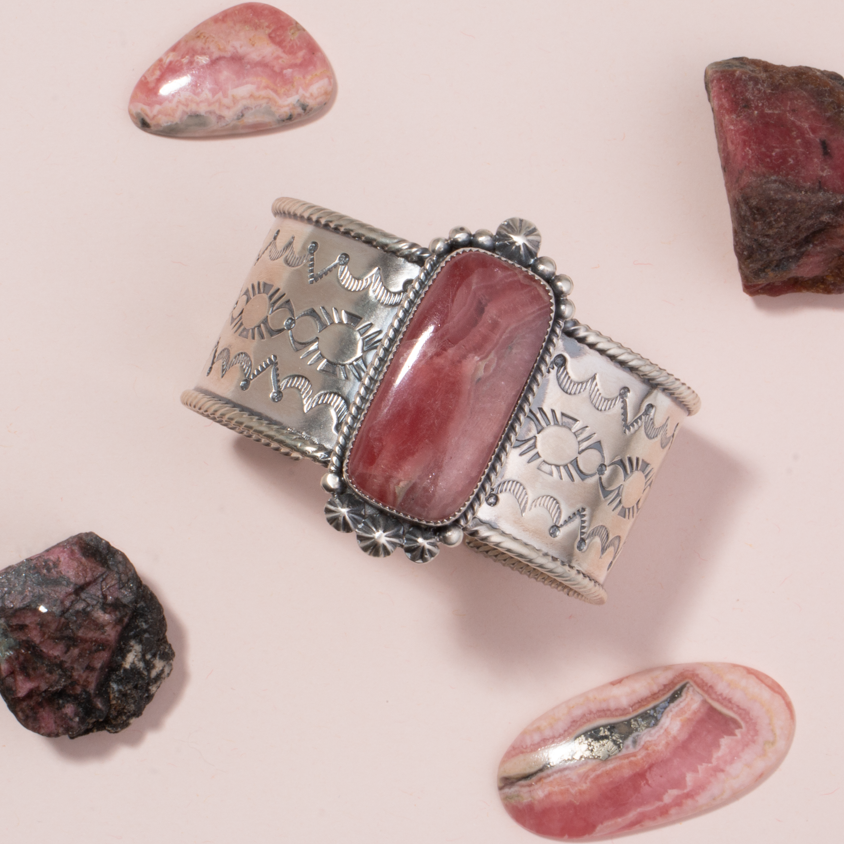
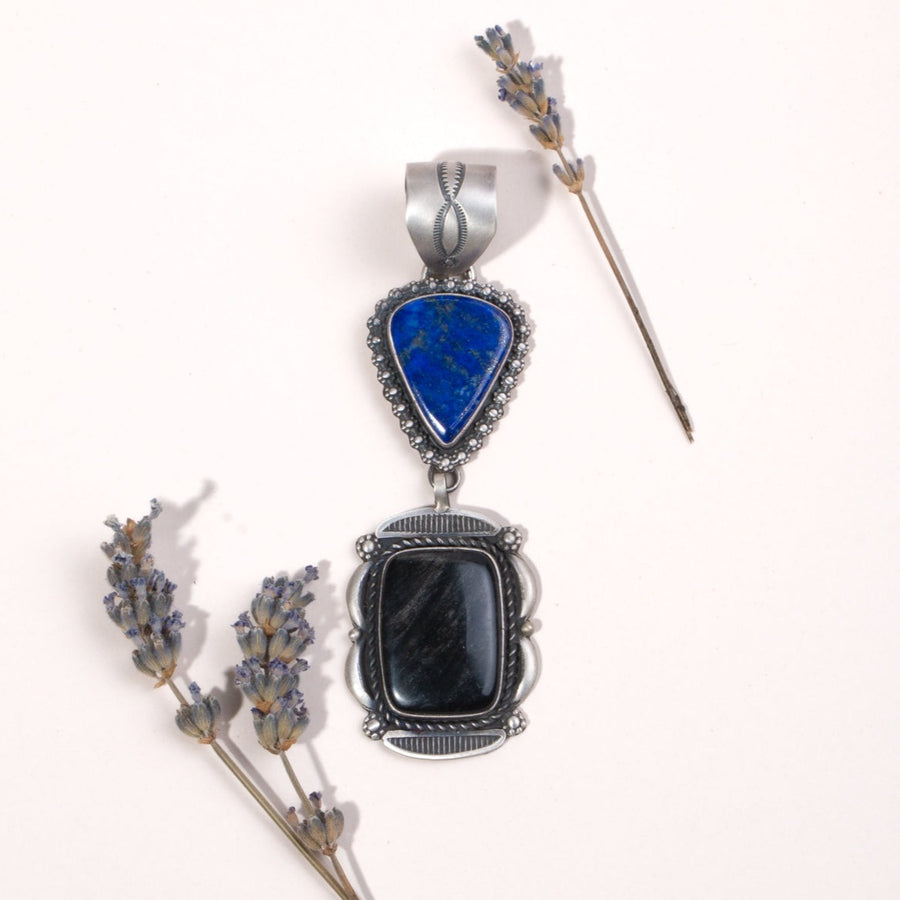
Turquoise necklaces in sterling silver: pendants, bead strands, inlay, and our own squash blossom designs. Most are T.Skies designs, and a Native-made piece is sold under the artist's name and hallmark. Ask about any stone and we'll tell you how it was treated, if at all.


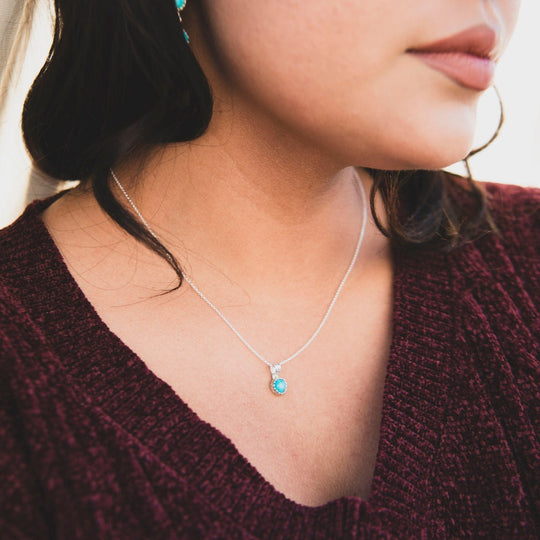


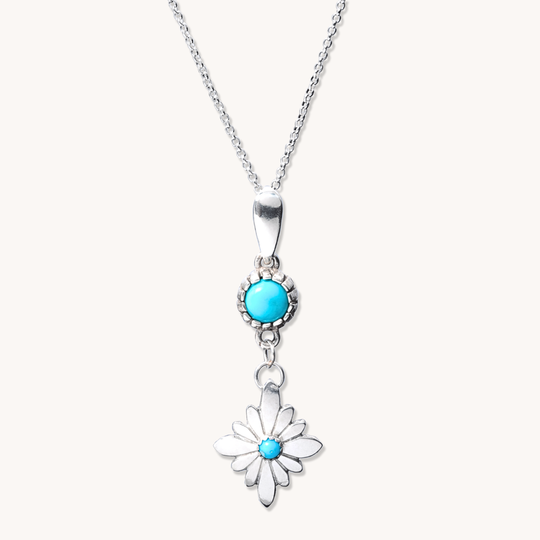
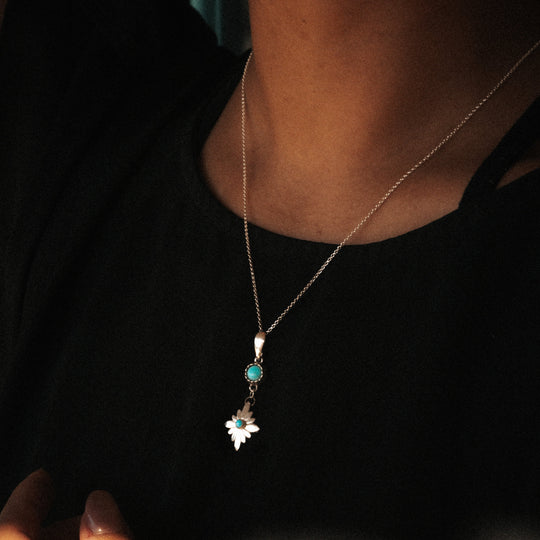


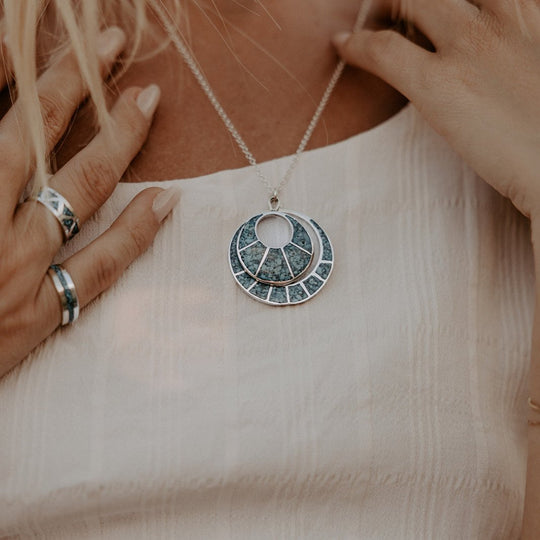


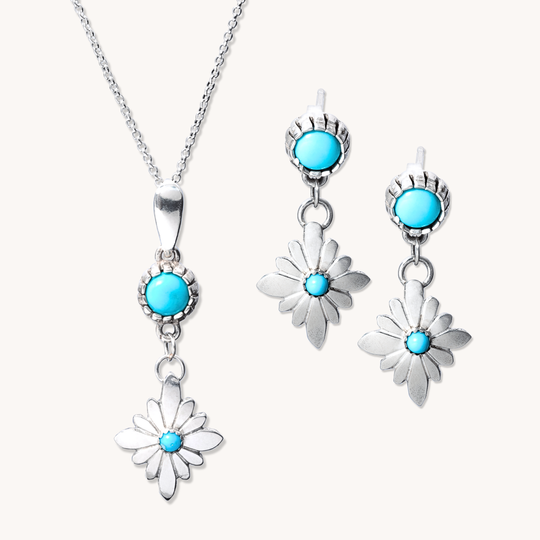
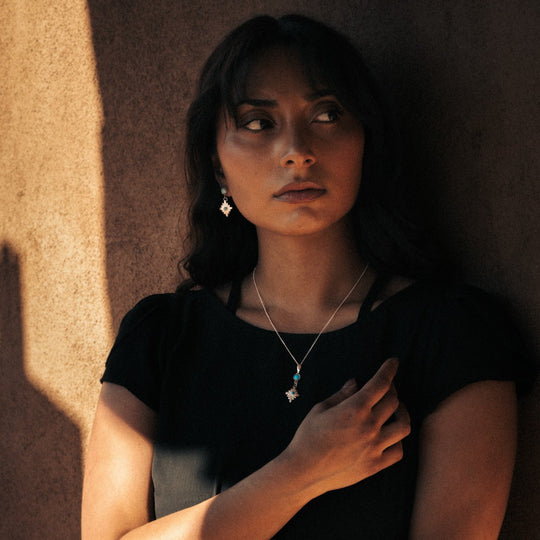


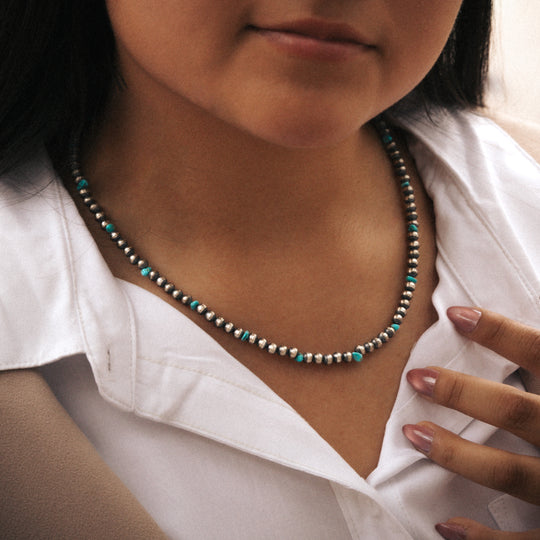


What you'll find here
Most of the necklaces here are pendants: a single turquoise stone or an inlaid shape hung on a chain. Bead necklaces are the second group, including strands of round silver beads, which the trade calls "Navajo pearls" (Baxter 2000, p. 161), and strands with turquoise and shell heishi. Our Desert Blossom and Enchantment lines include squash blossom designs, set with a naja at the center. Some necklaces come in a choker length.
The squash blossom and the naja
The squash blossom necklace pairs strands of silver beads with flared "blossoms" and hangs a crescent, the naja, at the center. The books disagree on when it first appeared: from 1870 onward (Baxter 2000), after 1880 (Adair 1944), probably around the turn of the century (Jacka 1995). Woodward (1946) traced the blossom beads to the silver ornaments on Spanish-Mexican trousers and jackets. Stones came into the blossoms later; Frank (1990) shows a necklace of about 1920 with turquoise in every blossom. Among the Navajo, the naja first hung from the forehead strap of a horse's headstall, with dated examples reaching back to the early 1880s (Bedinger 1973). Read more on the squash blossom and the naja and the naja. For styling, see how to wear a squash blossom necklace.
Heishi
Heishi are small disc beads of shell or stone. Lowry describes turquoise heishi cut from a thin square of stone, drilled at the center and rounded into cylinders (Lowry 2002, p. 30), and Schiffer credits the people of Santo Domingo with perfecting rolled heishi necklaces of one or many strands (Schiffer 1996, p. 97). Some listings spell it heishe. More in the beauty of heishi.
Choosing a turquoise necklace
Decide first where the necklace should sit: a pendant on a chain, a strand at the collarbone, or a squash blossom that fills the neckline. Each listing gives the length. With pendants, check the bail, the loop the chain passes through, because it decides which chains will fit. Our guide, how to choose an authentic turquoise necklace, covers it in depth.
The stone
Each listing names the stone. Inlay pendants in our own lines use chip inlay, made from the cut-offs of our own turquoise work; see inlay. Browse the turquoise mines of the Southwest to learn what each mine's stone looks like.
More turquoise: All turquoise jewelry · Rings · Bracelets · Earrings · How to tell real turquoise · Our silversmiths
Turquoise Necklaces: Common Questions
Are these necklaces Native American made?
Most are T.Skies designs, and a Native-made necklace is sold under the artist's name and hallmark. We don't sell our signature necklaces as Native American jewelry because our pieces are not made by one artist — it's a team effort, and we don't believe in labeling our signature jewelry by our team's ethnicity with a blanket term like Native American. Even though most of the team is Native American, we are of mixed tribes and races. If you are interested in a specific artist or tribal affiliation, we do market jewelry as Native American on an artist-by-artist basis.
What is a naja?
The crescent pendant at the center of a squash blossom necklace. Among the Navajo it first hung from the forehead strap of a horse's bridle (Bedinger 1973). See the naja.
What are Navajo pearls?
A strand of round, hollow silver beads, a name used informally in the Indian jewelry trade (Baxter 2000, p. 161).
Is the turquoise treated?
Ask about any stone and we'll tell you how it was treated, if at all. See turquoise terms explained.