



Ancestral Echoes: The Profound History of Navajo Jewelry

A piece of turquoise wrapped in silver isn't just an accessory. It's a prayer made physical. For centuries, the Diné people have woven their stories into the stones of the earth. Understanding the history of Navajo jewelry requires looking beyond the shine of the metal. You must see the resilience of a culture that refused to be silenced. This legacy began long before the first hammer struck an anvil. It started with the spirit of the high desert and the quiet rhythm of the canyons.
You've likely felt the pull of a heavy silver cuff and wondered about the hands that shaped it. It's easy to feel lost among mass-produced imitations that lack a true heartbeat. We're here to help you find the genuine path. Discover the soulful journey of Navajo jewelry from ancient bone and stone to the masterful silver legacies of today. We'll explore the life of Atsidi Sani and the deep meanings behind classic forms. You'll gain a true eye for authenticity and a deeper connection to this timeless art.
Key Takeaways
- Journey back to the era of bone and stone, where early Diné adornments served as sacred vessels for the spirit.
- Explore the history of Navajo jewelry through the legacy of Atsidi Sani, the first smith to transform iron and silver into cultural icons.
- Understand the symbolic marriage of sky and earth found in the pairing of turquoise and silver.
- Uncover the deep roots of the Naja and Squash Blossom, tracing their evolution from Spanish influence to Navajo symbols of protection.
- Learn how to honor this living tradition by recognizing the hallmarks of authentic, handcrafted masterworks.
The Origins of Diné Adornment: Before the Silver Age
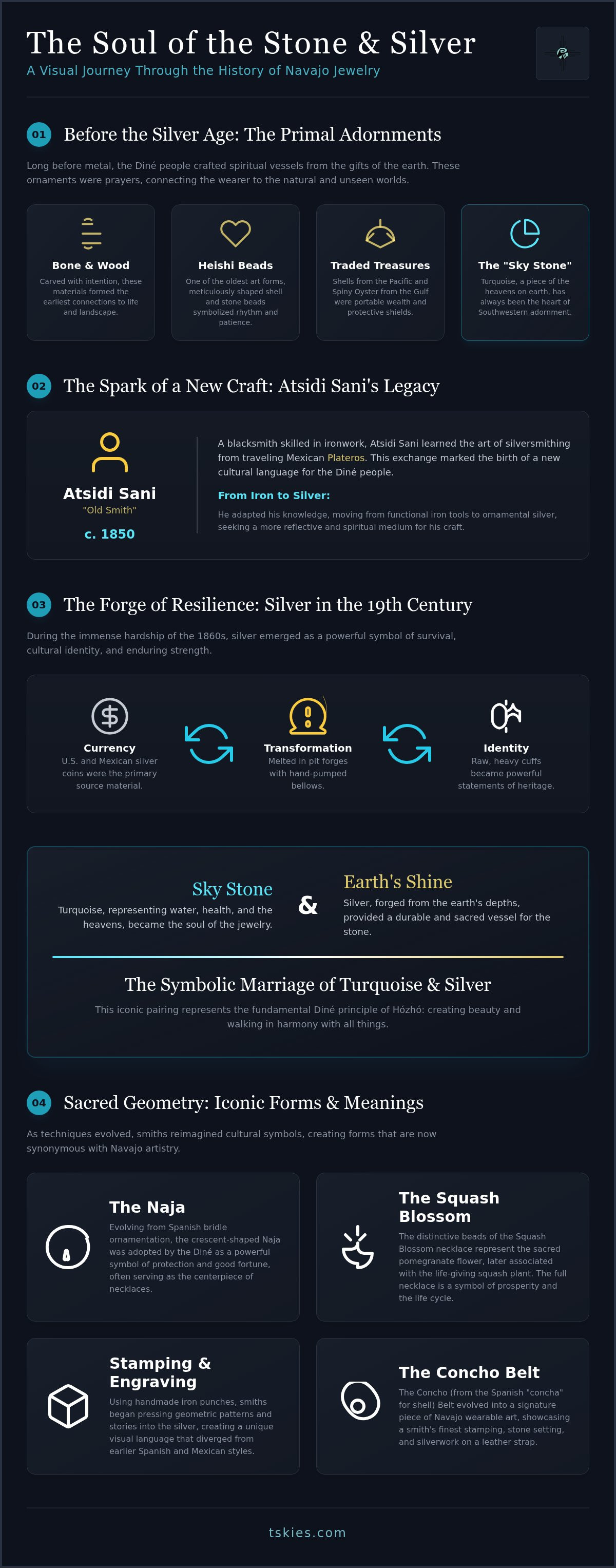
Long before the first glint of silver caught the desert sun, the Diné people were already masters of adornment. They looked to the earth. They listened to the wind. Every ornament was a prayer; a physical connection to the landscape. The history of Navajo jewelry didn't begin with metal. It began with the raw, elemental beauty of the Colorado Plateau. Artisans used what the Creator provided: bone, wood, seeds, and stone. These weren't mere decorations. They were spiritual vessels designed to carry the wearer through a world filled with both seen and unseen forces.
The tradition of Heishi beads remains one of the oldest forms of artistry in the Southwest. Small discs of shell or stone. Ground by hand against sandstone. Strung with quiet intention. This meticulous practice established an early aesthetic of rhythm and repetition. It required a deep patience that still defines the culture today. This deep-rooted lapidary tradition provided the foundation for the History of Navajo Silversmithing that would eventually define the region's artistic identity.
The Sacred Stones of the Ancestors
Turquoise has always been the heart of the Southwest. Before it was ever set in silver, it was the "Sky Stone." A piece of the heavens fallen to the red earth. It represented health, water, and protection. But the Diné didn't limit themselves to what was underfoot. They were part of a vast network of trade. Shells traveled from the Pacific coast. Spiny oyster arrived from the Gulf of California. These materials were more than beauty. They were portable wealth. Worn as beads or pendants, they served as a form of insurance and a shield of protection during long journeys across the high desert.
Cultural Exchange and Early Influences
The Diné didn't walk this path alone. They shared the landscape with their Pueblo neighbors, exchanging ideas and techniques over generations. Lapidary work, the art of cutting and polishing stones, became a shared language of the high desert. These early aesthetics prioritized balance and elemental harmony. Nothing was wasted. Nothing was excessive. Every bead and every carving had a purpose. It was about creating a bridge between the human spirit and the natural world. Deep within the history of Navajo jewelry, we find a story of resilience and shared wisdom.
In the Diné philosophy, Hózhó is the sacred practice of creating beauty and walking in harmony with all living things through every intentional act of craftsmanship.
The Birth of Navajo Silversmithing: The Iron Roots of Atsidi Sani
Around 1850, a man named Atsidi Sani, or "Old Smith," changed the trajectory of his people. He was a blacksmith first. He worked with iron. He shaped bridle bits and tools. But his soul sought a softer, more reflective medium. He learned the secrets of metal from Mexican Plateros, mobile silversmiths who traveled through the Southwest. This exchange of knowledge marks a pivotal moment in the history of Navajo jewelry. It wasn't just a transfer of skill. It was the birth of a new cultural language carved from the earth.
The early workshops were humble. A pit in the ground served as a forge. Hand-pumped bellows breathed life into the charcoal coals. Artisans carved intricate designs into sandstone molds, pouring molten metal to capture the spirit of their visions. Simple hammers and files were the only companions to the artist's hands. There was no room for excess. Only the essential rhythm of the strike and the cooling breath of the desert remained.
Forging Identity in the 19th Century
The 1860s brought a period of profound suffering known as the Long Walk. Thousands of Diné were forced from their ancestral lands. During this time of displacement and the subsequent return, silver emerged as a symbol of survival. It was portable. It was enduring. Lacking access to silver mines, the early smiths looked to currency. They melted down U.S. and Mexican silver coins, hammering the metal into thick, heavy bands. These pieces were raw and powerful. They carried the weight of history in every strike. You can see this progression in the Navajo and Pueblo Jewelry Traditions preserved in museums today.
The Evolution of Technique
As the decades passed, the Navajo style began to diverge from its Spanish roots. The smiths didn't just copy. They reimagined. They introduced stamping, using handmade iron punches to press geometric patterns into the cooling metal. Engraving added a layer of delicate storytelling. This era saw the rise of the first heavy cuffs and concho belts that defined a new era of personal expression. This transition from functional iron to ornamental silver represents a soul-deep evolution. It's a legacy that continues in the authentic heritage found in modern collections. When you choose to wear Navajo jewelry, you are participating in a story of resilience that has survived for nearly two centuries.
The Confluence of Sky and Stone: Silver Meets Turquoise
The late 1870s brought a sacred union. Silver found its partner in turquoise. This marriage of sky and earth is the heartbeat of the history of Navajo jewelry. Silver represents the moon or the cooling earth. Turquoise is the vast, desert sky. Together, they form a balanced universe. This wasn't just a design choice. It was a spiritual completion. Artisans began to realize that the reflective nature of the metal could perfectly cradle the vibrant soul of the stone.
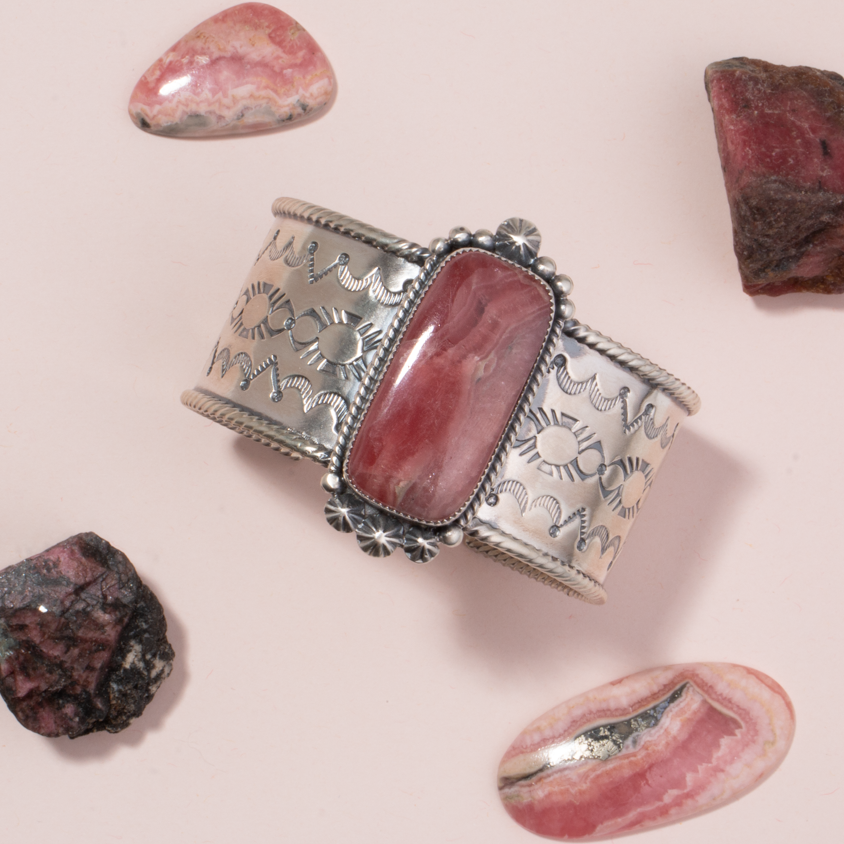
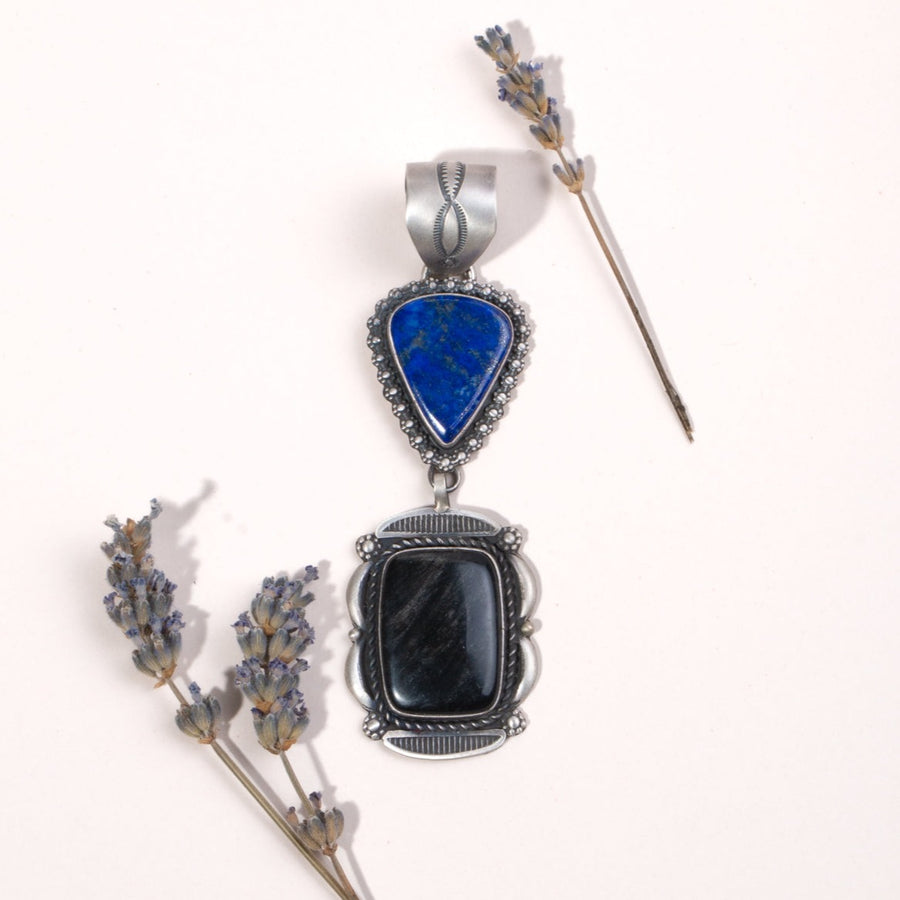
Between 1880 and 1900, the "Classic Period" emerged. Smiths transitioned from simple, unadorned bands to ornate masterpieces. They began setting large, hand-cut stones into substantial silver frames. The work became more intentional. More expressive. As noted in the Heard Museum's history of Southwest silverwork, this era established the bold, heavy aesthetic that remains the hallmark of authentic Diné craftsmanship today. The jewelry became a canvas for the landscape itself.
The Meaning of the Sky Stone
Turquoise isn't a passive material. It's a living spirit. It breathes with the wearer. To the Diné, the stone changes over time, reflecting the life and health of the person who carries it. This spiritual connection is mirrored in the diverse colors of turquoise found in historical pieces. Early smiths sourced stones from regional mines like Cerrillos. Each mine offered a distinct palette. Deep greens. Electric blues. Earthy matrices. These variations weren't just aesthetic; they were signatures of the landscape, marking the specific earth from which the stone was born.
Resilience and Trade: The Fred Harvey Era
The arrival of the railroad changed the scale of the craft. The Fred Harvey Company saw an opportunity in the growing tourism of the Southwest. They encouraged smiths to create jewelry that was lighter. More delicate. Easier for a traveler to wear. This "Harvey House" style introduced motifs like thunderbirds and arrows to the commercial market. It brought Navajo artistry to the world. However, it also created a lasting divide. There's a quiet tension between these "tourist trade" pieces and the authentic, heavy-gauge work meant for the community. True Navajo jewelry refuses to be thinned out. It retains its weight, its purpose, and its connection to the ancestral fire.
Sacred Geometry: Iconic Navajo Jewelry Forms and Meanings
The visual language of the Diné is written in geometry. Every curve and every line carries a specific weight. To understand the history of Navajo jewelry, you must look closely at the Squash Blossom necklace. It's perhaps the most recognized form in the world. Despite the name, the "blossom" beads likely originated from Spanish colonial pomegranate motifs, themselves rooted in ancient Moorish design. Navajo artisans took these foreign seeds and planted them in the desert. They transformed them into a symbol of abundance and agricultural life that resonates through the generations.
Navajo Pearls represent another feat of quiet dedication. These aren't found in nature. Each bead is a labor of love. Artisans hand-punch silver discs, dome them, and solder the halves together with surgical precision. The result is a heavy, seamless strand that feels like silk against the skin. They're the rhythmic foundation of traditional sets, providing a steady heartbeat for more ornate pendants to rest upon.
The Naja: A Symbol of the Horizon
The Naja is the soul of the necklace. This crescent-shaped pendant originally adorned the browbands of Spanish horse bridles to ward off the evil eye. Navajo smiths saw beauty in the curve. They adopted it. They reimagined it. In the history of Navajo jewelry, the Naja became a symbol of protection and the nurturing embrace of the earth. It's a reminder of the horizon where the sky meets the land. Modern artisans continue to honor this form, casting it in heavy silver or adorning it with a single, perfect stone to center the spirit. You can find this enduring symbol in our collection of handcrafted Navajo jewelry, where tradition meets modern soul.
Sandcasting and Tufa Casting
Some pieces are born from the fire in a single, breathless moment. Sandcasting is a technique that demands absolute mastery of the elements. An artisan carves a design directly into volcanic tufa stone or a specialized sand mold. The molten silver is poured. The metal takes its shape. Because the mold often breaks when the piece is removed, these items are truly one-of-a-kind. A traditional sandcast piece possesses a distinctive, grainy texture that feels like the very desert from which it came. It's a tactile connection to the earth. It's a physical echo of the stone that gave it life.
The Living Legacy: Navajo Jewelry in the Modern Era
The story doesn't end. It breathes. The history of Navajo jewelry is not a closed chapter in a textbook; it's a living flame passed from one generation to the next. Modern Diné artisans are the torchbearers of this legacy. They stand in the same desert light as the masters who came before, yet they aren't afraid to look forward. They honor the ancestors by refusing to let the craft become stagnant. They push boundaries with contemporary silhouettes. They experiment with textures. But they never lose the soul of the metal. This balance of innovation and reverence ensures the tradition stays vibrant for the next seven generations.
T.Skies Jewelry serves as a vital bridge between the past and the future. Founded to honor Southwestern craftsmanship, we focus on the intentionality of every strike. We don't believe in shortcuts. We believe in the weight of the silver and the quiet spirit of the stone. By specializing in authentic Navajo pearls and traditional styles, we help preserve the techniques that define this culture's identity. This isn't just about making jewelry. It's about keeping a cultural heartbeat steady in a world that often moves too fast.
Authenticity in the Digital Age
Finding genuine work requires a discerning eye. The digital landscape is often cluttered with mass produced imitations that lack a true heartbeat. To protect the legacy, it's essential to look for specific markers of truth. These details separate a masterwork from a factory made shell.
- The Hallmark: Authentic pieces usually carry an artist’s stamp. It might be a name, an initial, or a unique symbol that acts as a signature.
- The Indian Arts and Crafts Act: This 1990 law is a truth in advertising shield. It prohibits misrepresentation, making it illegal to market items as "Indian made" if they aren't produced by a member of a recognized tribe.
- Quality of Craft: Look for the signs of the hand. Slight variations in stamping or the weight of the silver indicate a piece born from a forge, not a machine.
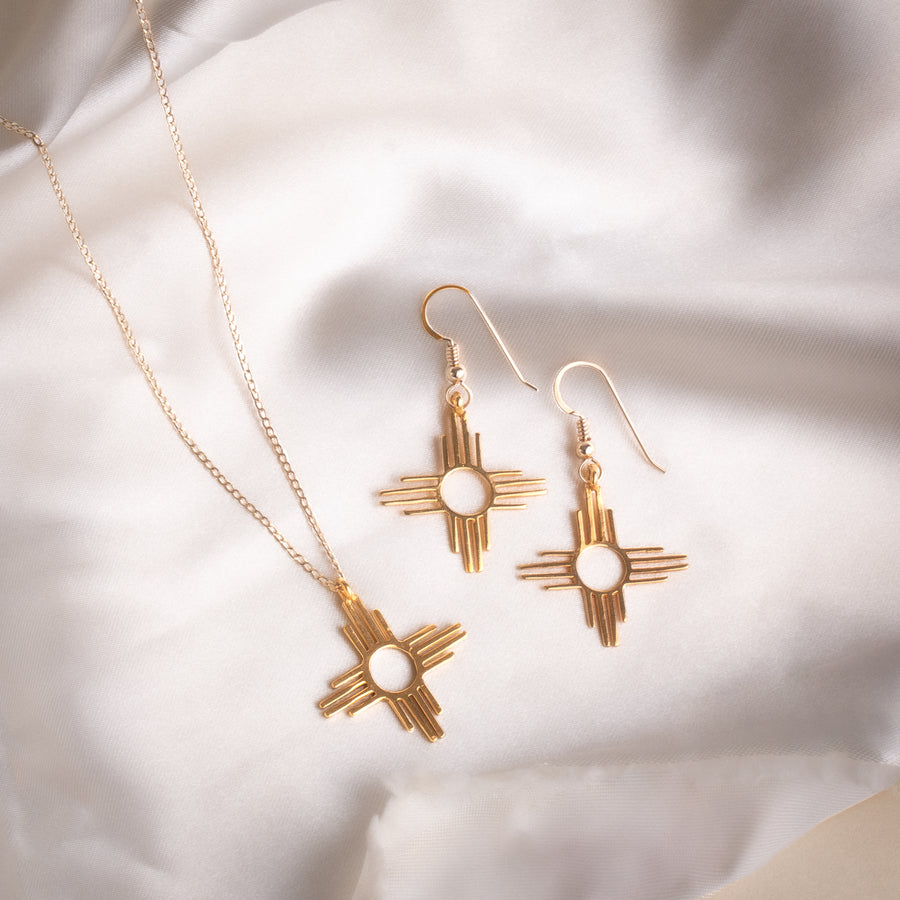
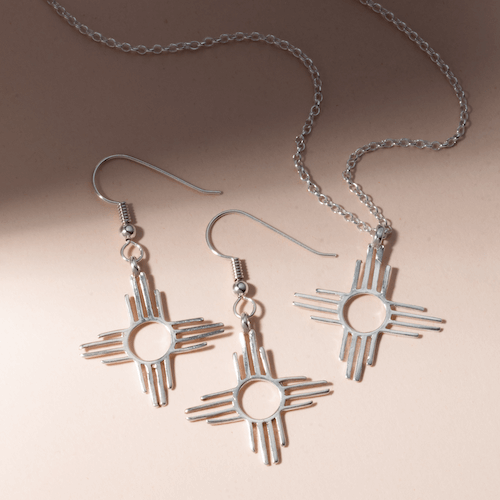
Integrating Zia symbol jewelry into your collection adds another layer to this Southwestern narrative. It’s a legacy of light and balance that perfectly complements the bold, protective silverwork of the Diné.
A Call to the Soul: Choosing Your Piece
When you choose a piece of jewelry, you aren't just buying an accessory. You're adopting a vessel of meaning. You're participating in a story that began with bone and stone in the high desert canyons. We encourage you to look for pieces that speak to your own journey. Perhaps you seek the protection of the Naja. Maybe you feel the abundance of the Squash Blossom. If you can't find the exact echo of your spirit, our custom jewelry design process allows you to collaborate with a smith to create a personal legacy. Explore our collection of authentic Navajo jewelry and handcrafted silver treasures at T.Skies Jewelry to find the piece that resonates with your soul.
Carrying the Ancestral Flame
The history of Navajo jewelry is a narrative of profound resilience. It's a journey from the quiet beads of the ancient canyons to the bold silver masterworks of the modern age. You've explored how early visions and the sacred union of sky and stone created a legacy that refuses to fade. This heritage isn't a relic of the past. It's a living tradition that breathes through the hands of artisans who still listen to the desert wind and the rhythm of the forge.
At T.Skies Jewelry, we've walked this path since 2017. Every ring, bracelet, and pendant is handcrafted by local artisans honoring traditional techniques. We specialize in high-quality turquoise and sterling silver to ensure your jewelry is a true vessel of meaning. Our work reflects an authentic Southwest heritage that you can feel in every hammered curve and polished stone. When you wear these pieces, you participate in a story that spans generations and honors the earth itself.
Adorn your soul with authentic Navajo jewelry from T.Skies Jewelry. Let these ancestral echoes guide your modern journey with quiet confidence and enduring beauty.
Frequently Asked Questions
Who was the first Navajo silversmith?
Atsidi Sani, known as Old Smith, was the first Navajo silversmith. He began his work around 1850, transitioning from a background in blacksmithing and ironwork. He learned the secrets of silver from Mexican Plateros who traveled through the Southwest. This pivotal exchange of skills forever changed the history of Navajo jewelry. His early creations using silver coins and simple hand tools established the foundation for the masterful traditions we honor today.
What is the history of the Squash Blossom necklace?
The Squash Blossom necklace has roots in Spanish colonial and Moorish pomegranate motifs. Navajo smiths reimagined these designs into the iconic blossoms seen on traditional strands. The central Naja pendant was originally a horse bridle ornament used by the Spanish. Over generations, the Navajo transformed these elements into a soulful symbol of protection and abundance. It represents a beautiful confluence of cultures, standing as a testament to the resilience of Diné artistry.
Why is turquoise so important in Navajo jewelry?
Turquoise is the Sky Stone, a sacred bridge between the heavens and the earth. To the Diné, it's a living stone that carries a spirit of its own. It represents health, water, and protection for the person who wears it. The stone is believed to change color based on the wearer’s well being, breathing with them through life. Its presence in jewelry is more than a design choice; it's a spiritual anchor.
How can I tell if Navajo jewelry is authentic?
Authenticity is found in the artist's hallmark, a unique stamp that serves as a signature. You should also look for the weight of genuine sterling silver and the natural variations of real turquoise. The Indian Arts and Crafts Act of 1990 protects you by requiring that items sold as Indian made are created by tribal members. Handcrafted pieces often show subtle variations, unlike the cold, repetitive precision of mass produced imitations.
What is the difference between Navajo and Zuni jewelry?
Navajo jewelry is known for its heavy silverwork and large, bold stones that showcase the metal's texture. In contrast, Zuni artisans are celebrated for their intricate lapidary skills. They specialize in needlepoint, petit point, and precise stone to stone inlay. While the history of Navajo jewelry focuses on the harmony of silver and sky, Zuni traditions highlight the mosaic beauty of many small stones joined together in complex, detailed patterns.
What do the symbols in Navajo jewelry mean?
Symbols in this tradition are vessels of meaning that reflect a spiritual connection to the desert landscape. The Naja represents the horizon and protection. Geometric stamps often mirror the movement of clouds, rain, or lightning. Each design is a prayer for Hózhó, or beauty and harmony. These motifs aren't just decorative; they're a visual language used to communicate the wearer's relationship with the Creator and the elements of the high desert.
When did the Navajo start using silver in their jewelry?
The Navajo began using silver in their jewelry during the mid 19th century, around 1850. Before this shift, adornments were crafted primarily from bone, wood, shell, and stone. The introduction of silverwork was led by Atsidi Sani after his apprenticeship with Mexican silversmiths. By the late 1870s, artisans began setting turquoise into silver. This era marked a profound evolution in personal expression and the preservation of cultural identity through metalcraft.


