


How to Layer Navajo Pearl Necklaces

Silver bead necklaces are the easiest Southwest jewelry to wear every day, and the easiest to layer. A single strand goes with almost anything. Two or three strands, chosen well, look like a set someone planned. This guide covers the choices that make a stack work: length, bead size, spacing, finish and a pendant, plus how to tell how a bead was made and how to care for the strands. You’ll find our bead strands and pendants in the necklace collection, including the Navajo pearls made by the Navajo bead maker Vinita Cowboy, whose hallmarked work we carry.
What “Navajo pearls” means, and what it should mean
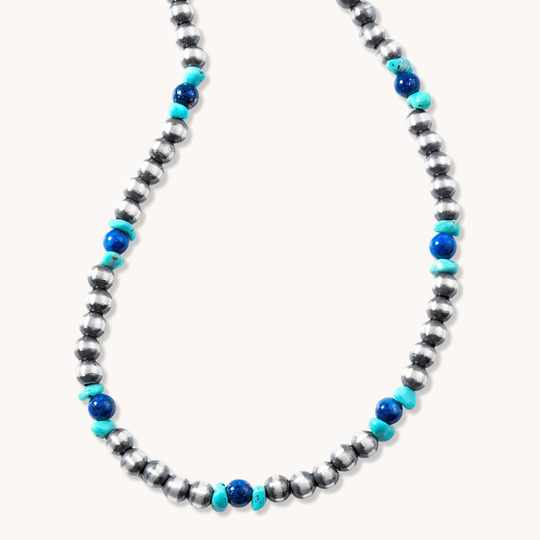
“Navajo pearls” is a trade name for round, hollow sterling silver beads strung as a necklace. It isn’t a term from the reference books. The older literature calls them hollow silver beads or bench beads, and none of the books in our library says where the nickname came from.
The name still makes a claim, because it names a nation. Under the Indian Arts and Crafts Act it is illegal to sell a product in a way that falsely suggests it is Indian-made or the product of a particular tribe. So we hold ourselves to a simple rule. We call a strand Navajo pearls only when it was made entirely by a Navajo maker. Vinita Cowboy’s strands carry the name. Our own house strands, designed by Mateo James, are called Desert Pearls, and you’ll find them in the Desert Blossom collection. When you shop elsewhere, ask who made the beads, and get the maker’s name on the receipt. More in our guide to authentic Native American jewelry.
How a silver bead is made, and how to tell
The hollow silver bead is old. Washington Matthews, describing two Navajo smiths at work in his 1883 report, recorded that “in making the hollow silver beads they did not melt the silver, but beat out a Mexican dollar until it was of the proper tenuity.” Margery Bedinger notes that “Shorty-Silver-Maker is said to have formed the first hollow silver beads.”
Today a strand is made one of three ways. Marsha Lund lists them: “There are three methods used for making hollow silver beads: Handmade, benchmade and machine-made.” Of the three, “silver beads made by hand take the most time, are the most desirable and bring the highest price.” In a handmade bead the maker cuts two silver discs, domes each into a half-sphere, punches the holes and solders the halves together. Lund puts the difference plainly: “A benchmade bead differs from a handmade bead in one step only: The first.” In a benchmade bead the discs come pre-cut. A machine-made bead is formed entirely by machine.
The seam tells you which you’re holding. The Encyclopedia of Native American Jewelry explains: “Bench beads can be recognized by an apparent ‘shoulder,’ or dip, on each half where the curve irregularly tails off to the seam at the center of the bead.” “Spun” beads, by contrast, “are totally machine-made and do not possess any seam.” In our experience, small differences from bead to bead are a good sign, and a strand of perfectly identical beads was probably made by machine.
A bead maker’s strands: Vinita Cowboy
We wrote about Vinita Cowboy and her husband, Darwyn Cowboy, in our journal. Darwyn is a fifth-generation bead maker of the Haley family, Navajo bead makers from Gallup, New Mexico, and the couple joined the family’s bead making to help fill its orders. As they described their process to us, the family works in heavy-gauge sterling silver: they melt it, roll it out, cut it, punch each bead as close to center as they can, then sand, polish and string the strands. They finish about six to eight necklaces in four or five days. Their most popular style is what Vinita calls “old-fashioned” beads, oxidized dark and then rubbed back with steel wool for an antique surface. “It’s different. Not a lot of people make beads,” she told us.
Vinita’s beads are handmade. Her strands on our shelf run from a fine 6 mm bead at 23 inches to a 10 mm strand, also 23 inches, and a 16 mm statement strand at 24 inches. Each listing names her. Read her story in our interview with Vinita Cowboy, and see Darwyn Cowboy’s page in our silversmith directory. Her beads also appear in our Bead Maiden bracelets, where the listing credits Mateo James for the design and Vinita Cowboy for the Navajo pearl.
Choose the lengths
Our Desert Pearls listings use four length names, and they are a useful map for any strand:
- Mini choker: 14 to 16 inches, high on the neck.
- Choker: 16 to 18 inches, at the collarbone.
- Princess: 20 to 22 inches, on the upper chest.
- Matinee: 24 to 26 inches, lower on the chest.
For a stack, our advice is to leave about four inches between strands, as a choker with a princess, or a princess with a matinee, does. That is enough room for each one to lie flat. A mini choker with a choker is only about two inches apart, and strands that close tend to tangle. For three strands, start with a choker, a princess and a matinee. Lengths vary with the neck and the clasp, so try the shortest strand on first and build down from it.
Choose the bead sizes
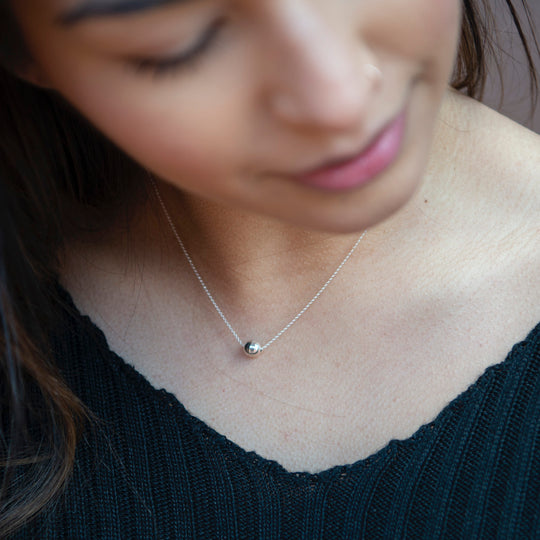
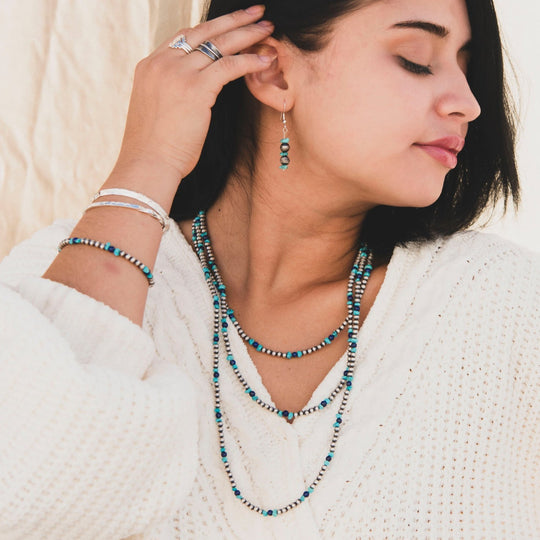
Bead size decides how bold the stack looks. Our Desert Pearls come as petite 3 mm and classic 5 mm strands. Vinita Cowboy’s run to 16 mm. In our view a stack reads best when the beads grow as the strands get longer: the smallest beads at the neck, the largest on the longest strand. The weight of the bigger beads keeps the lowest strand hanging straight, and the small ones keep the top of the stack light. If you only want one strand, a mid-size bead of about 5 or 6 mm is the easiest to wear with everything.
Plain strands have long been worn on their own. Lund notes that early silver beads “were not always worn in combination with the squashblossoms or the naja, but often were strung alone.” To wear bead strands with a squash blossom, see our guide to how to wear a squash blossom necklace, which covers layering shorter strands above a naja.
Mix the finishes, and add a pendant
Silver beads come bright or oxidized. Vinita’s “old-fashioned” beads are darkened and rubbed back, and some of our Desert Pearls have a rustic patina. Bright and oxidized strands mix well in one stack. In our view the look is best with the darker finish at the neck and the brightest strand lowest, where it catches the light.
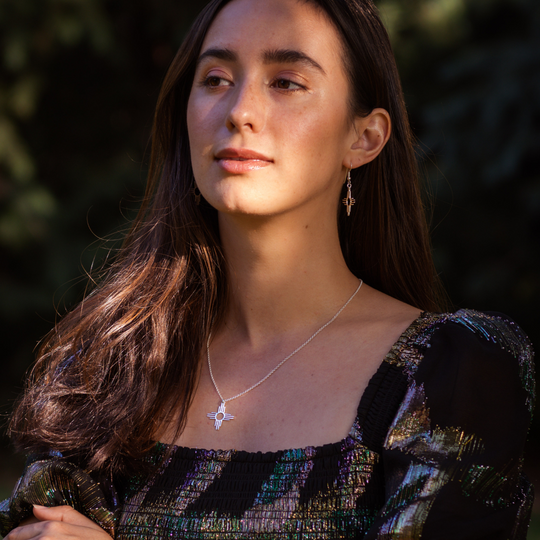
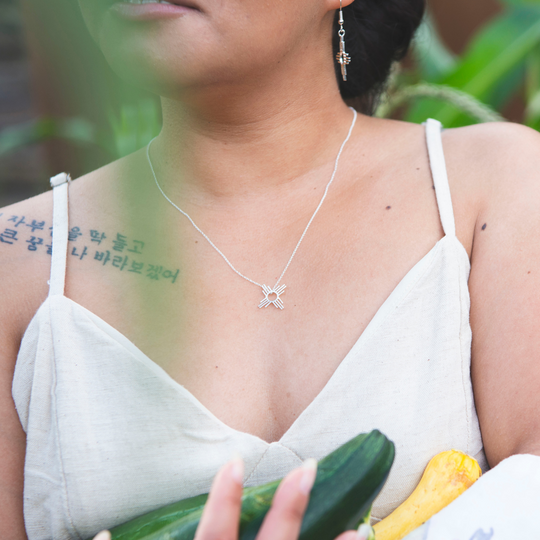
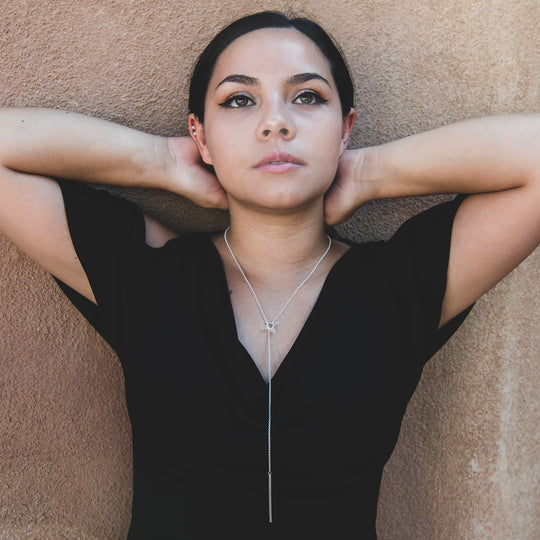
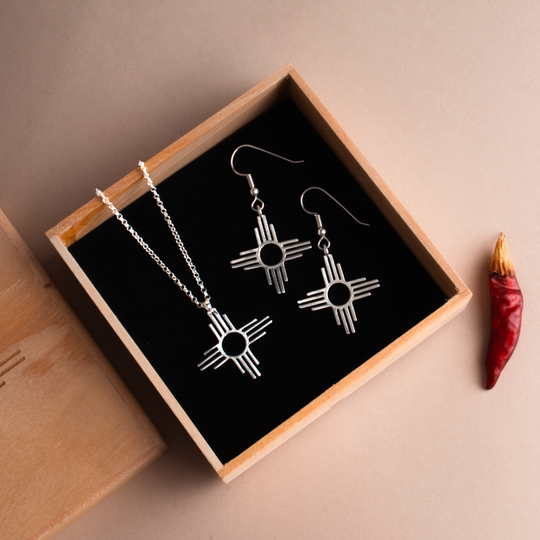
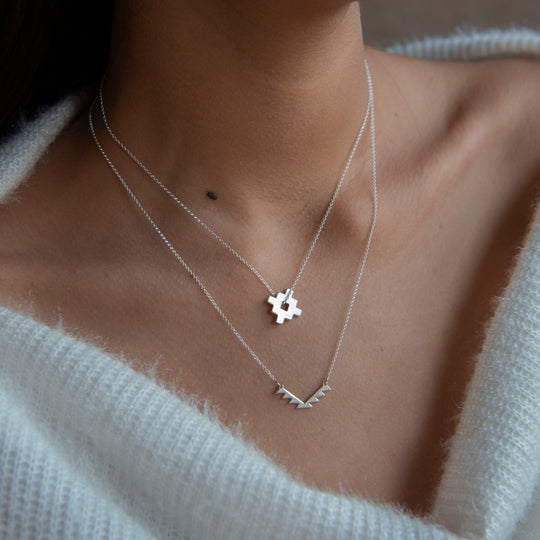
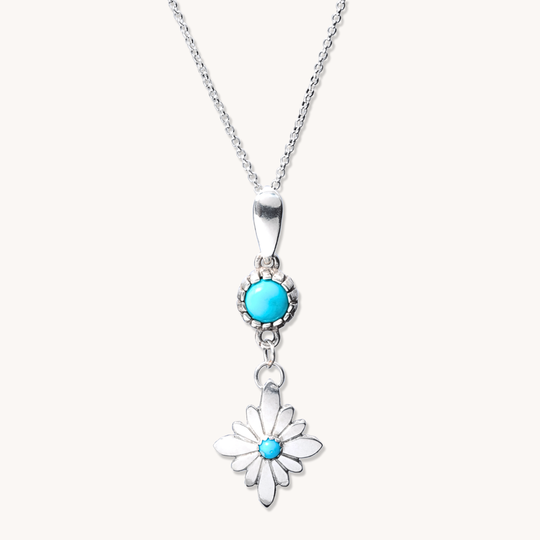
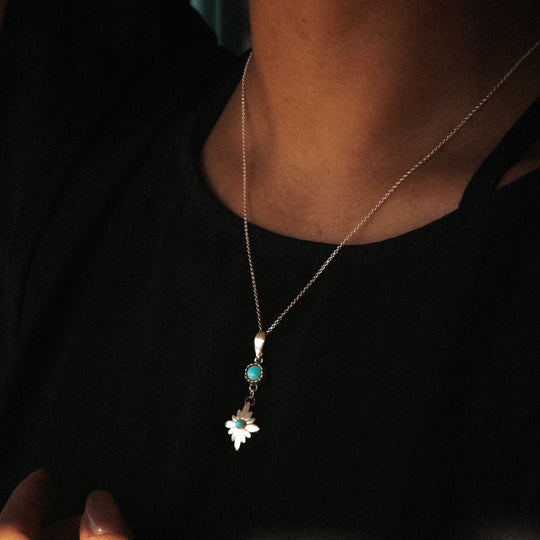
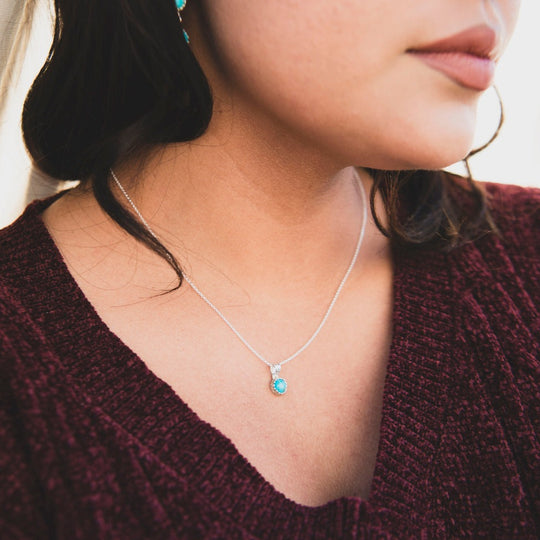
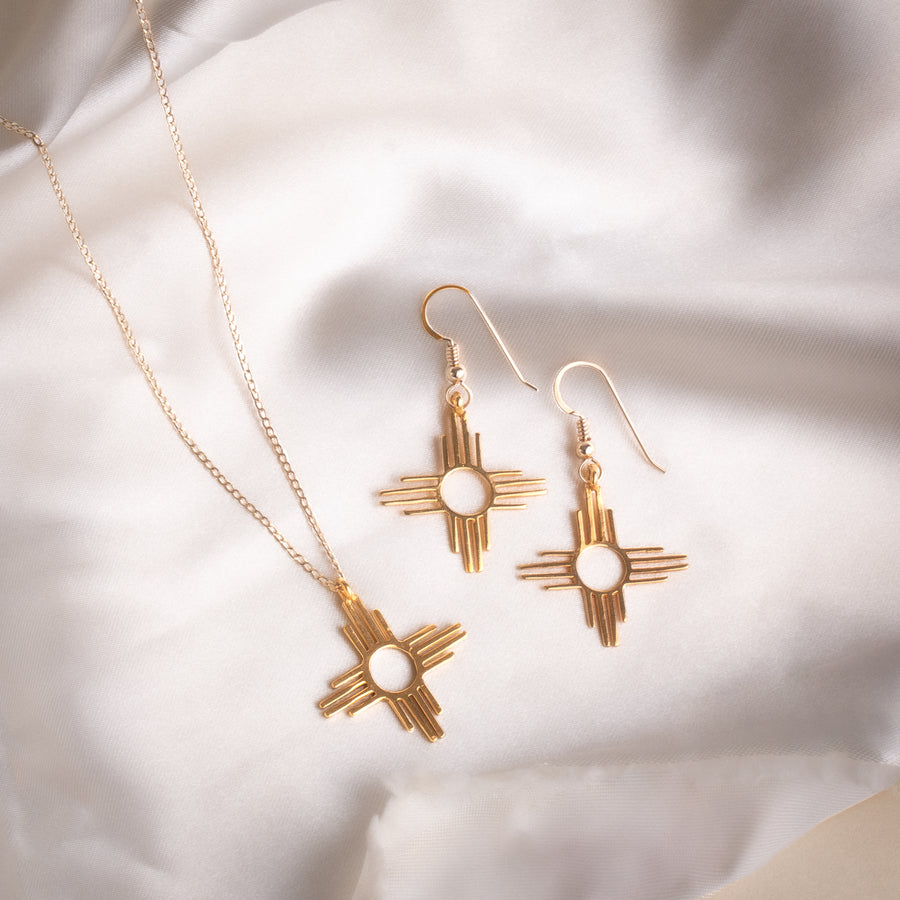
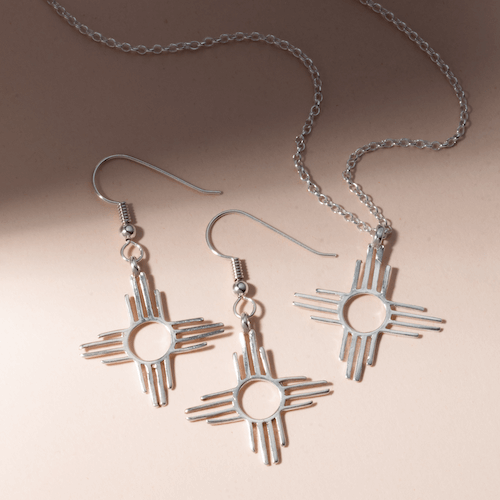
A pendant goes on the longest strand, so it hangs clear of the others. A turquoise pendant adds the color a silver stack lacks, and a naja pendant turns a bead strand into a lighter version of a squash blossom. If you choose a Zia sun pendant from our Enchantment line, it was designed in collaboration with the late Peter Pino, then Governor of the Pueblo of Zia, and T.Skies uses the Zia sun symbol with permission from the Pueblo of Zia. Browse the Enchantment collection or our turquoise necklaces for a focal piece.
Check the silver
A strand sold as sterling must meet the federal standard. Under the Federal Trade Commission’s jewelry guides, “Sterling” may only describe metal that is “at least 925/1,000ths pure silver.” Look for the mark on the clasp or ask the seller. The feel of a bead is not a test: you’ll read that real silver feels cool and then warms on the skin, but any metal does that. For the older silver standard on vintage beads, see coin silver vs. sterling.
Care and storage
Our advice: put your strands on after lotion, perfume and hairspray, and take them off first at night. Clean them with a polishing cloth, not a dip. The Turnbaughs recommend a jeweler’s rouge cloth, which “will remove tarnish from the surface without damaging stones and without polishing dark areas of the silver that the craftsman deliberately oxidized to heighten the contrast of the silver design.” That matters on oxidized beads, where a dip would strip the dark finish the maker put there.
Strands tangle in a drawer. In our experience they keep best hung up, or stored flat in separate pouches. If a strand breaks, the Turnbaughs’ advice is that broken items “should be taken to a knowledgeable repair shop or jeweler.” Keep the beads together until then. Our jewelry care guide covers the rest.
Building your stack
Start with one strand you’ll wear every day, in a mid-size bead. Add a second two lengths down, with a larger bead. Add a pendant to the longest strand if you want color. Mix bright and oxidized finishes, and keep a rouge cloth nearby. Wherever you buy, ask who made the beads and how. When you’re ready, browse our necklaces, including Vinita Cowboy’s Navajo pearls, or our Desert Pearls strands.
Related reading
- Vinita Cowboy: Navajo pearls, traditional handmade silver beads
- Navajo pearls
- How to wear a squash blossom necklace
- How to choose a turquoise necklace
- The squash blossom necklace and the naja
Frequently asked questions
What are Navajo pearls?
A trade name for strands of round, hollow sterling silver beads. The reference books call them hollow silver beads or bench beads. At T.Skies we use the name only for strands made entirely by a Navajo maker, such as Vinita Cowboy’s. Our house strands are called Desert Pearls.
How can I tell if silver beads are handmade?
Look at the seam. Bench beads show “an apparent ‘shoulder,’ or dip, on each half” toward the seam, while spun beads “do not possess any seam” (Encyclopedia of Native American Jewelry, pp. 13–14).
What lengths work for a three-strand stack?
In our experience, a choker (16–18 in.), a princess (20–22 in.) and a matinee (24–26 in.). About four inches between strands lets each one lie flat; strands two inches apart tend to tangle.
What bead size should I start with?
A mid-size bead of about 5 or 6 mm is the easiest single strand. For a stack, put the smallest beads at the neck and the largest on the longest strand.
How do I clean oxidized silver beads?
Use a jeweler’s rouge cloth, not a dip. It “will remove tarnish from the surface without damaging stones and without polishing dark areas of the silver that the craftsman deliberately oxidized” (Turnbaugh, “Care of Jewelry”).
Sources
- Washington Matthews. “Navajo Silversmiths.” Second Annual Report of the Bureau of Ethnology. 1883, p. 177.
- Margery Bedinger. Indian Silver: Navajo and Pueblo Jewelers. 1973, p. 20.
- Marsha Mayer Lund. Indian Jewelry: Fact and Fantasy. 1976, pp. 44, 123.
- Paula A. Baxter with Allison Bird-Romero. Encyclopedia of Native American Jewelry. 2000, pp. 13–14 (“bench beads”).
- William A. Turnbaugh and Sarah Peabody Turnbaugh. Indian Jewelry of the American Southwest. Schiffer, n.d., “Care of Jewelry.”
- Federal Trade Commission. Guides for the Jewelry, Precious Metals, and Pewter Industries, 16 CFR § 23.5(b)(2).
- U.S. Department of the Interior, Indian Arts and Crafts Board. Indian Arts and Crafts Act turquoise consumer brochure (GPO gpo58769). n.d., p. 2.
- “Vinita Cowboy: Navajo Pearls, Traditional Handmade Silver Beads.” T.Skies Journal; and T.Skies product listings for Desert Pearls and Vinita Cowboy strands (accessed September 23, 2026).