
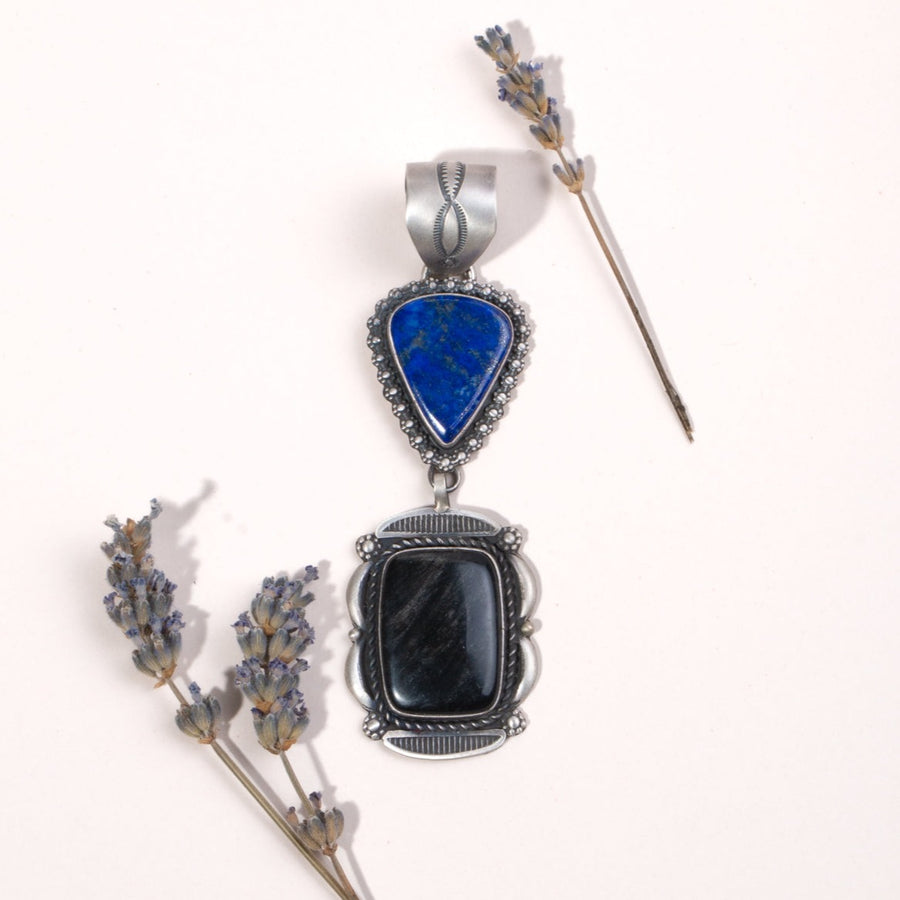


Navajo Pearls
Beads have a long history among Native American culture. They have been used as trade goods, worn as adornment, and have even been used to tell stories. Tribes used shell, bone and stone to create these tiny pieces of culture, carving the stories into the material itself. Necklaces of such beads were passed down through the tribes so the stories continued with the next generation.

When the Spanish conquerors came to the American Southwest, they brought a different kind of story. Most of what they brought with them ended in pain and suffering for Native people. But there was one thing the Spanish added, silversmithing, which came to be an intricate part of the culture of such tribes as the Navajo. Taking the concept and making it their own has allowed the Navajo and other tribes to add to the ways in which they create beauty.
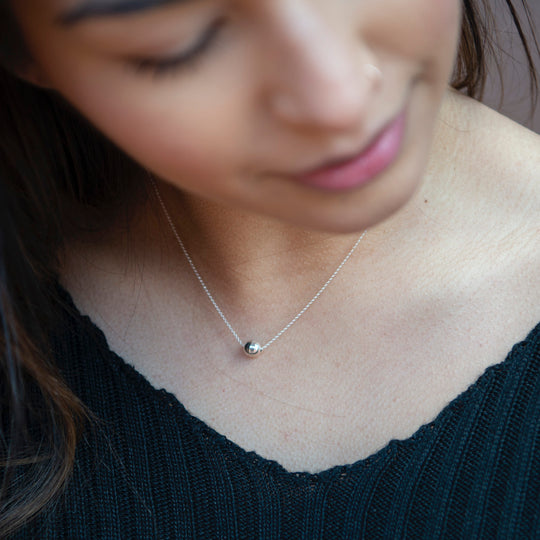
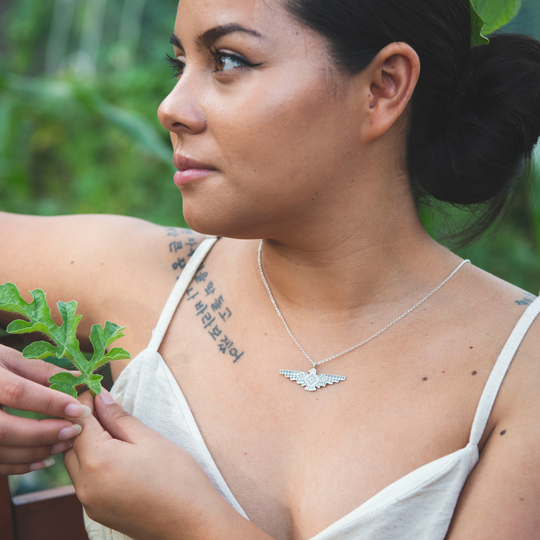
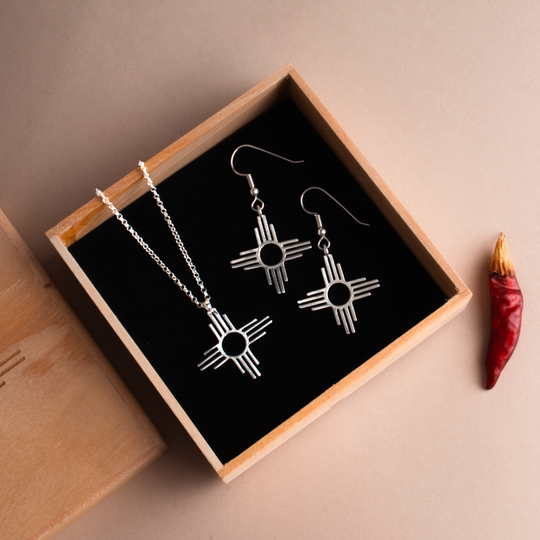
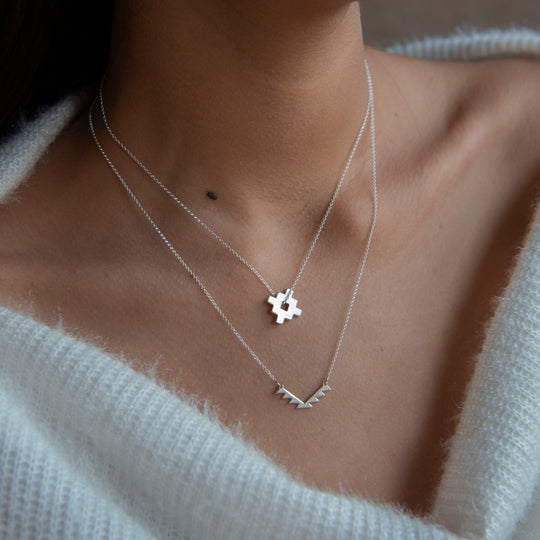
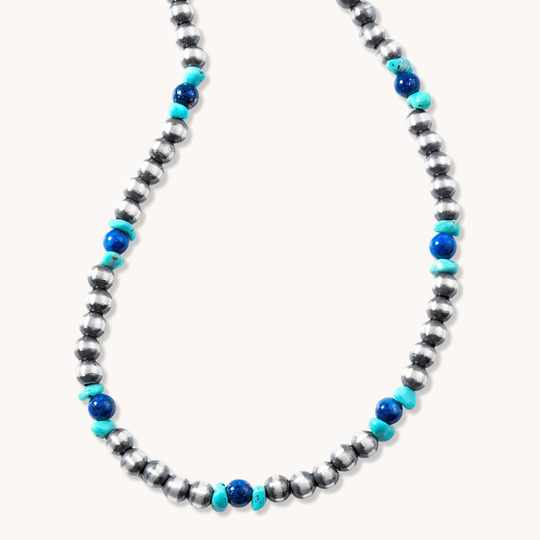
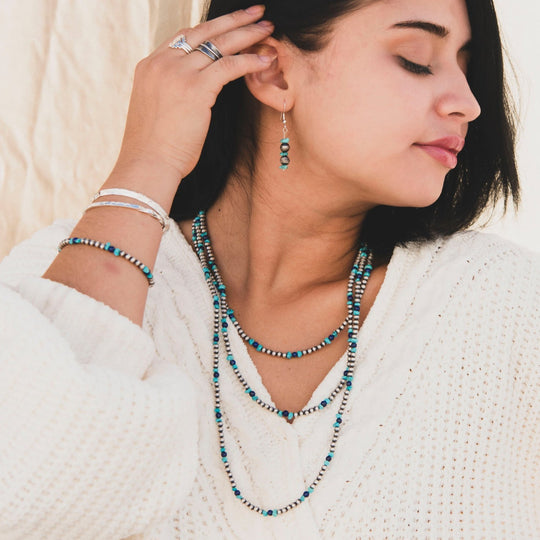
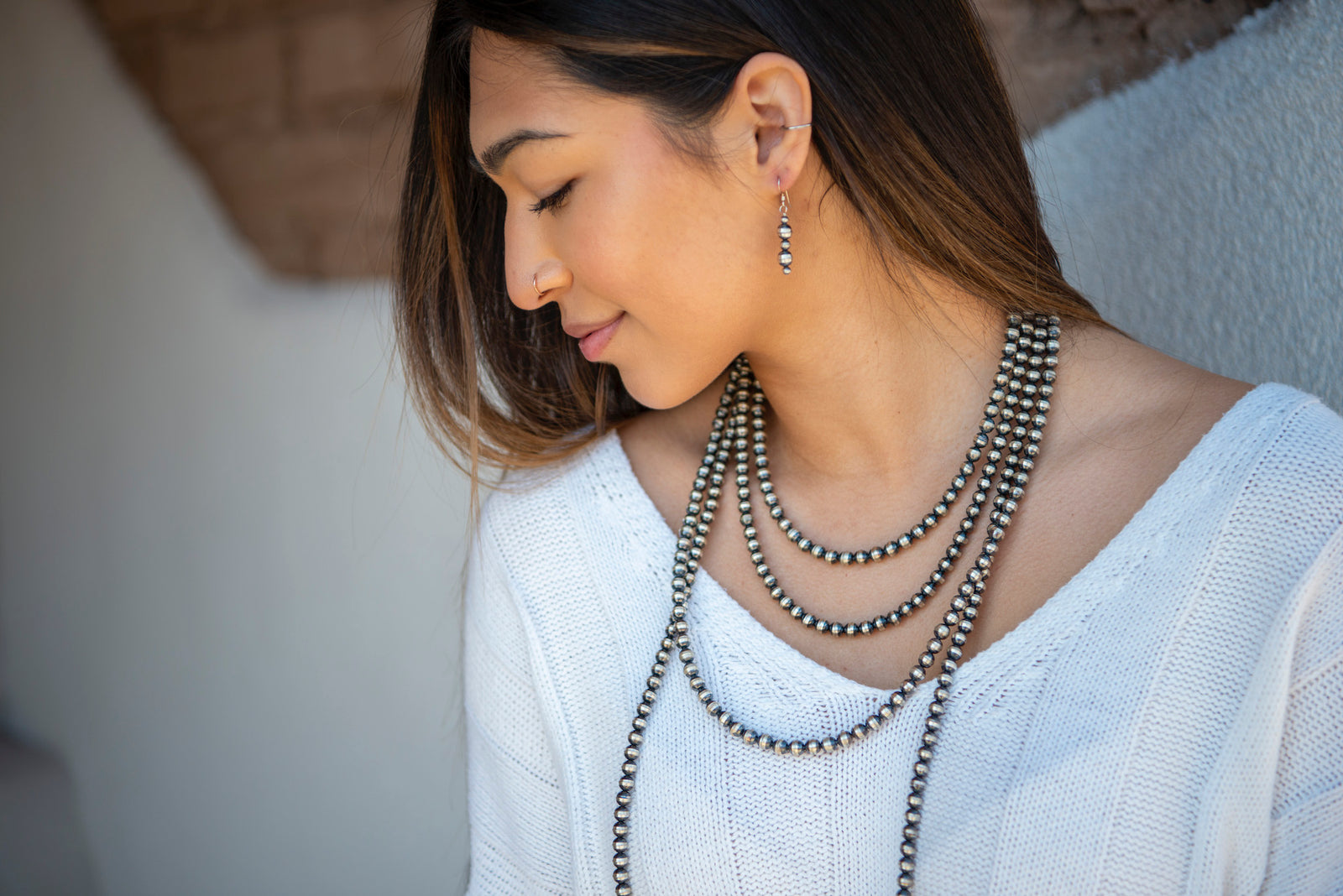
Beauty and beads combine in the creation of what are known as Navajo Pearls. Navajo Pearls are handmade beads of sterling silver. The way they are crafted means each bead is unique. Using mostly heavy gauge silver, the metal is melted, rolled out and cut into the desired length according to the design. After the holes are cut, they are sanded and polished before being used to create necklaces, earrings and other jewelry.


It is this careful, time-consuming process and the fact that no two of the beads are alike that makes Navajo Pearls so unique and so coveted. In this they are much like their namesakes. Their creation brings the ancient tradition of storytelling beads into the modern world. Their beauty brings an elegance to a piece of fine handcrafted jewelry that is hard to match.
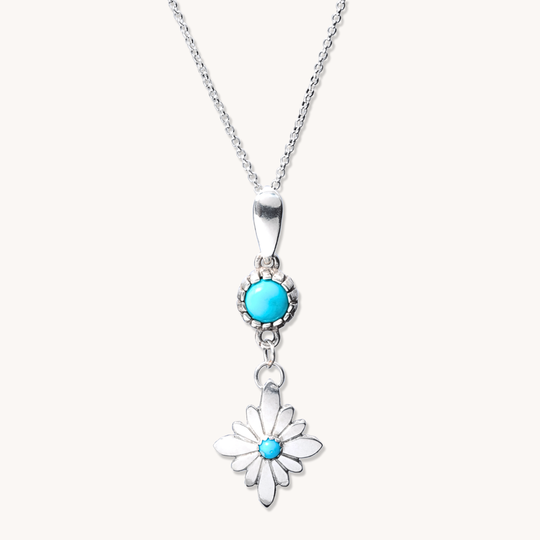
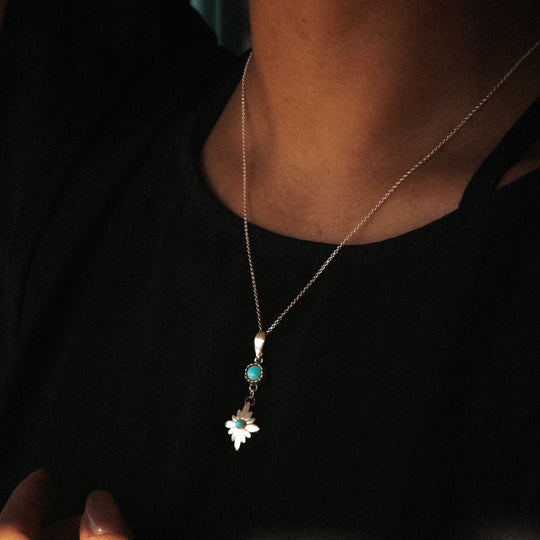
You can shop the Desert Blossom Collection by clicking here.
From the Library: Lund, Indian Jewelry: Fact and Fantasy (1976)
1976 primary source. Anything described as current here describes 1976, not today.
Lund (1976) on how hollow silver beads were made:
“There are three methods used for making hollow silver beads: Handmade, benchmade and machine-made.”
— Lund (1976), p. 123 [1]
According to Lund (1976, p. 123), a handmade bead began with two discs the smith cut from sheet silver, each domed by hand in a dapping block, its hole punched from the inside out, and the halves soldered together; a benchmade bead differed only in that the discs came pre-cut. [1]
The tell, as Lund (1976) put it:
“The single most obvious mark of a machine made bead is that the holes on both ends are punched by machine from the outside in.”
— Lund (1976), p. 126 [1]
Lund (1976, p. 126) added that by 1976 most new beads, whatever the method, were polished in a tumbling machine to a chrome-like shine, while older hand-polished beads had a patina like light pewter with tiny scratches from rubbing compounds. [1]
From the Library: Franciscan Fathers, An Ethnologic Dictionary of the Navaho Language (1910)
1910 primary source. Anything described as current here describes 1910, not today.
Writing in 1910, the Franciscan Fathers recorded one smith's method for hollow silver beads:
“The smith takes a Mexican silver dollar, or any other silver coin, and beats or hammers it out until it has the required thickness, or rather the desired thinness. This sheet of silver is placed upon an iron die, into which holes of various sizes have been made. These holes go all the way through the die and are slightly funnel-shaped.”
— Franciscan Fathers (1910), p. 278 [2]
The Franciscan Fathers (1910) went on:
“An iron punch, usually consisting of a bolt with one end rounded off hemispherically, is set square over one of the holes and struck with a hammer.”
— Franciscan Fathers (1910), p. 278 [2]
Once the half-beads were filed smooth and pierced, the Franciscan Fathers (1910) wrote,
“Two are then strung upon a wire, the concave sides are fitted together so as to form a globe, which is wrapped with some very thin wire, and the seam is then soldered with borax, saliva, and silver dust.”
— Franciscan Fathers (1910), p. 279 [2]
From the Library: Branson, Indian Jewelry Making, Vol. 1 (1977)
1977 primary source. Anything described as current here describes 1977, not today.
Branson (1977) traced the silver bead to the button:
“The silver beads were evidently evolved from two button halves soldered together to make a bead. The buttons were from Spanish clothing decoration.”
— Branson (1977), p. 37 [3]
Branson (1977, p. 39) noted that the melon bead was originally known as the melon seed bead, and that silver bead necklaces were usually strung on foxtail cord. [3]
Sources
- Lund, Marsha Mayer. Indian Jewelry: Fact and Fantasy. Boulder, CO: Paladin Press, 1976. Cited by printed page. Statements describe conditions as of 1976.
- Franciscan Fathers. An Ethnologic Dictionary of the Navaho Language. Saint Michaels, Arizona: The Franciscan Fathers, 1910. Public domain (U.S. publication before 1931). Cited by printed page. Statements describe conditions as of 1910.
- Branson, Oscar T. Indian Jewelry Making, Volume I. Tucson: Treasure Chest Publications, 1977. Cited by printed page. Statements describe conditions as of 1977.