



Authentic Native American Jewelry: How to Tell What You’re Buying
Most buyers ask one question: is it real? It is the right instinct pointed at the wrong target.
Authenticity here is two separate questions, and they are answered by two different laws.
The first is who made it. The federal Indian Arts and Crafts Act of 1990 makes it illegal to offer, display, or sell any art or craft product “in a manner that falsely suggests it is Indian produced, an Indian product, or the product of a particular Indian Tribe.” The standard is labor — not style, not materials, not a look. A design by a Native artist that someone else produces does not meet it, and neither does a piece worked by Native and non-Native hands together: the regulation is explicit that the labor component must be entirely Indian.
The second is what’s in it — and here the Act stops. Materials fall outside its scope; the Indian Arts and Crafts Board says plainly that “the use of materials, such as turquoise, in the production of Indian art or craftwork is not within the scope of the Act.” Those claims are governed elsewhere. Federal trade rules make it deceptive to call a piece handmade unless the entire shaping, forming, and finishing was done by hand, and they require disclosure when a stone has been treated. New Mexico goes further and requires the seller to disclose the materials in writing.
Two habits follow, and together they are our whole method. We name the maker and their nation rather than a category — Native American is a blanket term covering many distinct nations, each with its own traditions and rules about what may be depicted, and a piece belongs to the artist who made it, not to a demographic. And we cite: facts on our guide pages carry a book and a page.
Authenticity questions, answered
How can I tell if Native American jewelry is authentic?
Ask who made it, and get the answer in writing. Under the Indian Arts and Crafts Act the test is labor: a piece is an Indian product when Native hands did the artistic work. A seller who deals honestly can name the artist and their nation without hesitating. The Indian Arts and Crafts Board recommends asking for a written receipt listing the artist’s name and Tribal affiliation, the mine the turquoise came from, whether that stone is natural, stabilized, or treated, and the price, date, and business address of the sale. A seller who won’t put those in writing has told you something. (More on where to buy: How to Buy Authentic Native American Jewelry.)
How do I know if the turquoise is real?
Change the question. The Indian Arts and Crafts Board puts it directly: the question to ask is not whether turquoise is “real” but whether it is “natural.” Natural turquoise comes out of the ground and is cut and polished with nothing added — roughly 15% of the world’s supply. The other 85% is too soft to cut or polish as it comes, so it is stabilized, enhanced, oiled, dyed, or blocked. Treated turquoise is still turquoise; it is not a fake. But you are owed the disclosure, and federal trade rules require one when a treatment isn’t permanent, creates special care requirements, or significantly affects the stone’s value.
What does the Indian Arts and Crafts Act actually require?
It is a truth-in-marketing law, not a quality standard. It does not require that a piece be old, handmade, or good — only that no one sell it in a way that falsely suggests it was made by a Native artist or by a particular tribe. The bar is entirely Native labor. A design by a Native artist that non-Native hands produce does not clear it; neither does a necklace strung by a Native person from overseas-manufactured parts, though that may honestly be sold as “Indian assembled,” a different claim. Complaints go to the Indian Arts and Crafts Board at the U.S. Department of the Interior: 1-888-ART-FAKE.
Does “handmade” mean anything legally?
Yes, and it is stricter than most sellers assume. Federal trade rules make it deceptive to represent a product as handmade unless the entire shaping and forming of the product from raw materials, and its finishing and decoration, were accomplished by hand labor and manually-controlled methods. Raw materials there means sheet, wire, ingot, casting grain — stock not yet formed into parts. A piece built from pre-cast components can be hand-assembled and hand-finished honestly. It is not handmade. Ask which one you are looking at.
Is it legal to sell “Native American style” jewelry?
Yes — if it is labeled honestly. The Act prohibits marketing that falsely suggests Native production; it does not stop anyone from working in a style. The line is the suggestion. “Southwest traditional design” describes a design vocabulary and claims nothing about the maker. “Navajo-made” describes a specific person, and is either true and documentable or a federal violation. When a piece is a technique example rather than tradition-made, the honest move is to say so.
- Indian Arts and Crafts Board / Turquoise Museum consumer brochure (U.S. Dept. of the Interior).
- 25 CFR §309.2(d) and §309.7 — definition of an Indian product; “Indian assembled.”
- FTC Jewelry Guides, 16 CFR §23.2 (handmade) and §23.24 (treatment disclosure).
- Indian Arts and Crafts Act of 1990, Public Law 101-644.
“Indian” appears here only where federal law uses it.
Learning about Authentic Native American Jewelry and Art
The mission of Turquoise Skies is to help maintain the quality and authenticity of Native American jewelry and art. When collecting Native art, the quality and authenticity of the pieces is a priority. It is illegal to falsely sell replication Native style art and jewelry as authentic when it is not produced by legitimate Native artists. There are several great organizations out there that help fight fraud, however they can only do so much. We feel that it is a responsibility of the sellers and buyers to help keep the industry clean. By learning about the industry, art, and culture of the Native people we get a better understanding of what is quality and authentic. Turquoise Skies Inc. believes that it is a website’s responsibility to provide a wealth of free information to anyone who wishes to know more about Native art and culture.
Native American Industry Guides
The following is a set of informational resources related to Native art, jewelry and culture including: A jewelry and art buying guide, a guide to the handling and maintenance of authentic native art and jewelry, a visual guide to many of the Native American Tribes, a gemstone guide for precious stones and other natural materials used in making Native jewelry and art, a visual turquoise mine directory, a directory of known Native artist signature hallmarks, a directory of helpful organizations and groups in the Native arts and craft industry and a glossary of relevant terminology.
Buy with confidence — authenticity guides
Ready to buy? These guides help you shop with confidence: How to Buy Authentic Native American Jewelry · How to Spot Fake Native American Jewelry · What Native American Jewelry Is Worth · How to Tell Real Turquoise.


If you are thinking about buying Native American Jewelry online there are a few things that will make the shopping experience as accurate and enjoyable as possible. Here at Turquoise Skies, we would like everyone to be happy with their purchases by knowing that everything we sell is authentic and handmade by Native American artists. We strive to make sure the jewelry is accurately described, however not all online sellers will have the same respect. Before you get started, evaluate your ideal purchase and be sure to evaluate the seller or shop you are purchasing from. It is also important to educate yourself so some of the qualities of handmade Native American Jewelry and how if differs from mainstream mass produced jewelry. We feel that there are a few key questions to ask yourself before buying.
Before You Buy
Who are you buying for?
Are you buying a piece for yourself? Or is it going to be a gift for someone else? Jewelry is a direct reflection of personal taste and style. Buying the right piece of jewelry begins with knowing the person that is going to be wearing it.
What Size?
Much like a good pair of shoes, a piece of jewelry needs to fit its wearer. Generally, this really depends on the type of jewelry as necklaces and earrings are one size fits most, other items such as bracelets and rings can be more specific in the owner’s size.
When You Are Shopping
What determines the price?
The amount of money you are expecting to pay for the jewelry depends on many factors. The purity and rarity of the materials used to create the piece are huge factors. A small gemstone can range from a few dollars to a few thousand dollars depending on what type of stone it is. Is the jewelry machine made or handmade? Who was the artist that made it and what technique was used in its creation?
Is the jewelry authentic?
The Native American jewelry industry has become very popular in these modern times. Along with the popularity come those who try to exploit the industry for profit, it is important to be aware of this and how misrepresentations can be avoided. Only buy from reputable dealers and take the time to research the industry.
Frequently Asked Questions

All About the Zia Pueblo
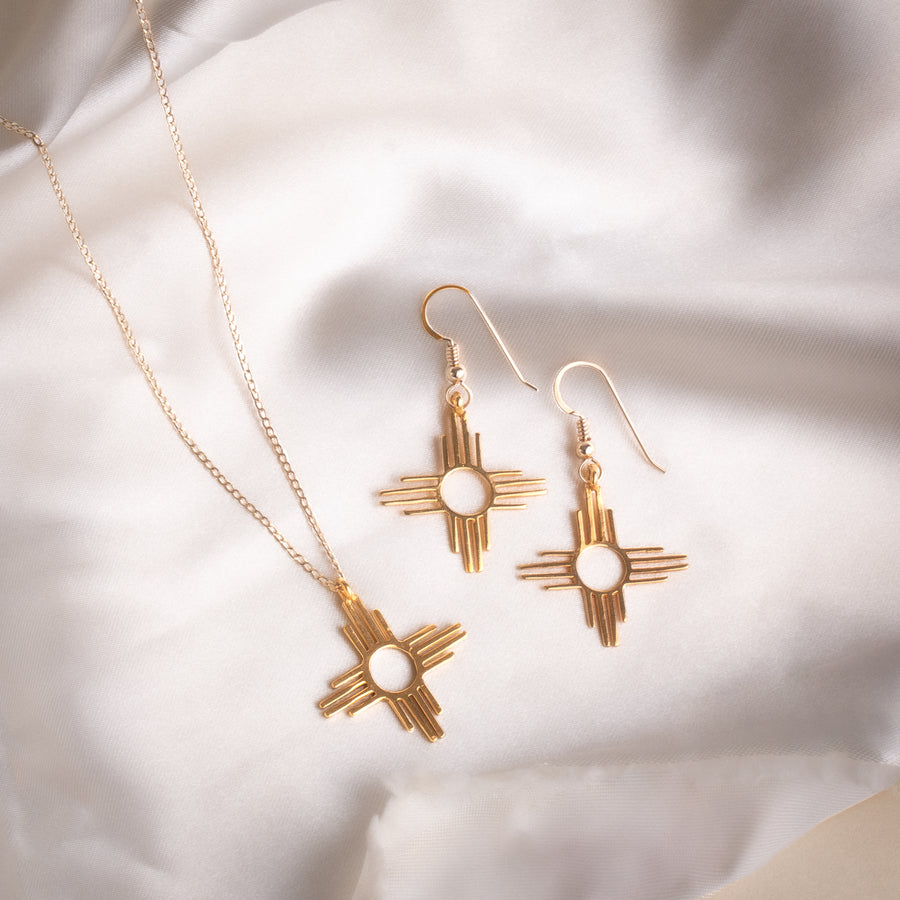
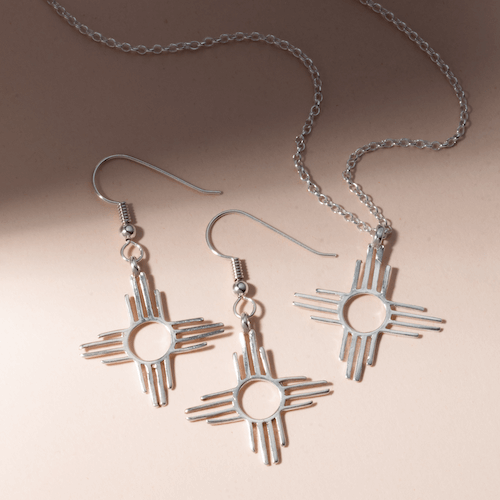
Zia Pueblo sits on the Jemez River, some thirty miles north of Albuquerque. The roots of this long-standing community run deep into the land around it, and the symbol of its people’s spiritual beliefs extend far across the state of New Mexico through the Zia Sun symbol. The state began using the Zia symbol on […]

What is Sovereignty?
There’s a saying that words have power. Often, however, words lose that power or have it corrupted by a lack of understanding of their true meaning. One such word is “sovereignty”. When it comes to the meaning and the practice of the concept of sovereignty for Native American tribes in the United States, there can […]

The Beauty of Cluster Jewelry
Though he admits he finds it a “little bit nerve-wracking”, Eric Joe loves creating pieces of handcrafted jewelry in the cluster style. He says “it’s just so pretty”. And it is indeed that. This style has a longstanding role in the world of Native American jewelry and rightly so. What is it? The name refers […]

Who Does Cultural Appropriation Hurt?
Culture is defined as “the characteristic features of everyday existence shared by people in a place or time.” For most of our history, culture has been seen as the way in which various groups of people define themselves among the diversity that exists in the world. Their collective history and the way in which they [...]

Rock Solid Wisdom with a Navajo Silversmith
“It’s all about asking the right questions.” That’s what Navajo silversmith George Francis tells me as he hands me a box of what appear to be arrowheads (photo #1). Then he tells me that these are indeed “Indian” arrowheads. Made in India. Without asking the right questions, someone who purchased them as authentic […]

What is Turquoise?
Turquoise Skies believes in the future of authentic, handcrafted Native American art. Our mission is to protect and preserve both the artists and the materials used to produce these treasured pieces. As a company, we believe it’s important to provide customers with accurate information on the history and culture of Native people, offer them access […]

Does Turquoise Change Color?
You may know that turquoise is found in a variety of colors, ranging from a white to dark navy blue to lime green. But did you know that turquoise can actually change color? Turquoise is a very porous and absorptive precious stone. When a turquoise stone is exposed to water, oils and other chemicals it […]

What is Turquoise Chalk?
Turquoise Chalk or Chalk Turquoise is not actually chalk; it is a form of low quality natural turquoise that has the consistency of common writing chalk. Chalk turquoise is the most abundant type of turquoise found in the earth. The best quality turquoise forms near the surface where the weathering, oxidation and pressure conditions are […]

Where Does Turquoise Come From?
Turquoise forms in arid regions, where rainwater filters through copper-rich soils and leaves deposits of hydrous phosphate of copper and aluminum in apertures in parent rock. As a result, major turquoise deposits generally occur in association with large copper deposits, and copper mining and turquoise harvesting often work hand-in-hand. Turquoise-producing regions have historically included northern […]

Who Were Fred Harvey and the Harvey Girls?
The coming of the railroad changed the landscape of the American West in many ways. With its exotic scenery, the West captured the imaginations of Easterners while the opportunity for business expansion fueled the dreams of entrepreneurs. Traveling by train meant Americans could literally move from sea to shining sea. While the ability to travel […]

What is Block Turquoise?
You may have heard this term block turquoise before when shopping for turquoise jewelry. If you are interested in buying turquoise jewelry, then it’s a good idea to know what it means! You must know what questions to ask. Did you know you shouldn’t ask the question “Is that real turquoise?” Because some dealers and […]

How to Care for Handcrafted Jewelry
Handcrafted jewelry is more than an adornment. Each piece is a work of art, created with the skill and vision of an individual who has invested the time and effort to learn the craft. Design and style reveal the depth of artistic vision. With vintage jewelry, it is important to know that patina can bring […]

Why Did the Stone Fall Out of My Jewelry?
Unfortunately, stones can fall out of vintage Native American jewelry pieces. If a stone feels loose in a setting or comes out entirely, this doesn’t mean the piece is broken or defective. In fact, this can show you that the jewelry is truly vintage handmade Native American! The crafting techniques used by authentic Native artists […]

The Price of Patina
Did you know that the tarnish on your old vintage Native American jewelry is actually very valuable? Metal jewelry develops a sheen called patina as it ages. Patina is caused by the oxidation of the metal when exposed to the air. So before you go cleaning your vintage jewelry, know that this darkened discoloration is […]

What is Turquoise Hardness?
What is Hardness? Hardness is not only the condition of being a hard solid but in mineralogy it is a measurement of scratch resistance. In other words how resistant a solid’s surface to being scratched relative to another solid. A hard mineral can scratch the surface of a softer mineral. A soft mineral is unable to […]

How to Find the Right Handcrafted Jewelry for You
Jewelry has adorned us further back than recorded history. Over the years it has been a way of announcing status, commitment and familial bonds. A beautiful ring, necklace, bracelet or other item is a surefire hit as a gift. But why wait for that piece you desire to come your way from someone else? Today […]

Turquoise Doppelgangers: Why Do Some Mines Look Alike?
As you may know turquoise stones are like snowflakes, no two are the same. When turquoise is pulled from the earth it has a unique fingerprint. This is caused by unique elements that affect the stone during formation, such as host rock composition, elevation, pressure and temperature. This causes the stones to display variations of […]

What is Natural Turquoise?
The idea of “natural” in the turquoise industry can be a little confusing. We often hear consumers and collectors ask if a piece of turquoise is real, if it is natural, or if it is imitation. What does that even mean? To start, I want to define some common terms. By definition, the term “natural” refers […]

Native American Jewelry: How to Buy with Certainty
“If you’re going to spend money on a piece, you’ll want to know what it is.” That’s the opinion of jeweler James Baldwin and it’s one most buyers likely share. Authenticity is an important part of a sale. Getting exactly what you want for the money you spend makes the whole deal sweeter. It is […]

What is Enhanced Turquoise?
Enhanced turquoise means that the stones have been treated to become better than the stone’s raw state. Most raw natural turquoise is a fairly brittle and porous material. The stone’s color can fade or change over time, and the stone itself is subject to cracking. High-grade turquoise stones don’t have many of these […]

Is Reconstituted Turquoise Real Turquoise?
At first glance, this looks like natural turquoise. But in reality this is reconstituted turquoise. It might have some real turquoise mixed in it during the making of it, but it is not considered natural. This type of turquoise is very common in the market, and it is also one of […]

Turquoise FAQs
How is Turquoise Formed? Naturally occurring minerals are separated into two categories: primary and secondary. Turquoise is a secondary mineral. Unlike base elements such as copper or silver, it forms over time. Two natural processes and reactions occur in order to form turquoise. Weathering sets the stage as water passes through rocks and minerals dissolve. Over […]

Tips for Maintaining Your Native American Jewelry
Authentic handmade Native American jewelry is valued for its unique beauty and hand craftsmanship. Because the jewelry is handmade, using natural materials, it may be more vulnerable to damage than the generic mass-produced jewelry found on the market. Here are 8 tips to consider for maintaining your authentic handmade jewelry: Avoid Water Avoid submerging jewelry in […]

What is Tufa?
Tufa (also called tuff) is a type of volcanic stone. Massive volcanic explosions send millions of tons of ash into the air, which then settles in layers downwind. Over a long time, these ash layers are compressed into tufa, a light and porous volcanic stone. Tufa has been used by humans for centuries as a […]