



Hopi Silvercraft Guild: History, Members & the Sun Mark
The Hopi Silvercraft Guild was formed in 1949 by Hopi men who had just finished a G.I.-funded silversmithing course for veterans (Wright 2003, p. 44; Bedinger 1973, p. 202). It gave them a shared workshop and a sales outlet, and it was also a school: in the words of Mark Bahti, who profiled working Hopi jewelers in Silver + Stone, it "trained generations of Hopi silversmiths until about 1992" (Bahti 2007, p. 152). One caution before anything else. Margaret Nickelson Wright, whose Hopi Silver is a full history and hallmark register of the craft, warns that "the names of Hopicrafts, a private business, and the Hopi Silvercraft Guild are easily confused" (Wright 2003, p. 46). They are two different organizations; Hopicrafts has its own entry.
In print it also appears as the Hopi Silvercraft Cooperative Guild and the Hopi Arts and Crafts Guild (Wright 2003, p. 44; Bahti 2007, p. 160); the Heard Museum library's 2024 authority file prefers "Hopi Arts and Crafts Silvercraft Cooperative Guild" (Heard Museum 2024).
Founding
It began with an exhibit. In the late summer of 1946, "Fred Kabotie and other villagers got together an exhibit of Hopi crafts" at Shungopavi; Willard Beatty, Director of Indian Education, attended, and the next day he "arranged for the G.I. training program for veterans to sponsor an eighteen-month silversmithing course for Hopi servicemen" (Wright 2003, p. 38). The program paid for the training and the tools, and "paid living expenses for the veteran and his family" (Wright 2003, p. 38).
"The classes started in February of 1947" (Wright 2003, p. 38). Paul Saufkie taught technique and Fred Kabotie taught design while also teaching art at Hopi High School in Kykotsmovi; the classes met at the school, then moved to a Quonset hut nearby (Wright 2003, p. 38). Margery Bedinger, whose 1973 Indian Silver surveys Navajo and Pueblo jewelers, counts "thirteen men, soon increasing to nineteen," and notes that "Students used copper to learn on, then silver as they became more competent" (Bedinger 1973, p. 202).
Graduation created the problem the Guild solved. The first class graduated in 1949, in January by Bedinger's account (Bedinger 1973, p. 202); "The subsistence payments to the men stopped at graduation, and they lacked any means of getting more silver to make into jewelry" (Wright 2003, p. 43). "With the help and encouragement of the Indian Arts and Crafts Board and the Hopi Government Agency, the Hopi Silvercraft Guild was formed in 1949," its stated purpose "'To produce, purchase, and sell handcrafts and to operate related activities'" (Wright 2003, p. 44). Through it the smiths borrowed $5,000 from the government for supplies and equipment (Wright 2003, p. 44).
A note on the date. 1947 is when the veterans' classes began, not when the Guild was formed. Every book in our library that dates the Guild gives 1949 (Wright 2003, pp. 44, 113; Bedinger 1973, p. 202; Bassman 1993, p. 2; Turnbaugh 2007, p. 62; Hougart 2022, p. 277).
Members worked in part of the Quonset hut, then took the whole building after the second veterans' class graduated on January 1, 1951 (Wright 2003, p. 44). "In 1962 ground was broken for a new guild building a mile northwest of the entrance to Shungopavi," with display and sales space as well as working space (Wright 2003, p. 45).
People
Bedinger records that the graduates chose "Bert Puhuey Estewa, president, and selected the Hopi sun shield as their trademark" (Bedinger 1973, p. 202). Fred Kabotie was elected secretary-treasurer, then was transferred to the Indian Arts and Crafts Board as the Guild's manager; his wife, Alice, took over as secretary-treasurer, and "In 1971 Kabotie retired as manager, but remained active in the guild" (Wright 2003, pp. 44–45). Theda Bassman puts it simply in The Beauty of Hopi Jewelry: the Kaboties "managed the Guild for more than twenty years" (Bassman 1993, p. 2). Bille Hougart, whose Native American and Southwestern Silver Hallmarks catalogues makers' and shop marks, calls Paul Saufkie "Co-founder of the Hopi Silver Craft Guild in 1949" (Hougart 2022, p. 277).
Ties to the Guild were never uniform. Some older smiths "had no connection with the organization," others worked for it full time, and others worked at home "with or without ties to the guild" (Wright 2003, p. 45). "The guild supplied the silver for all jewelry made under its auspices and these pieces were marketed by the guild rather than by the individual craftsmen. However, the pieces were identified and sold as each smith's own work" (Wright 2003, p. 45). Gerald Lomaventema described the arrangement to Bahti: "The Guild would issue us silver, subtract the cost as the finished work came in, and pay us" (Bahti 2007, pp. 96–98). Victor Coochwytewa was affiliated with the Guild "but marketed his silver individually as well, even selling it to Hopicraft for re-sale" (Wright 2003, p. 57).
Other smiths the sources place at the Guild:
- Wallie Sekayumptewa, "An early innovator in overlay technology" there in the late 1940s, G.I. class of 1949–1951 (Hougart 2022, p. 282).
- Lawrence Saufkie, who worked with the Guild in 1953 and adopted his bear hallmark there (Hougart 2020, p. 84).
- Michael Kabotie, who worked with the Guild on Second Mesa in the 1970s (Hougart 2022, p. 165).
- Farron Naka'waywisa, who joined the class the Guild started in 1991, learned from Charleston Lewis, Shannon Lamson and Steve Kuyvaya, and worked for the Guild until 1994 (Bahti 2007, pp. 120–121).
- Elmer Satala Jr., a member of the last graduating class (Bahti 2007, p. 152).
- Raymond Sequaptewa, about seven years at the Guild after his time at Hopicrafts (Bahti 2007, p. 160).
Marks and what to look for
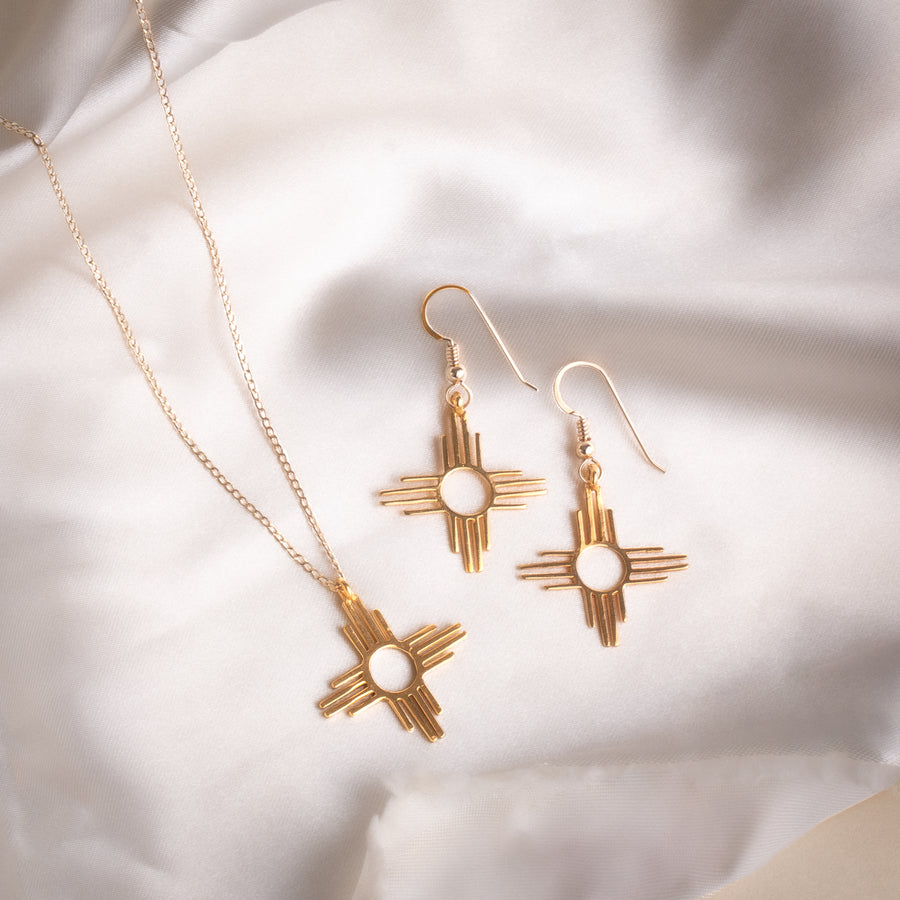
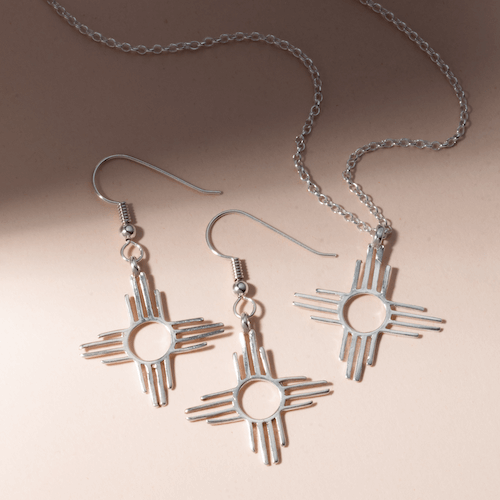
Wright is precise here: "Silver produced under Hopi Silvercraft Guild auspices is marked with its insignia, the sun symbol, as well as with the individual smith's mark" (Wright 2003, p. 69). Bedinger calls the same device the sun shield, and her caption for three 1949 bracelets in the Museum of Northern Arizona points to "the Hopi Guild symbol (sun shield) and the makers' marks" inside (Bedinger 1973, p. 203). Hougart lists the Guild's mark as "Sunface (various versions)" (Hougart 2022, p. 361). The stamps vary because "Each smith has his own Guild stamp. Consequently, none are exactly alike" (Wright 2003, p. 113).
Read the two marks for what each one says. The sun names the organization; the smith's own mark names the maker. Hallmarks themselves spread with this program: "Hallmarks became widely used on Hopi silver during the veterans' classes in 1949" (Wright 2003, p. 69), and Kabotie and Saufkie "encouraged each silversmith to design and use a hallmark, frequently based upon a clan symbol or using the smith's initials" (Bahti 2007, p. 136).
A missing sun does not settle anything. Because ties to the Guild came and went, "in the same time period one might buy jewelry with both the guild mark and the smith's stamp, as well as pieces with only the smith's mark" (Wright 2003, p. 69). Hougart records Paul Saufkie's own mark appearing with "no Hopi guild stamp--perhaps after he left the Guild" (Hougart 2022, p. 277). None of our sources describes the sun mark as a certificate of anything beyond Guild auspices.
The Guild as a school
"After the veterans' classes ended, new smiths learned their trade by working at the Hopi Guild" (Wright 2003, p. 71). Wright's register of Hopi smiths lists dozens who learned there, from Ted Wadsworth, who began in 1954, to Belvin Yuyaheova in 1991 and Kendrick Lomayestewa in 1992 (Wright 2003, pp. 80, 107, 108). Among them: Mark Lomayestewa, McBride Lomayestewa, Billie Ray Hawee, Vernon Mansfield, Willard Nuvayaouma, Bernard Dawahoya, Patrick Lomawaima, Norman Honie, Andrew Saufkie, Elliot Koinva, Marcus Lomayestewa, Dwayne Lomayestewa, Ruben Saufkie, George Phillips, Fermin Hawee and Del Fred Masawytewa (Wright 2003, pp. 80–112).
Satala's account of the last class shows how it worked. "There were eighteen in the class when we started, but only seven graduated"; at the end "They gave you a two-by-six sheet of silver to make a ring, bracelet, a pair of earrings, and pendants" (Bahti 2007, pp. 152–153). Bahti ties the end of the training, about 1992, to a mission "largely accomplished," with most new smiths "now learning from practicing silversmiths" (Bahti 2007, p. 152).
Wright's verdict: "Without it, the benefits of the veterans' classes would not have had such lasting effects" (Wright 2003, p. 46).
Each source dates its own "now." Bedinger wrote in 1973 that "The Hopi Silvercraft Guild continues to be active" (Bedinger 1973, p. 209). Wright's hallmark table, as of her 2003 revised edition, runs the Guild from 1949 to "present" (Wright 2003, p. 113). William and Sarah Turnbaugh's Indian Jewelry of the American Southwest (2007) described it as "a mecca for visitors" and "a major outlet for jewelry and other arts which Hopi artisans create" (Turnbaugh 2007, p. 63). Our sources don't record whether it still operates, trains or sells today.
From the Library: Stacey, Turquoise Blue Book and Indian Jewelry Digest (1975)
1975 primary source. Anything described as current here describes 1975, not today.
Jerry D. Jacka, writing in the 1975 Turquoise Blue Book, on who made Hopi overlay in 1975:
“The "Hopi Arts and Crafts Silvercraft Cooperative Guild" which was organized by Fred Kabotie and the "Hopi Crafts," which is owned by Wayne Sekaquaptewa and managed by Glen Lucas, utilize the services of several fine Hopi silversmiths.”
— Stacey (1975), p. 79 [9]
From the Library: Baxter, Encyclopedia of Native American Jewelry (2000)
2000 primary source. Anything described as current here describes 2000, not today.
Baxter (2000) dated the Guild differently:
“The Hopi Silvercraft Guild was started in 1947 on Second Mesa.”
— Baxter (2000), p. 64 [10]
Baxter (2000) named its first president:
“A new generation of artists studied in this program, including the first president of the soon-to-be established Hopi Silvercraft Cooperative Guild, Bert Puhuyestiwa (active from the 1950s).”
— Baxter (2000), p. 72 [10]
Of Southwestern guilds in general, Baxter (2000) wrote:
“Guild-produced jewelry in the Southwestern United States has been criticized for being conservative in its design.”
— Baxter (2000), p. 65 [10]
As of 2000, Baxter noted the market for marked pieces:
“Jewelry pieces with guild marks gather collector interest and high prices in the antique Indian arts market.”
— Baxter (2000), p. 65 [10]
From the Library: Schaaf, American Indian Jewelry I (2003)
2003 primary source. Anything described as current here describes 2003, not today.
Schaaf (2003, p. 120) named the Hopi Silvercraft Cooperative Guild as the teacher of Joe Coochyumptewa, a silver overlay smith at Mishongnovi active from about 1971 whose hallmark was a pipe. [11]
Schaaf (2003, p. 128) named the Hopi Silvercraft Cooperative Guild as the teacher of Steward Tewawina Dacawyma of Shungopavi, a nephew of Bernard Dawahoya, active in silver overlay from about 1976. [11]
Schaaf (2003, p. 131) named Ted Wadsworth and the Guild as the teachers of his son Donald Dawahongnewa, a silver overlay smith at Shungopavi. [11]
Schaaf (2003, p. 135) named the Guild as the teacher of Howard Dennis, Jr., a silver overlay smith and Kachina carver at Mishongnovi. [11]
Schaaf (2003, p. 155) named the Hopi Silvercraft Cooperative Guild as the teacher of Perry Fred of Shungopavi, a silver overlay smith active from 1988 who in turn taught his sister Caroline Fred and brother Sidney Sahneyah. [11]
Schaaf (2003, p. 159) named the Hopi Silvercraft Cooperative Guild as the teacher of Marian Gashwazra of Mishongnovi, a silver overlay smith active from 1990 and a daughter of Bradley Gashwazra. [11]
Schaaf (2003) wrote of Watson Honanie:
“Uncle Fred Kabotie was manager of the guild when Watson began his apprenticeship.”
— Schaaf (2003), p. 179 [11]
Schaaf (2003, p. 178) also named the Hopi Silvercraft Cooperative Guild as the teacher of Antone Honanie, a nephew of Aaron Honanie. [11]
Schaaf (2003, p. 198) named Paul Saufkie and Fred Kabotie of the Hopi Silvercraft Cooperative Guild as the teachers of Valjean Joshevema, Sr., active from 1948, and the Guild as the teacher of Guy Josytewa, active from 1988. [11]
Schaaf (2003) dated the change:
“Kabotie was elected secretary-treasurer and manager of the Hopi Silvercraft Cooperative Guild”
— Schaaf (2003), p. 200 [11]
Schaaf (2003) added:
“They retired in 1971, the year of construction for the Hopi Cultural Center and Motel which he planned”
— Schaaf (2003), p. 200 [11]
Schaaf (2003) wrote of Milland Lomakema, Sr.:
“For 18 years, he has served as the Executive Director of the Hopi Arts & Crafts Silvercraft Guild on Second Mesa”
— Schaaf (2003), p. 221 [11]
Schaaf (2003, p. 221) recorded that Cortez Lomahukva was taught by Paul Saufkie and Fred Kabotie at the Hopi Silvercrafts Cooperative Guild. [11]
Schaaf (2003, p. 210) recorded that Shannon Lamson learned at the Guild. [11]
Schaaf (2003, p. 238) recorded that Clifton Mowa, who used a quarter-sun hallmark, was taught at the Hopi Silvercraft Cooperative Guild. [11]
Schaaf (2003, p. 239) recorded that his brother Tim Mowa was also taught at the Guild. [11]
Schaaf (2003, p. 233) recorded that Gary Masawytewa learned at the Guild. [11]
Schaaf (2003, p. 240) recorded that Franklin Namingha, Sr., father of the overlay smiths Floyd and Fletchard Namingha, was taught at the Hopi Silvercraft Cooperative Guild. [11]
Schaaf (2003, p. 263) wrote that Bert Puhuyestiwa, one of the first GI Bill students of Paul Saufkie and Fred Kabotie, later taught classes at the Hopi Silvercraft Cooperative Guild. [11]
Schaaf (2003, p. 261) named Glen Lucas and the Guild as the teachers of the Hopi overlay smith Phil Poseyesva, active from about 1973. [11]
Schaaf (2003, p. 280) wrote that Paul Saufkie, Sr. and Fred Kabotie helped establish the Hopi Silvercraft Cooperative Guild on Second Mesa. [11]
Schaaf (2003, p. 300) named Paul Saufkie, Sr., Fred Kabotie and the Hopi Silvercraft Cooperative Guild as the teachers of the Hopi-Tewa smith Vernon Talas, active from about 1948. [11]
Schaaf (2003, p. 335) named Paul Saufkie, Sr., Fred Kabotie and the Hopi Silvercraft Cooperative Guild as the teachers of the Hopi smith Arthur Yowytewa, active from about 1948, father of Hubert and Earl Yowytewa. [11]
From the Library: Wright, Hopi Silver (2003)
2003 primary source. Anything described as current here describes 2003, not today.
According to Wright (2003, p. 44), the Hopi Silvercraft Guild was formed in 1949 with the help of the Indian Arts and Crafts Board and the Hopi agency, and through it the smiths borrowed $5,000 from the government to buy supplies and equipment. [1]
According to Wright (2003, p. 45), the Guild supplied the silver for all jewelry made under its auspices and marketed it, but each piece was identified and sold as its smith's own work. Some smiths worked for the Guild full time, others at home with or without ties to it. [1]
According to Wright (2003, p. 45), ground was broken in 1962 for a new Guild building a mile northwest of the entrance to Shungopavi, and the Hopi Cultural Center and Motel were built nearby in 1971. [1]
Field Notes by Mateo James
Our page dates the Guild to 1949, with every other book we cite. Baxter's 2000 encyclopedia gives 1947 (p. 64), the year the veterans' classes began, though on p. 72 she calls the Guild soon-to-be established while that class was studying. I've set her date beside ours.
A note on accuracy. We strive for accuracy, and this page is continuously updated with new information from the artists, their families, and the community. Corrections welcome.
← Back to the Southwest Jewelry Guide
Sources
- Wright, Margaret Nickelson. Hopi Silver: The History and Hallmarks of Hopi Silversmithing, revised edition, 2003. Pp. 38, 43–46, 57, 69, 71, 80–113.
- Bedinger, Margery. Indian Silver: Navajo and Pueblo Jewelers, 1973. Pp. 202–203, 209.
- Bahti, Mark. Silver + Stone: Profiles of American Indian Jewelers, 2007. Pp. 96–98, 120–121, 136, 152–153, 160.
- Turnbaugh, William A., and Sarah Peabody Turnbaugh. Indian Jewelry of the American Southwest, 2007. Pp. 62–63.
- Bassman, Theda. The Beauty of Hopi Jewelry, 1993. P. 2.
- Hougart, Bille. Native American and Southwestern Silver Hallmarks, 5th edition, 2022. Pp. 165, 277, 282, 361.
- Hougart, Bille. 100 Collectible Native American Silversmiths and Their Hallmarks, 2020. P. 84.
- Heard Museum, Billie Jane Baguley Library and Archives. Native American Artists Resource Collection thesaurus, generated August 30, 2024.
- Stacey, Joseph, ed. Turquoise Blue Book and Indian Jewelry Digest. Arizona Highways Collectors Series. Phoenix: Arizona Highways (Arizona Department of Transportation), 1975. Cited by printed page. Statements describe conditions as of 1975.
- Baxter, Paula A., with Allison Bird-Romero. Encyclopedia of Native American Jewelry: A Guide to History, People, and Terms. Phoenix: Oryx Press, 2000. Cited by printed page. Statements describe conditions as of 2000.
- Schaaf, Gregory, with Angie Yan Schaaf. American Indian Jewelry I: 1,200 Artist Biographies, ca. 1800-present. American Indian Art Series, Vol. 5. Santa Fe: CIAC Press, 2003. Cited by printed page. Statements describe conditions as of 2003.
Part of our Southwest Jewelry Business Directory.