



Gerald Lomaventema — Hopi Silversmith & His Mark
Gerald (Honwytewa) Lomaventema. Shungopavi, Second Mesa. The smith who teaches in Hopi.
Ask Gerald Lomaventema what makes a good piece of jewelry and he won't start with silver. "You have to make jewelry that makes sense," he tells his apprentices. "You have to make jewelry that has a meaning." He means it literally: he teaches his students in the Hopi language, because he believes the craft can't be separated from the culture that made it — and the culture rides on the words. His work carries that conviction into the metal.
The Smith
He was born into the Bear Clan of Shungopavi, on Second Mesa, and long worked under the name Gerald Honwytewa; Margaret Nickelson Wright's register of Hopi smiths lists him under that name, Bear clan, Shungopavi (Wright 2003, p. 98). Since 2005 he has worked as Lomaventema. Galleries often list him under both names to bridge the two eras of his work.
His first lesson came the way many do on the mesas: watching his father, Jerry Honwytewa, do overlay when he was a boy. The formal training came at nineteen, through the Hopi Silvercraft Cooperative Guild in Second Mesa. That Guild is worth knowing about — it was founded after World War II by Fred Kabotie and Paul Saufkie so that Hopi men coming home from military service could learn silvercraft and stay on the reservation for the year-round ceremonial cycle, instead of leaving for city work. It was cultural preservation built as a trade school. Kabotie, who co-developed the Hopi overlay technique itself, was Lomaventema's own great-uncle — a fact he says he only fully grasped later in life. He is a member of that original Co-op Guild, and a founding link to its successor, the Qwa-Holo Hopi Silvercraft Guild.
The Work
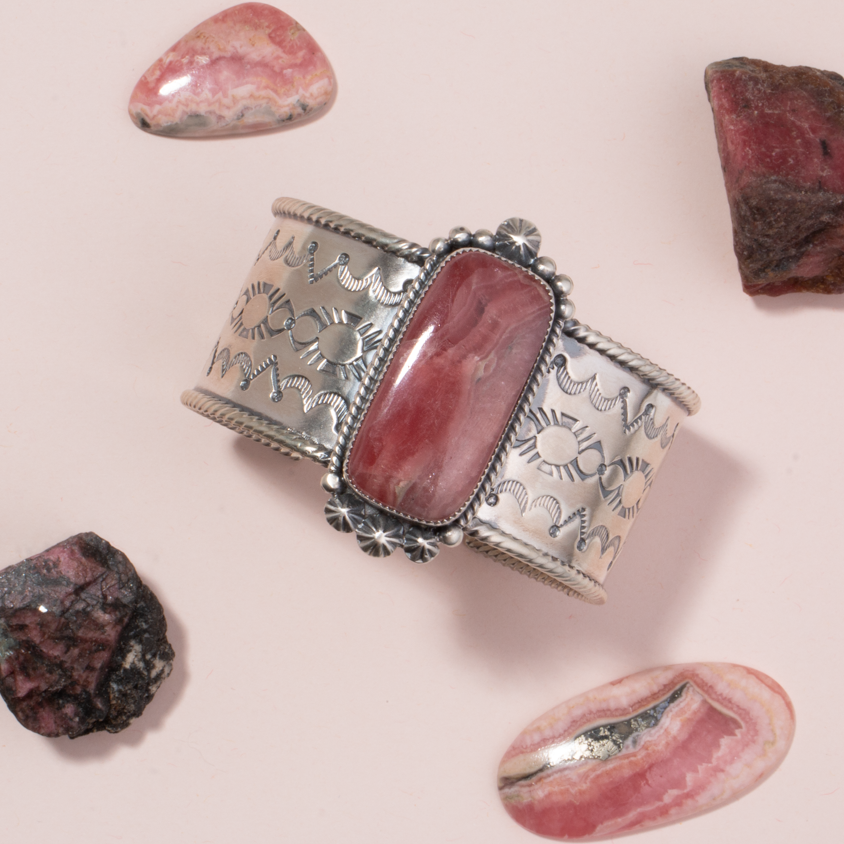
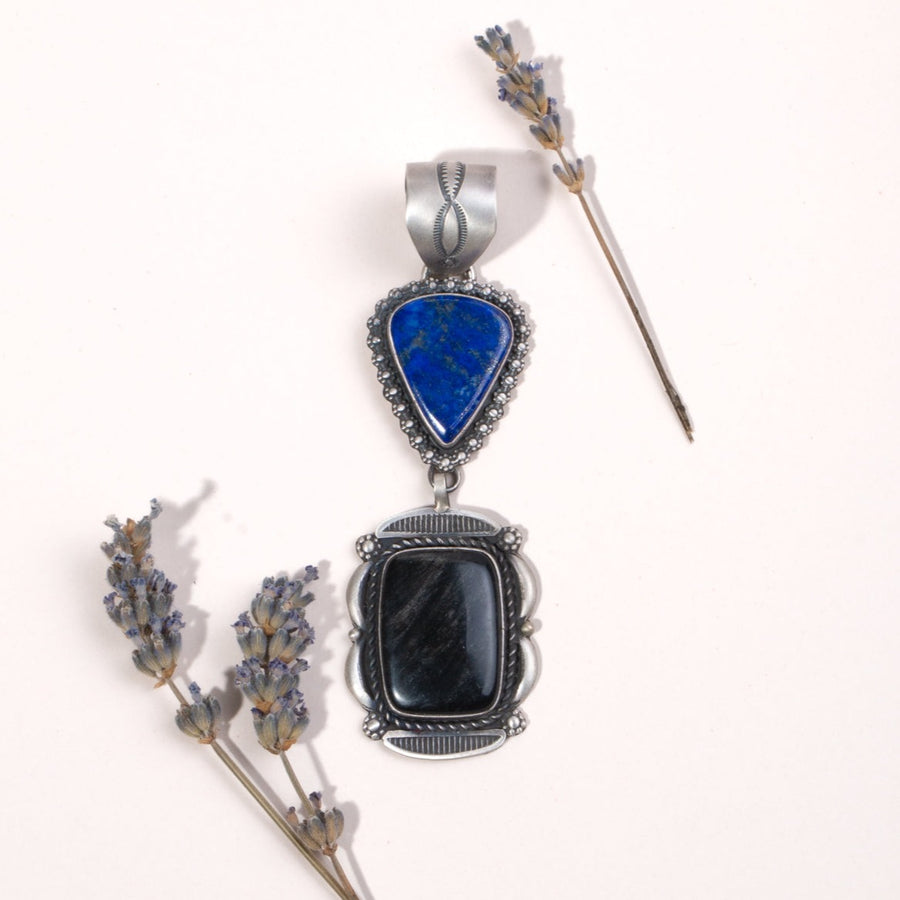
Lomaventema works traditional Hopi overlay — a design sawn from one sheet of silver and soldered over a second, the recessed background oxidized dark so the pattern reads sharp — and in 2001 he added tufa casting, using volcanic ash from the Hopi Reservation. He builds much of his own toolkit: dental instruments reground into fine steel "rakes" for texturing lines, the arch of a bowling ball used to bend a silver plate into a true curve. His bolo ties, concho belts, and cuffs, often accented with 14k gold and set with coral, ironwood, and turquoise, are recognizable enough that collectors say it on sight — "Oh, that's a Lomaventema."
His designs come from life on Second Mesa — kachina dances, nearby petroglyphs, corn planting, prayers for rain. We describe these as the sources he and his galleries name publicly, and leave their ceremonial meaning to Lomaventema and the Hopi people; some of what stands behind this work is kept private, as it should be.
The Standing
In 2014 Lomaventema won Best in Jewelry at Santa Fe Indian Market for a concho belt — the milestone win of his career in a famously fierce category — along with Best of Category at the Gallup Inter-Tribal Ceremonial that same year, and First Place at the Eiteljorg Museum Indian Market in 2013. In 2016 he received a Southwest Folklife Alliance Master-Apprentice Artist Award, which he spent on tools and materials for his own apprentices. He demonstrates regularly at the Museum of Northern Arizona's Hopi Heritage Festival and at Tucson Meet Yourself, and travels to the Hopi & Zuni Artist Show in Japan. But the work he seems proudest of is the teaching — the apprentices, in the language, carrying it forward.
Know more about Gerald? Contact T.Skies.
- Bahti, Mark. Silver + Stone: Profiles of American Indian Jewelers.
- That's a Lomaventema: A Hopi Silversmith on Making and Teaching — BorderLore (Southwest Folklife Alliance)
- Gerald Lomaventema, Jeweler — Southwest Folklife Alliance
- Gerald Lomaventema — Museum of Northern Arizona
- Gerald Lomaventema — Waddell Gallery
- Qwa-Holo Hopi Silvercraft Guild — Tucson Meet Yourself
From the Library: Bahti, Silver + Stone: Profiles of American Indian Jewelers (2007)
2007 primary source. Anything described as current here describes 2007, not today.
Speaking to Bahti (2007), Gerald Lomaventema recalled his training at the Hopi Guild:
“They started us on copper to practice. Not even a month later and I was already making silver jewelry for sale.”
— Bahti (2007), p. 98 [1]
According to Bahti (2007, p. 98), the Guild issued the trainees silver, subtracted its cost as finished work came in, and paid them; Gerald stayed nearly ten years and started out on his own in 1997. [1]
According to Bahti (2007, p. 98), in 2001 Gerald joined Roy Talahaftewa's Putavi Project (also called Grandmother's Dream), set up to help Hopi silversmiths learn new techniques; he learned sand-casting at a 2002 workshop given at Hopi by Steve LaRance, stonecutting from Talahaftewa, hollow-forming from Duane Maktima, and wax-carving from Phil Navasya. [1]
According to Bahti (2007, p. 99), Gerald generally drew each design first, often made a copper pattern of it, and then carved it into tuff for casting, even carving the bezels that hold his stones or inlay into the mold. [1]
According to Bahti (2007, p. 99), Gerald taught his wife to work silver; she began making chain in 2004. [1]
Field Notes by Mateo James
Our page dates Gerald's start in tufa casting to 2001, but in his own words to Bahti (2007) he places the sand-casting workshop that taught him in 2002, the year after he joined the Putavi Project in 2001. Where the account is the artist's own, as it is here, I take it as the stronger source.
Sources
- Bahti, Mark. Silver + Stone: Profiles of American Indian Jewelers. Tucson: Rio Nuevo Publishers, 2007. Cited by printed page. Statements describe conditions as of 2007.
- Wright, Margaret Nickelson. Hopi Silver: The History and Hallmarks of Hopi Silversmithing. Revised edition. Albuquerque: University of New Mexico Press, 2003. Originally published by Northland Publishing. Cited by printed page. Statements describe conditions as of 2003.
This profile is maintained in support of Native American silversmiths and compiled from published references. See something inaccurate, or want to add to it? Contact us.