


What is Tufa?

Tufa (also called tuff) is a type of volcanic stone. Massive volcanic explosions send millions of tons of ash into the air, which then settles in layers downwind. Over a long time, these ash layers are compressed into tufa, a light and porous volcanic stone. Tufa has been used by humans for centuries as a building material, including the Servian Wall of Rome. Tufa deposits are found all over the world. One of the largest tufa stone deposits in the world is the Bishop Tuff formation in California. The stone was formed from the ash plume of the Long Valley Caldera super-volcano. Being composed of consolidated volcanic ash, tufa is a soft stone and very easy to manipulate.
Tufa Use in Native Culture

In New Mexico, the Bandelier National Monument features a great example of tufa layers. The Bandelier deposit was created from the Valles Caldera super-volcano eruption, 1.14 million years ago. Ancestral Puebloan peoples settled in the canyon and dug dwellings into the soft tufa canyon walls. Tufa has been used as building blocks for more modern Pueblos due to how easy it is to cut and transport. See more here
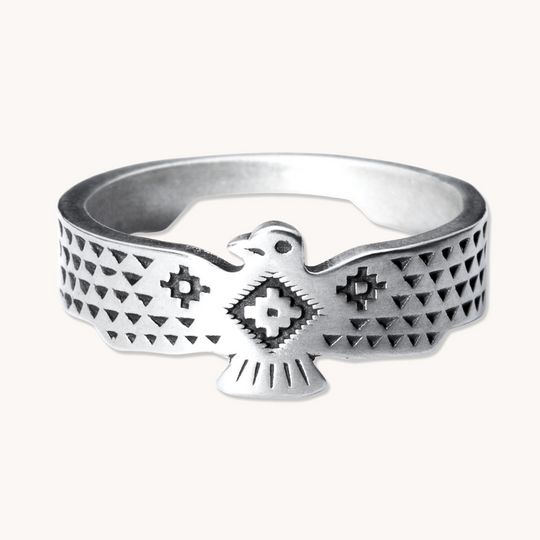
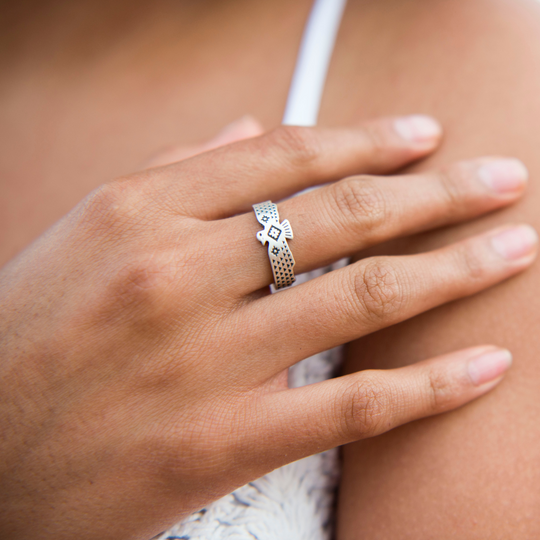
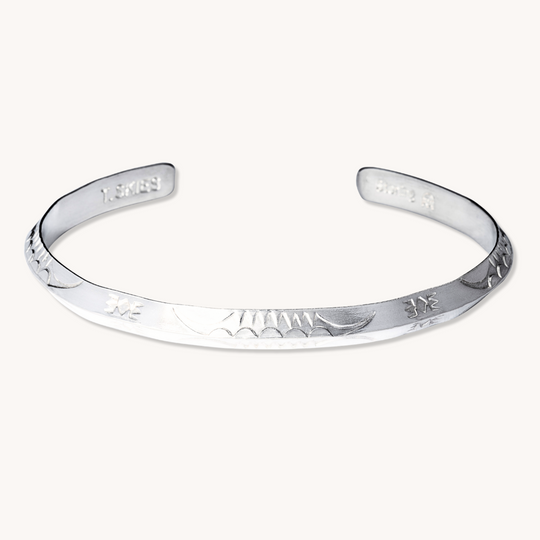
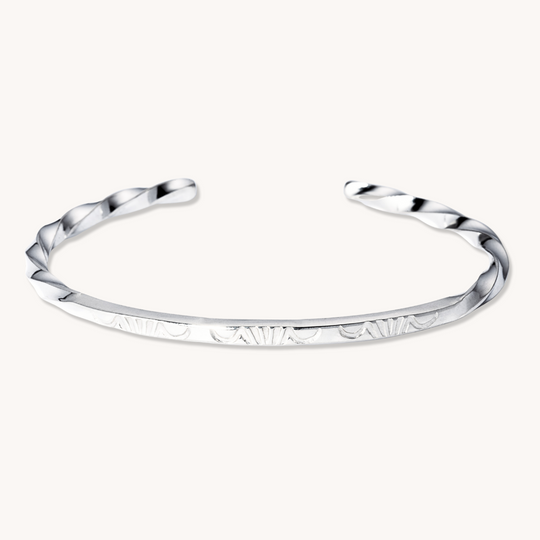
Tufa stone has been used in Native American jewelry since the mid 1800’s. Native silversmiths found tufa stone to be the perfect vessel for molten silver casting. The stone is soft enough to carve designs into with simple iron tools. Yet it is very resistant to heat, which makes tufa an ideal stone for a casting mold. After the design is complete, the tufa block is tied to a flat sandstone brick and the molten metal is carefully poured.
The tufa stone is fragile and will usually only hold the design shape for one casting. Many modern Native silversmiths, such as Aaron Anderson, sell the original tufa casting block along with the piece. This proves that each piece of cast jewelry is one-of-a-kind, never to be reproduced.
Caring for your Tufa Block

Tufa blocks are soft and fragile. The stones are also porous and will absorb skin oils over time. Take these precautions to ensure that the tufa block remains an unbroken, treasured piece of your collection:
- DO take care in handling the tufa block, and hold in the center of the stone to limit shearing pressures.
- DO wash your hands before handling the tufa block, and limit how much you touch it. Tufa is porous and absorbed skin oil may cause discoloration.
- DO NOT ever wash the stone, or submerge it in liquid. Tufa stone is porous and will absorb fluid, which will weaken the structure.
- DO NOT worry about small amounts of tufa dust. This will fall off naturally over time. Excessive handling will cause more erosion, however.
Shipping Tufa Blocks
These tufa block pieces are a valuable and important part of the story for any cast jewelry piece. Turquoise Skies takes the utmost care in delivering the blocks safely. We encase the tufa block in bubble wrap, pack the block into a hard plastic container, and then package the container into a larger cardboard shipping box. This method protects the block from the dangers of shipping, even internationally.
From the Library: Schiffer, Indian Jewelry on the Market (1996)
1996 primary source. Anything described as current here describes 1996, not today.
Writing in 1996, Schiffer described the Navajo casting method:
“Sand casting is accomplished by carving a piece of sandstone or volcanic tuff to form a hollow space.”
— Schiffer (1996), p. 25 [1]
Schiffer (1996) continued:
“Then, a different piece of stone is clamped to the back of the cut stone to make a mold and molten silver is poured into the mold through one of the ports left open for the escaping air.”
— Schiffer (1996), p. 25 [1]
From the Library: Adair, The Navajo and Pueblo Silversmiths (1944)
1944 primary source. Anything described as current here describes 1944, not today.
In the late 1930s, Adair (1944) recorded where Navajo smiths got their casting stone:
“There are a number of places on the reservation where this tuff may be obtained, but the finest of it comes from this region and from around Ganado.”
— Adair (1944), p. 63 [2]
According to Adair (1944, p. 64), Tom Burnsides trimmed two blocks of tuff to the same size, one to carry the design and one to serve as the lid, smoothed one face of each with a knife and a file, and rubbed the two faces together until they fitted perfectly, about half an hour's work before any carving began. [2]
From the Library: Baxter, Encyclopedia of Native American Jewelry (2000)
2000 primary source. Anything described as current here describes 2000, not today.
Baxter (2000) on what tufa replaced:
“Early silversmiths abandoned other casting techniques, such as the use of cuttlefish bone (the hard calcified shell of the cuttlefish mollusk) in favor of tufa and the facility with which it can be worked.”
— Baxter (2000), p. 181 [3]
Baxter (2000) on the finish it gives:
“Sometimes the porous quality of the tufa mold can create a slightly different texture and sheen on a cast piece.”
— Baxter (2000), p. 181 [3]
Sources
- Schiffer, Peter N. Indian Jewelry on the Market. Text and photography by Peter N. Schiffer. Atglen, PA: Schiffer Publishing Ltd., 1996. Cited by printed page. Statements describe conditions as of 1996.
- Adair, John. The Navajo and Pueblo Silversmiths. The Civilization of the American Indian Series. Norman: University of Oklahoma Press, 1944. Cited by printed page. Statements describe conditions as of 1944.
- Baxter, Paula A., with Allison Bird-Romero. Encyclopedia of Native American Jewelry: A Guide to History, People, and Terms. Phoenix: Oryx Press, 2000. Cited by printed page. Statements describe conditions as of 2000.