



The Meaning of Native American Jewelry Symbols: Ancestral Echoes in Silver and Stone

What if the silver resting against your skin isn't just an ornament, but a rhythmic, visual prayer that connects you to the earth and the ancestors? Many people are drawn to the desert's artistry but fear accidentally misrepresenting a culture that isn't their own. You've likely felt that pull of the soul when looking at a turquoise ring, yet wondered about the true meaning of Native American jewelry symbols. It's more than a design choice. It's a language of the spirit.
You want to wear these pieces with respect, not just for their beauty, but for the stories they carry. It's confusing when mass-produced imitations flood the market, making it hard to find the heartbeat of authentic craftsmanship. We promise to help you navigate this sacred landscape. You'll gain the knowledge to distinguish genuine motifs from empty patterns, ensuring your collection is a true vessel of tradition.
We'll dive into the profound narratives woven into silver and stone. From the spiritual connection between turquoise and the endless sky to the universal harmony found in Zia pendants, you'll learn to read the symbols of the Southwest. We'll also cover the protections of the Indian Arts and Crafts Act; this ensures you can buy with confidence and honor the artisans who keep these ancestral echoes alive.
Key Takeaways
- Visual Storytelling: Learn how every silver stamp serves as a living language, carrying the rhythmic prayers of the ancestors.
- The Zia: Discover how this sacred symbol represents universal harmony through its connection to the four directions and stages of life.
- Spiritual Guides: Explore the meaning of Native American jewelry symbols like the Bear and Thunderbird to invite protection and wisdom into your daily journey.
- Elemental Links: Uncover the significance of the Spiral and Feather as they bridge the gap between the physical earth and the divine spirit.
- Mindful Stewardship: Gain the knowledge needed to identify authentic, artisan-led creations that respect and preserve cultural heritage.
The Visual Language of the Southwest: More Than Ornamentation
To understand the artistry of the high desert, one must look beyond the surface shine. For the Navajo, Hopi, and Pueblo peoples, Native American jewelry serves as a living visual language. It's a way to speak without words, a rhythmic dialogue between the maker and the wearer. Silversmithing became a medium for ancestral storytelling in the mid-19th century, transforming raw metal into a canvas for history. While the specific meaning of Native American jewelry symbols can vary between tribes, they share a universal heartbeat. The artisan enters into a sacred relationship with the silver and the spirit of the stone, ensuring every piece is a vessel of tradition rather than a mere accessory.
- Ancestral Continuity: Designs passed through generations to keep oral histories alive.
- Elemental Respect: Motifs that honor the rain, the sun, and the shifting desert sands.
- Spiritual Protection: Symbols intended to guard the wearer’s spirit on their life journey.
- Tribal Identity: Subtle variations in technique that distinguish Navajo smithing from Pueblo lapidary work.
The Silent Dialogue of Silver
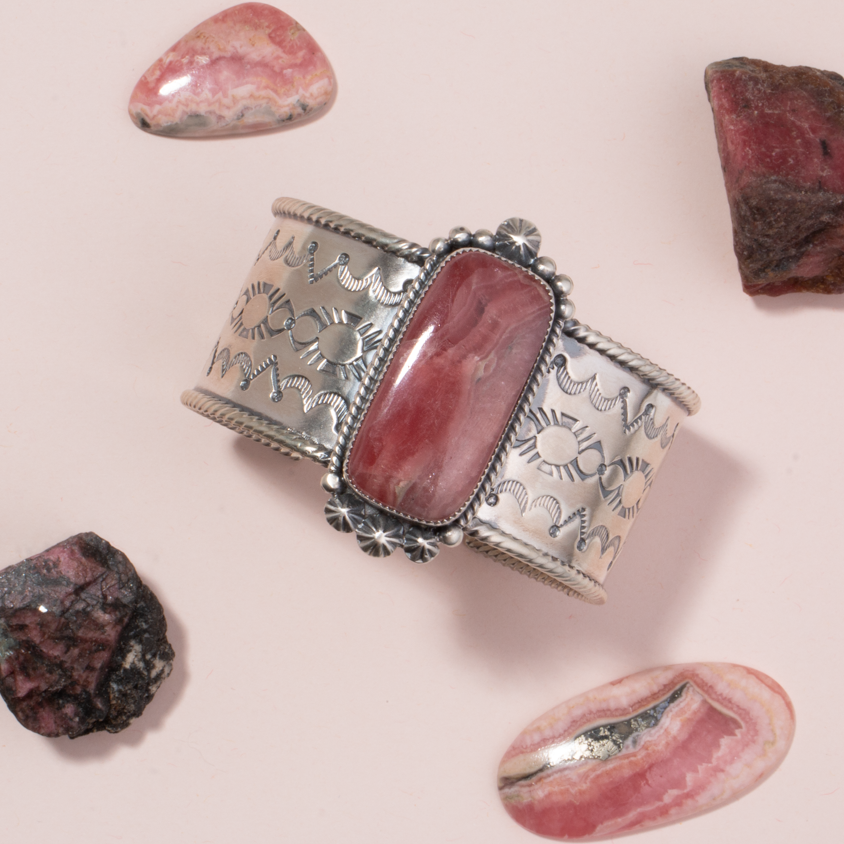
Every mark on a piece of jewelry is a deliberate choice. Traditional techniques like stamping involve hand-carved steel tools that press a narrative into the metal. Overlay, a technique often associated with the Hopi, uses two layers of silver to create intricate shadows and depth through negative space. There's a deep intentionality in every artisan-crafted strike. The smith isn't just making a pattern; they're capturing a feeling. Native American jewelry symbols are ancestral echoes bound in silver. This process ensures that no two pieces are identical, as each one carries the specific energy of the moment it was forged. When you hold a handcrafted piece, you're feeling the weight of that focused attention.
Turquoise: The Sky Stone Connection
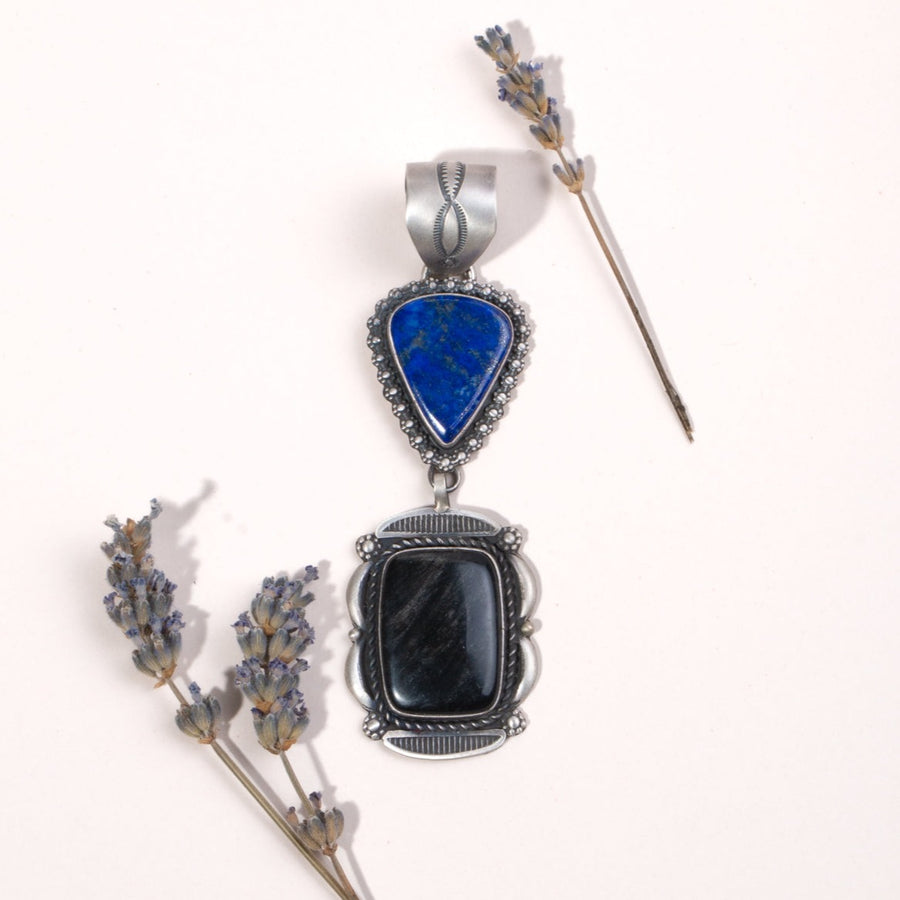
Turquoise is the soul of Southwest jewelry. Often called the "Sky Stone," it acts as a symbolic bridge between heaven and earth. Its presence in a piece isn't just for color; it's a prayer for protection, health, and abundance. Many artisans pair turquoise with specific symbols like the Zia or the Bear to amplify these protective qualities. This sacred stone mirrors the shifting colors of the desert horizon, reminding the wearer of their place within the natural world. You can explore this deeper in The Sacred Song of Turquoise Jewelry, where the spiritual resonance of this vibrant stone unfolds. It's a connection that transcends time, linking the modern world back to the ancient roots of the land.
Celestial Guidance: The Zia and the Sacred Sun
The sun is more than a physical presence in the high desert. It's the ultimate giver of life and warmth. In the vast stretches of the Southwest, the sun is a golden anchor. Ancient cultures watched the horizon with a deep, quiet respect. This reverence is often captured in silver, holding the light that feeds the earth and the spirit. Understanding the meaning of Native American jewelry symbols begins with this celestial source. It's a recognition of the energy that flows through all living things.
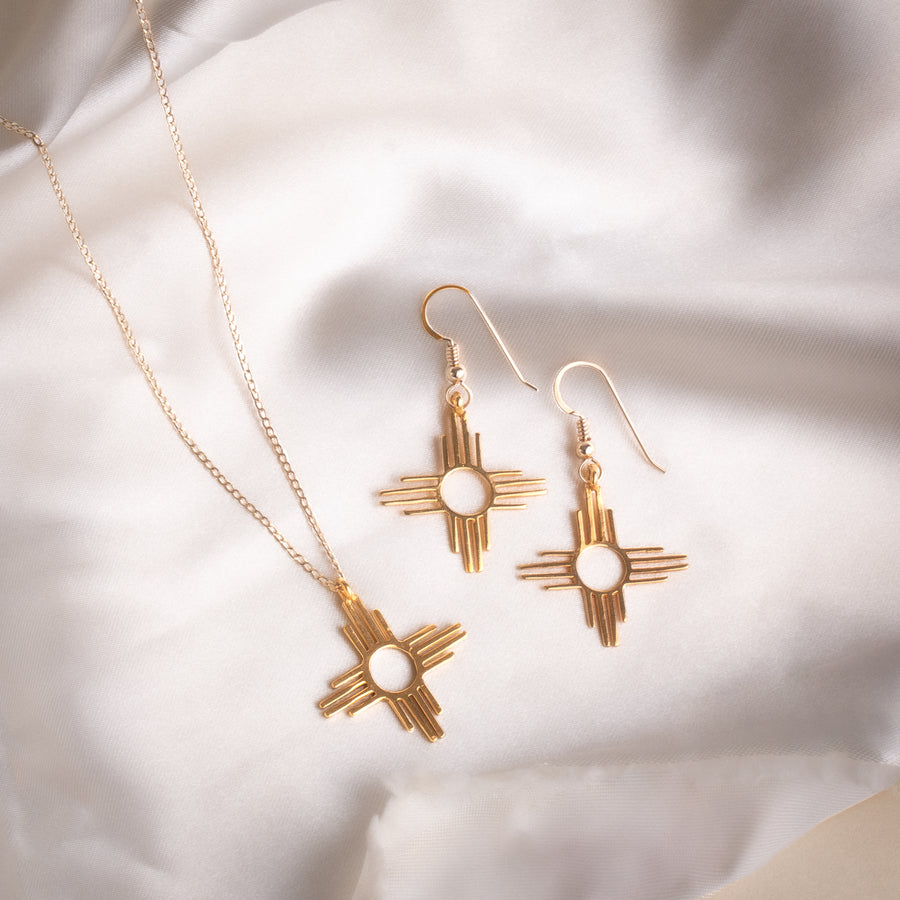
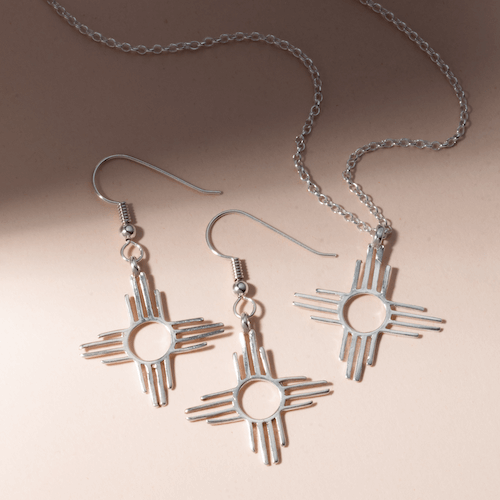
A central circle binds these elements together. It represents the eternal cycle of life, where there's no beginning and no end. This sacred geometry suggests that everything in the universe is connected. Zia pendants are considered symbols of universal harmony and balance. They remind the wearer to walk a path of peace and intentionality, honoring the rhythm of the natural world.
The Zia Symbol: A Legacy of the Four Directions
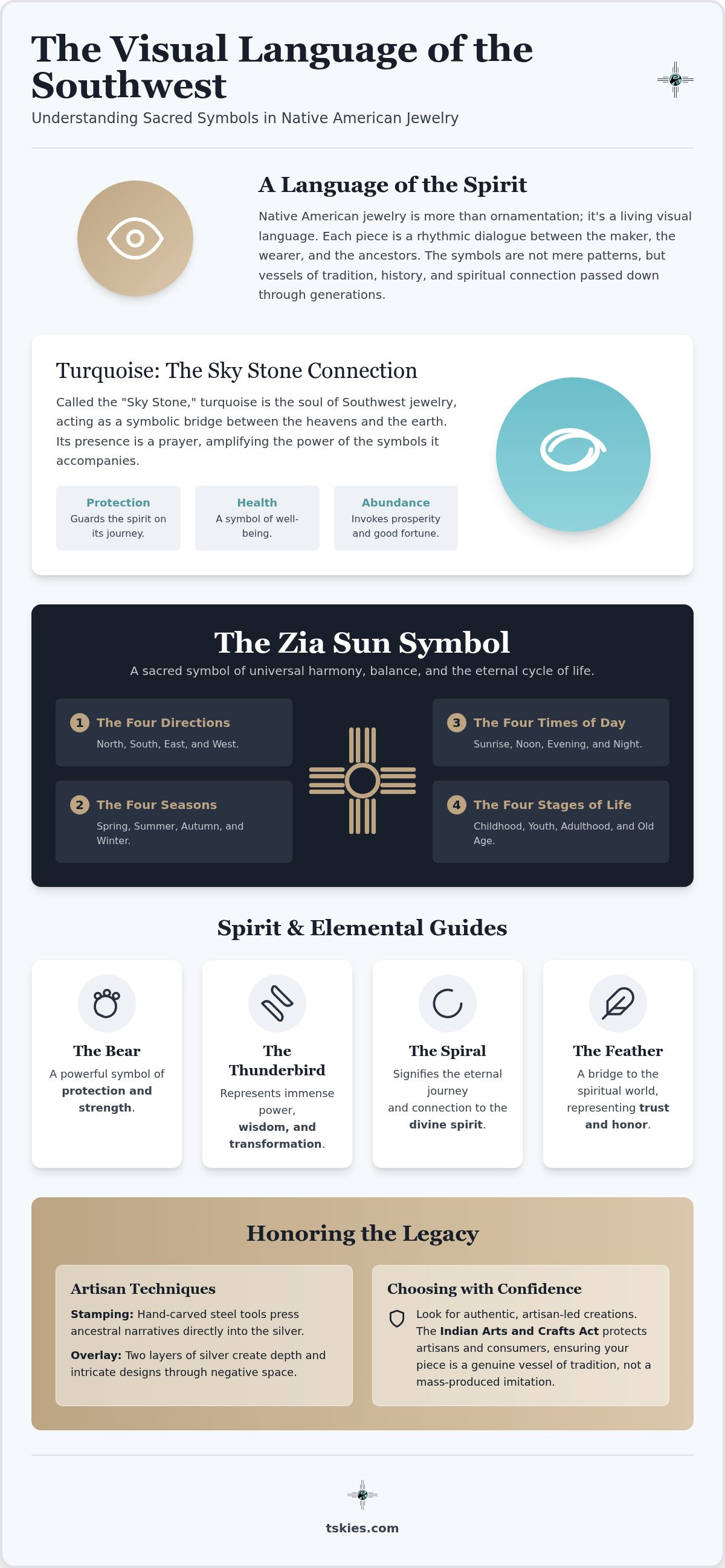
The Zia sun symbol is a masterclass in spiritual balance. It's not a mere pattern; it's a philosophy of living. Four groups of four rays radiate from the center. Each group carries a specific weight and purpose. They represent the four directions: North, South, East, and West. They also signify the four seasons and the four times of day. Most profoundly, they mirror the stages of life: childhood, youth, adulthood, and old age. This symbol represents a lifelong commitment to the earth and the community. When you wear one of our handcrafted Zia pendants, you carry a visual prayer for a life lived with a pure heart and a clear mind.
Stars and the Night Sky
When the sun dips below the mesa, the dialogue with the heavens continues. The night sky is a vast, sparkling map for the soul. In Navajo jewelry, star motifs often act as guides. They represent the infinite nature of the universe and our place within it. Silversmiths use the metal's natural luster to mimic the soft light of the moon against the desert floor. This interplay of light and shadow creates a sense of profound peace. Understanding the deeper meaning of Native American jewelry symbols allows us to appreciate how these celestial patterns anchor the wearer to the timeless beauty of the heavens. These designs aren't just decorative. They're witnesses to the stories of the ancestors, shining through the silver like the stars themselves.
Animal Spirit Guides: Power, Protection, and Wisdom
The desert isn't just a landscape; it's a living, breathing community. For the Navajo and Pueblo peoples, animals aren't just subjects for art. They're teachers. They're guardians. When you explore the meaning of Native American jewelry symbols, you find that each creature offers a specific medicine for the soul. These motifs transform a simple piece of silver into a source of strength or a guide for transformation. Each carving is a visual prayer, inviting the spirit of the wild to walk beside the wearer.
While the New Mexico Secretary of State on the Zia Symbol highlights the four-fold harmony of the universe, animal guides represent the specific roles we play within that balance. The Turtle, for instance, carries the weight of the world on its back. It represents longevity, persistence, and a deep, unshakeable connection to Mother Earth. In contrast, the Butterfly flits through the air. It symbolizes the lightness of being and the beauty of personal transformation. These creatures remind us that every living thing has a purpose in the great cycle of the Southwest.
The Bear and the Heartline
The Bear is a sovereign of the mountains, a symbol of inner strength and healing. In many pieces of Navajo jewelry, you'll see a distinct arrow reaching from the bear's mouth toward its center. This is the heartline. It represents the breath of life and the direct path to the animal's soul. Wearing the bear provides a sense of quiet confidence and protection for the home. This is why bear motifs remain a favorite in handcrafted sterling silver bracelets and rings. They serve as a physical reminder of one's own resilience and the transformative power of nature during times of quiet reflection.
The Thunderbird: Bringer of Rain
In the arid high desert, rain is life. The Thunderbird is the majestic messenger that calls the clouds. It's often depicted with wings made of lightning and eyes that flash like fire. This isn't just a bird; it's a symbol of immense spiritual power and leadership. It bridges the gap between the people and the Great Spirit, carrying prayers upward and bringing life-giving moisture down. For those who wear it, the Thunderbird represents the ability to overcome challenges and the authority to lead with wisdom. Understanding the meaning of Native American jewelry symbols like the Thunderbird helps us appreciate the deep reverence these cultures hold for the elements that sustain us all.
Symbols of the Earth: The Spiral, the Feather, and the Arrow
The desert floor is a storyteller. Every stone and shifting dune carries a memory of those who walked here before. When we look at the meaning of Native American jewelry symbols, we find a deep reflection of the physical world. These motifs aren't just shapes; they're anchors. They ground the wearer to the soil, the wind, and the precious water that sustains life in an arid landscape. To wear these symbols is to acknowledge your place within the vast, elemental beauty of the Southwest.
The Arrow serves as a symbol of protection and direction. It represents the focused intent of the hunter and the quiet vigilance of the guardian. In the silence of the mesa, an arrow is a visual commitment to a specific path and a clear mind. Similarly, the Water or Wave motif highlights the absolute sanctity of moisture. In a land where rain is a rare blessing, these flowing lines are a constant prayer for abundance. They remind us that life is a gift from the clouds, flowing through the canyons and into the soul of the people.
The Path of the Spiral
The spiral is a map of spiritual growth. It tracks the eternal journey of life and the ancient migration of people across the continent. Unlike a circle, which returns to its start, the spiral expands outward. It connects the wearer to the rhythmic patterns of the cosmos, mirroring the shapes of galaxies and the curve of a seashell. The spiral is the wind’s breath caught in silver. It reminds us that time is cyclical, and every step forward is also a step deeper into our own history. This motif is a powerful reminder that our personal journeys are part of a much larger, ancestral migration.
Feathers as Sacred Messengers
Feathers are treated with a quiet, profound reverence. They're a sacred link to the divine, acting as a bridge between the earth and the sky. In Southwest jewelry, a feather represents prayer, honor, and the ultimate freedom of the spirit. There's a clear distinction between different feather styles. Some are smooth and streamlined, while others show the delicate, hand-stamped texture of every barb, reflecting their ceremonial roots. These ancient meanings find a vibrant home in modern sterling silver earrings and necklaces. They act as messengers, carrying the wearer’s intentions toward the Great Spirit with the lightness of a summer breeze.
If you feel called to carry these stories with you, explore our collection of Native American jewelry. Each piece is crafted with the same intentionality as the ancient symbols it honors, serving as a vessel for your own journey.
Honoring the Legacy: Choosing Authentic Symbolic Jewelry
Choosing a piece of jewelry is an act of deep intention. It's about more than the eye's delight. It's about the lineage. When you seek the meaning of Native American jewelry symbols, you search for a connection to a living culture. Authentic pieces are sacred vessels. They carry the breath of the maker and the weight of the desert's history. Mass-produced imitations might mimic the shapes, but they lack the soul of the craft. By choosing handcrafted art, you become a steward of a story that has survived for centuries. This intentionality ensures that your collection remains a source of pride and a true reflection of the spirit.
The difference between "inspired" patterns and true art lies in the origin. A factory-made piece is a copy of a copy, stripped of its spiritual context. In contrast, an authentic Navajo ring or Pueblo pendant is born from a specific cultural narrative. It's a physical manifestation of a tradition that honors the earth and the elements. When you wear these pieces, you aren't just wearing silver. You're participating in a legacy of resilience and beauty. Empowering yourself with knowledge allows you to support the artisans who keep these ancestral echoes alive.
The Soul of Handcrafted Art
True art is felt before it is seen. The marks of a hand-held stamp are not flaws. They are the rhythmic signatures of a soulful creator. In an age of digital precision, these slight variations show that a human heart was involved in the process. Modern Navajo silversmiths carry the weight of their ancestors' techniques into every ring and bracelet they forge. Custom jewelry design allows you to weave your own narrative into these ancient patterns. It creates a personal symbolic legacy that is uniquely yours. Supporting these hands ensures that the craft remains a vibrant, living tradition. It keeps the fire in the studio burning for the next generation of masters.
Wearing Symbols with Respect
For the non-indigenous collector, wearing these motifs is a privilege. It requires a commitment to understanding the deep meaning of Native American jewelry symbols. Respect begins with education. When someone asks about your silver, share the story with grace and accuracy. Explain the Zia's four-fold path or the Bear's heartline as you've learned them. This turns your jewelry into a bridge between cultures. It becomes a conversation about heritage rather than just a fashion statement. By purchasing intentionally from artisan-led studios, you ensure your appreciation contributes directly to the community that birthed the art. You aren't just buying silver. You're honoring a legacy. Explore our collection of authentic Zia pendants and symbolic silver.
Walk the Path of the Ancestors
The silver on your wrist and the stone against your heart are more than art. They're echoes of a profound cultural history that spans generations. From the universal balance of the Zia to the protective strength of the Bear, understanding the meaning of Native American jewelry symbols transforms every piece into a rhythmic, visual prayer. You're no longer just a collector. You're a steward of a living language that bridges the gap between the red earth and the infinite sky.
Your choice to seek authenticity honors the master craftspeople who forge these stories into reality. It's a sacred commitment to the artisans who keep the fire of tradition burning in their studios. We invite you to participate in this shared heritage with quiet confidence. Our collection is artisan-crafted in the USA, featuring ethically sourced high-grade turquoise and honoring generations of Navajo silversmithing. Every piece is a vessel of purpose, waiting to join you on your journey.
Adorn your soul with authentic Southwest heritage and carry the spirit of the high desert with you. Let your jewelry be a timeless testament to the enduring beauty and wisdom of the ancestors.
Frequently Asked Questions
What does the Zia symbol mean in Native American jewelry?
The Zia symbol represents universal harmony and the sacred number four. It reflects the four directions, the four seasons, the four times of day, and the four stages of life. Bound by a central circle of life, these groups of rays remind the wearer to maintain a balanced spirit. It is a visual prayer for a heart that is pure and a mind that is clear, anchoring the soul to the natural rhythm of the Southwest.
Is it disrespectful for non-Native people to wear symbolic jewelry?
Wearing these pieces is a sign of cultural appreciation if you purchase from authentic indigenous artists and honor the stories they carry. It isn't disrespectful to wear symbolic jewelry when you act as a steward of the tradition. By choosing handcrafted work over mass-produced imitations, you support living artisans and help preserve their heritage. Always be ready to share the true meaning of Native American jewelry symbols with grace when others ask about your silver.
What does the bear symbol represent in Navajo culture?
In Navajo culture, the bear is a sovereign protector and a powerful symbol of inner strength and healing. It represents the ability to overcome challenges through quiet confidence and resilience. Many designs include a heartline, which is an arrow pointing toward the bear's center. This signifies the breath of life and the direct path to the animal's soul. Wearing the bear connects you to the sovereign spirit of the mountains and your own restorative power.
Why is the Thunderbird so common in Southwest jewelry?
The Thunderbird is revered as a majestic messenger that bridges the gap between the people and the Great Spirit. In the arid high desert, rain is life; this bird is the bringer of life-giving storms. It is often depicted with wings of lightning and eyes of fire, symbolizing immense spiritual power and leadership. Artisans use this motif to invite protection and to celebrate the elemental forces that sustain the earth and its inhabitants.
What is the meaning of the spiral in indigenous art?
The spiral represents the eternal journey of life and the ancient migration of people across the land. Unlike a circle that closes on itself, the spiral expands outward to mirror the rhythmic patterns of the cosmos and the wind's breath. It tracks a path of spiritual growth and the cyclical nature of time. This motif reminds the wearer that every step forward is connected to the ancestral echoes that shaped our shared history.
How can I tell if the symbols on my jewelry are authentic?
Authenticity is often confirmed through artisan hallmarks and compliance with the Indian Arts and Crafts Act of 1990. This federal law protects consumers from counterfeit goods, which made up an estimated 80% of the market in 2017. Look for the unique soul of hand-stamped patterns rather than the sterile perfection of cast pieces. Buying from reputable, artisan-led studios ensures that you are receiving a genuine vessel of tradition rather than a mass-produced imitation.
Do different colors of turquoise change the meaning of the symbols?
While the core meaning remains the same, different hues of turquoise can subtly shift the focus of a piece's energy. Blue turquoise is frequently associated with the endless sky and the heavens, while green stones mirror the earth and growing things. Regardless of the color, turquoise always acts as a sacred bridge between the physical and spiritual worlds. When paired with the specific meaning of Native American jewelry symbols, the stone amplifies the piece's protective and healing vibrations.
What does an arrow pointing to the left mean in jewelry design?
An arrow pointing to the left in Southwest jewelry design typically symbolizes protection and the warding off of outside forces. It represents the focused intent of a guardian who stands watch over the home and spirit. While an arrow can signify direction or a successful hunt, its specific orientation often clarifies its role as a shield. Wearing this symbol serves as a physical reminder to remain vigilant and intentional as you navigate your own life path.


