


What You Need to Know About Turquoise Mining Today

Turquoise is a semi-precious stone, but there is a variety in the quality that makes the price vary as well. Mines in Nevada, New Mexico, Arizona, and Colorado all produce the high-quality stones needed for use in jewelry. For the work they put in, less than five percent of what they take out is of the necessary quality to be used in fine jewelry. The time and labor necessary to prepare the stones for use add to the overall cost.
The largest change behind the price of natural turquoise can be found in the closure of many of the mines which formerly marketed the raw stones. Governmental restrictions on mining combined with higher costs for permits, equipment, and other necessities made the mining of turquoise more difficult and less profitable. As turquoise is found in conjunction with other minerals such as copper, some mines chose to forego the turquoise and concentrate on other operations. Some closed altogether.

Another issue for mine owners was turquoise coming from out of the country, in particular from China. The popularity of the stone created the incentive for other countries like China to produce their own turquoise for sale in the world market. Unable to compete with the cheaper stones being imported, some mine owners in the US opted to slow down or cease turquoise mining, with the belief they could go back to it after the influx of Chinese turquoise slowed. But that hasn’t happened. Today it is estimated that close to seventy-five percent of the turquoise on the market comes from China.

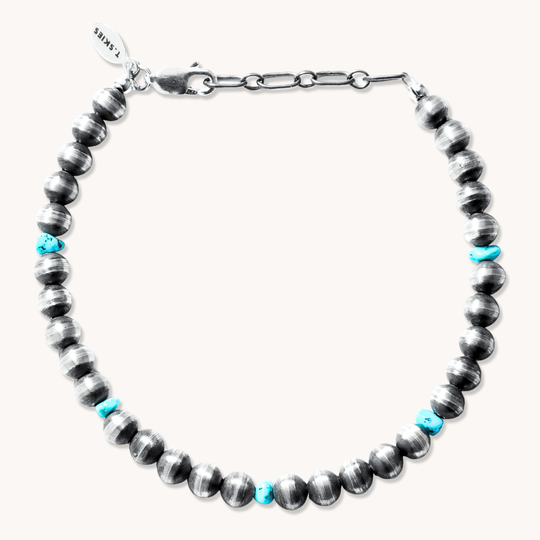
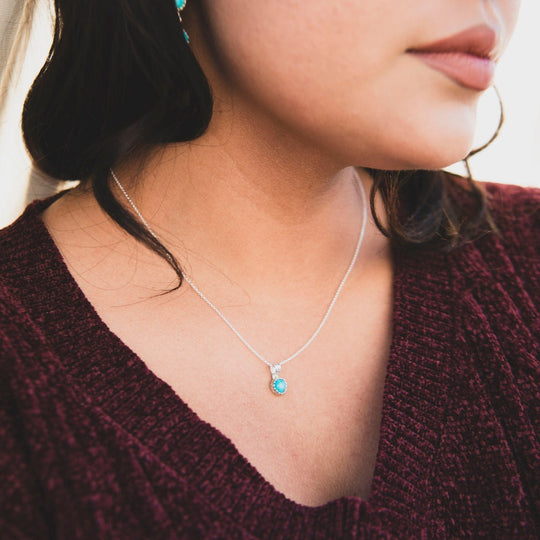
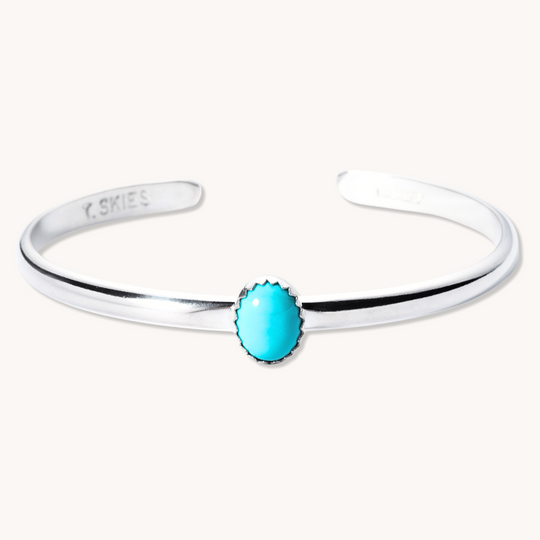
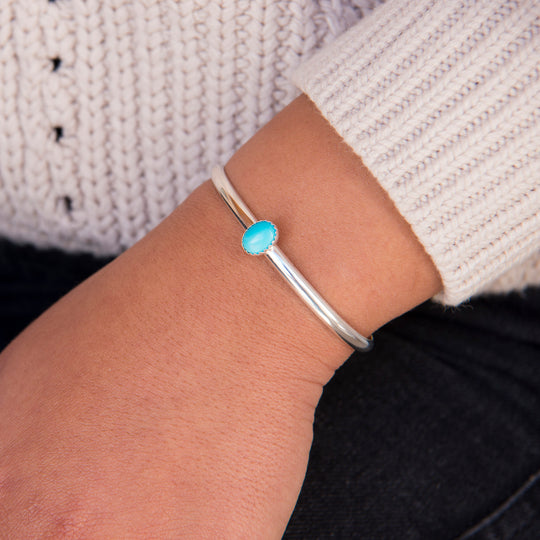
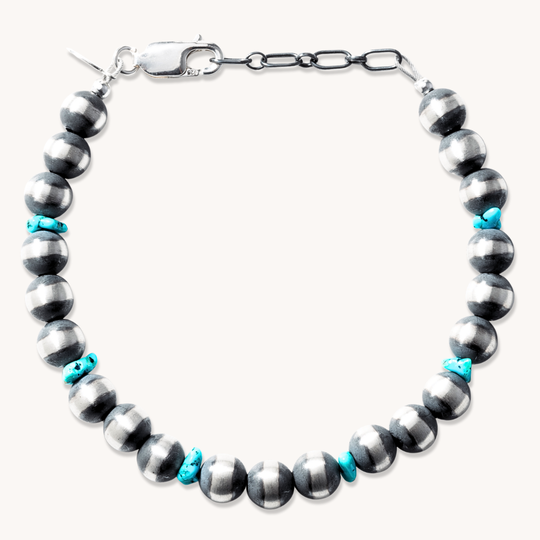
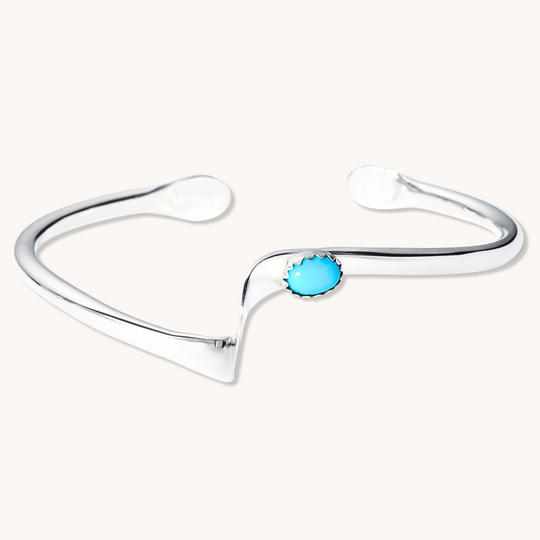
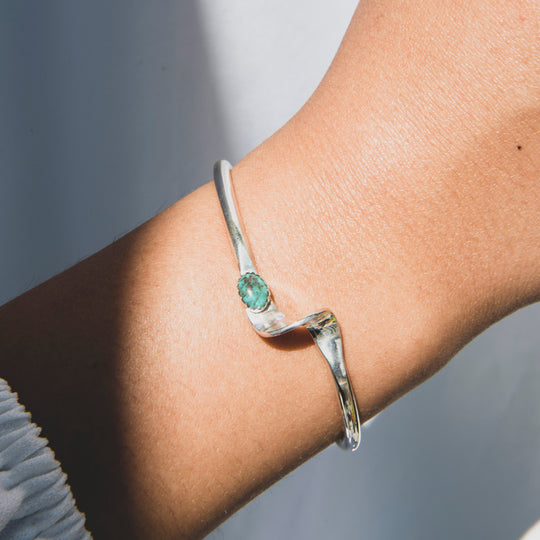
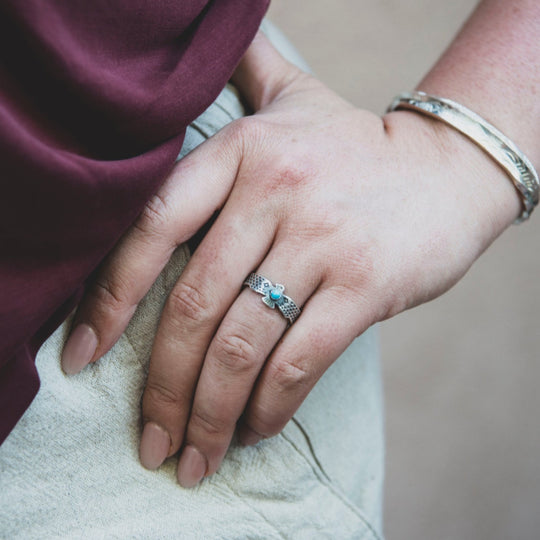
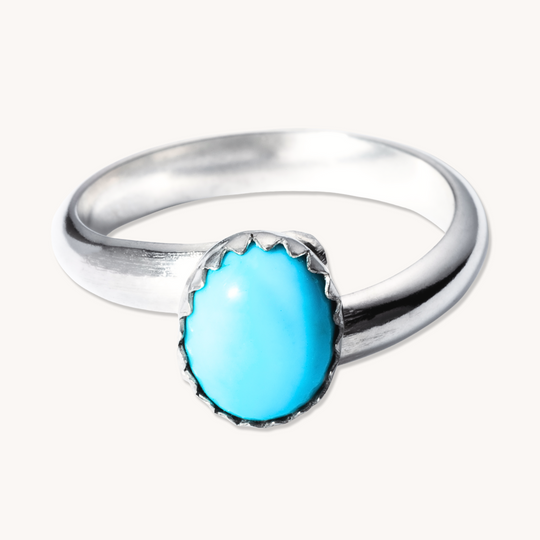
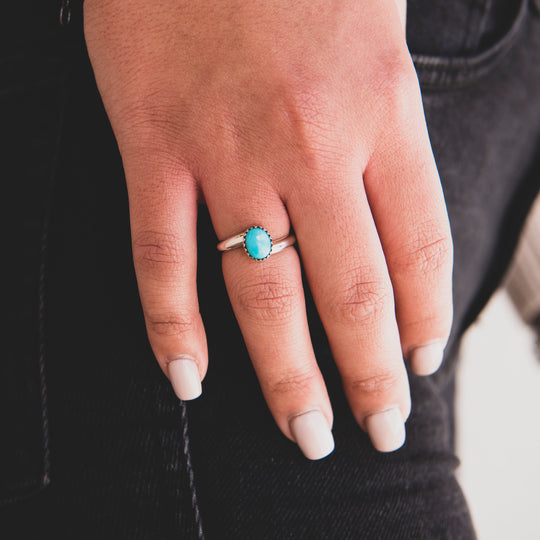
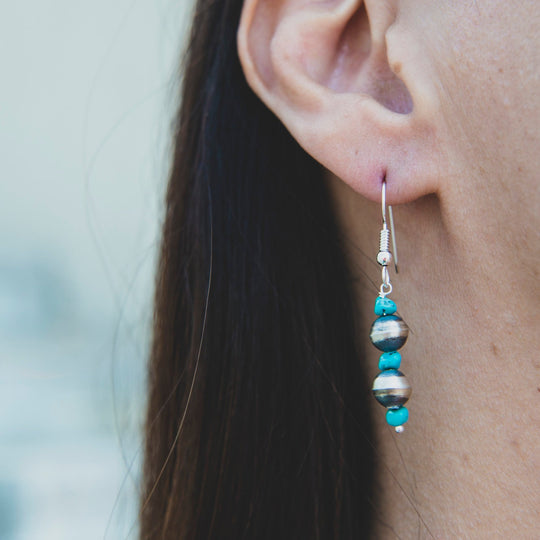
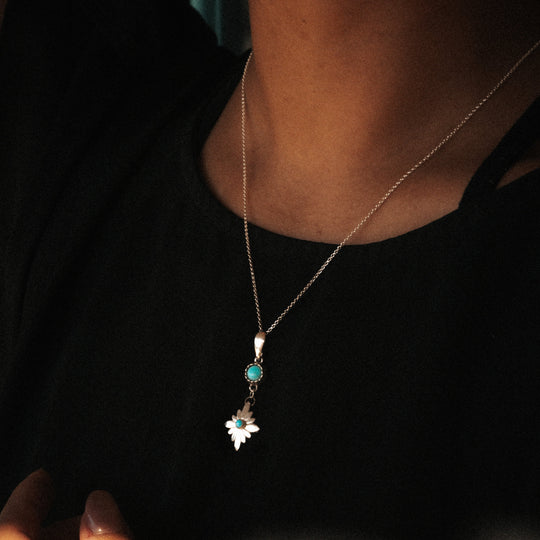
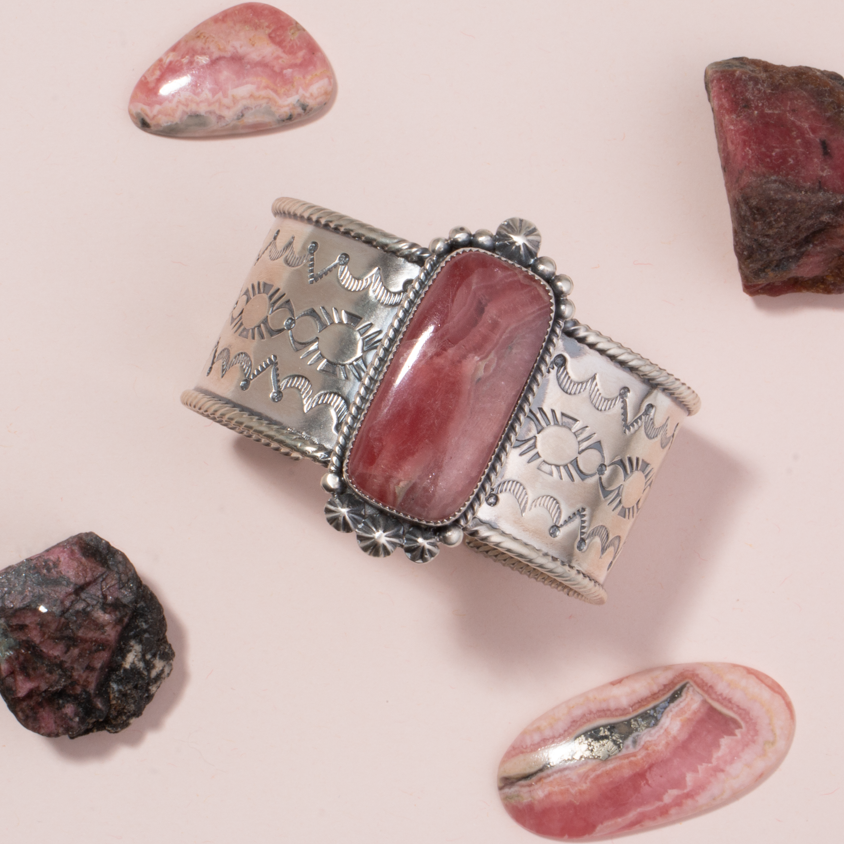
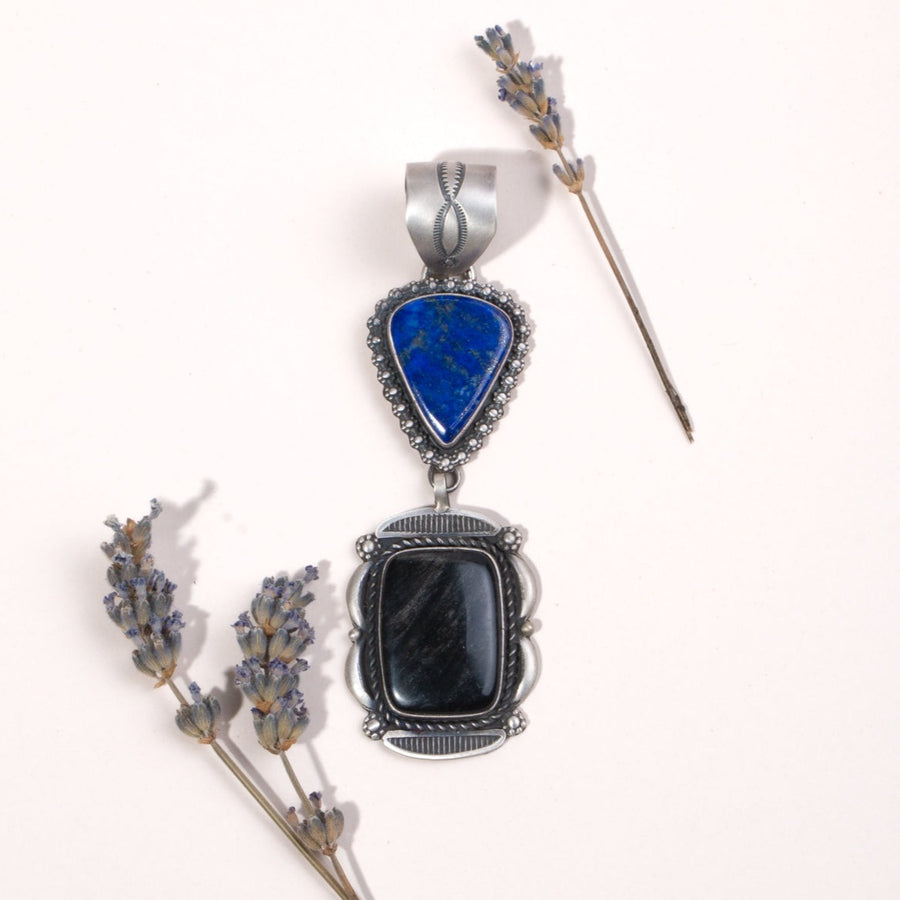
A buyer seeking genuine Native American jewelry may find that the price for a piece is a bit higher than manufactured pieces, but they can be assured that the quality of the jewelry they purchase will be much higher as well. In spite of its price increase, turquoise remains an important stone for Native artists and their work.
Turquoise Mining in 1915
1915 primary source. Anything described as current here describes 1915, not today.
Writing in 1915, Pogue explained why turquoise mining was simpler than most:
“Turquois is a mineral of superficial origin and consequently is never found in quantity at depths exceeding about 100 feet. Its mining is therefore comparatively simple and inexpensive, as deep shafts and extended tunnels are unnecessary.”
— Pogue (1915), p. 129
On methods, Pogue (1915) wrote:
“Before the advent of gunpowder turquois was mined by crude tools, probably aided in some instances by the effect of suddenly cooling with water the heated rock. Modernly, however, the material is obtained by blasting.”
— Pogue (1915), p. 129
As of 1915, Pogue described how mines were equipped:
“Turquois mines, in most instances, are not fitted with modern appliances of mining, due in part to the isolated and barren regions in which many deposits occur, and in part to the temporary nature of the enterprise.”
— Pogue (1915), p. 129
Mine closures are not new. Pogue reported in 1915:
“Of late turquois matrix has been in demand and the large quantities mined have resulted in an overproduction. For this reason, and because the turquois is temporarily out of vogue, many mines are at present (1914) closed.”
— Pogue (1915), p. 135
At the Persian mines, Pogue (1915) reported:
“Work in the various mines is carried on by means of picks and crowbars and gunpowder. The last was not used prior to 1850. Formerly all work was done by picks, with better results; for, whereas the blasting accomplishes more, it also breaks the stones into small pieces.”
— Pogue (1915), p. 38
At Mineral Park, Arizona (the Kingman area), Pogue (1915) described
“the mining is chiefly done by means of open cuts and tunnels, the rock being blasted out and the turquois removed after careful breaking of the blocks.”
— Pogue (1915), p. 46
On who profited, Pogue (1915) wrote of Nishapur:
“The original finder of a turquois does not gain much. The elders make about 20 per cent upon their purchases; and the final selling price, in Europe or in the East, is from two to three times the first purchase price.”
— Pogue (1915), p. 39
Turquoise Mining in 2010
2010 primary source. Anything described as current here describes 2010, not today.
As of 2010, Lowry described who does the mining:
“Independent mine owners who own one to five mines make up most of the turquoise mining operations in the world.”
— Lowry (2010), p. 130 [2]
According to Lowry (2010, p. 130), some mines were large and productive while others were so small that their whole output might fit in a hat, the so-called hat mine. [2]
According to Lowry (2010, p. 139), most individual turquoise mines were worked only sporadically: in America they were called Sunday mines, worked a couple of days a year, while others ran a couple of months depending on the weather. [2]
According to Lowry (2010, p. 140), a small operator in northern Baja California said it cost him $200 a day, with three workers, a backhoe and compressor hammers, to average three hundred pounds of turquoise a month. [2]
According to Lowry (2010, p. 141), a larger Nevada operation using a bulldozer, backhoe and trucks cost about $5,000 a week, and labor, hand tools, diesel, equipment repairs, claims and time were the main costs of mining. [2]
Lowry (2010) summed up the economics of the trade:
“Turquoise mining has produced tons of ore, limited wealth, and incredible amounts of lore.”
— Lowry (2010), p. 141 [2]
According to Lowry (2010, p. 144), a U.S. mining claim was generally a surveyed 20-acre plot, 600 by 1,500 feet, with each corner marked by a monument showing who owned it. [2]
According to Lowry (2010, p. 145), a claim gave rights to the minerals below the surface while the BLM kept control of the trees, vegetation and roads above; mining with heavy equipment needed an approved Plan of Operation and a bond, while a pick-and-shovel operation could often be approved within two or three months. [2]
As of 2010, Lowry estimated where the stone in Southwestern jewelry actually came from:
“In fact, about 85 percent of all turquoise set in "Indian" jewelry is from Chinese and Mexican turquoise mines.”
— Lowry (2010), p. 146 [2]
Lowry (2010) described the trade as international:
“Turquoise is a world market that is larger than any one supplier or any single culture.”
— Lowry (2010), p. 146 [2]
From the Library: Ryan & Chambless, Turquoise in America Part Two: 1910–1990 (2020)
2020 primary source. Anything described as current here describes 2020, not today.
According to Ryan & Chambless (2020, p. 273), most turquoise is found in the West on public land, where under the 1872 Mining Act any adult citizen could stake the mineral rights, provided they showed minerals were actually there and spent $165 a year per claim plus filing fees. [3]
Ryan & Chambless (2020) on the catch:
“Yet while the entry cost is low, operating costs are high, especially for the small-scale miner.”
— Ryan & Chambless (2020), p. 273 [3]
According to Ryan & Chambless (2020, p. 272), the big mining companies that turned up turquoise as a byproduct regarded it more as a liability than an asset, because extracting it cost worker efficiency or added liability. [3]
As of 2020, Ryan & Chambless (2020, p. 275) reported that apart from Kingman, most American turquoise mines, almost all in Nevada, were worked by small-scale miners, many of whom needed other jobs to keep their operations going. [3]
Ernie Montoya told Ryan & Chambless (2020, p. 275) that turquoise deposits were disappearing because gold companies using cyanide were destroying the mines, and that a miner had to deal with environmental groups, the BLM, OSHA and MSHA. [3]
From the Library: Lowry, Turquoise Unearthed: An Illustrated Guide (2002)
2002 primary source. Anything described as current here describes 2002, not today.
Writing in 2002, Lowry (2002) observed:
“It is much more expensive to mine turquoise today than in the heyday of the twentieth century.”
— Lowry (2002), p. 21 [4]
According to Lowry (2002, p. 21), labor and machinery cost more, worker-safety laws were stricter, and environmental rules required miners to reclaim and restore land after mining; some claims had been leased or sold to gold and copper companies and were closed to turquoise miners. [4] Jacka (1995, p. 80) also noted in 1995 that "there are strict state and federal mining laws that must be adhered to, and environmental concerns demand costly reclamation projects." [6]
From the Library: Stacey, Turquoise Blue Book and Indian Jewelry Digest (1975)
1975 primary source. Anything described as current here describes 1975, not today.
David L. Neumann, a Santa Fe dealer whose El Palacio article the 1975 Turquoise Blue Book reprinted, on the nature of the deposits:
“Turquoise deposits, with few exceptions, are not massive, and often productive mines return good earnings for a few months or years and then the deposits are depleted, the vein pinches out or the pocket is exhausted. Years often pass during which a mine lies unworked.”
— Stacey (1975), p. 71 [5]
From the Library: Jacka, Navajo Jewelry: A Legacy of Silver and Stone (1995)
1995 primary source. Anything described as current here describes 1995, not today.
Prices and market conditions quoted here are 1995 figures, recorded as history, not a guide to value today.
Lois Essary Jacka, writing in 1995:
“Due to the shortage of American turquoise and the consequent high prices, the use of Chinese turquoise has become more prevalent.”
— Jacka (1995), p. 82 [6]
Gene Waddell of Waddell Trading Company told her in 1995:
“Chinese turquoise, like the American stone, is procured from several different mines and its quality ranges from poor to excellent; most Indian artists insist on using only the best.”
— Jacka (1995), p. 82 [6]
From the Library: Schiffer, Indian Jewelry on the Market (1996)
1996 primary source. Anything described as current here describes 1996, not today.
As of 1996, Schiffer (1996, p. 59) wrote that Chinese turquoise had come into the Southwest about fifteen years earlier, when the supply of good domestic turquoise ran short, and that most United States turquoise mines had been exhausted. [7]
Shop the T.Skies turquoise jewelry collection →
Sources
- Pogue, Joseph E. The Turquois: A Study of Its History, Mineralogy, Geology, Ethnology, Archaeology, Mythology, Folklore, and Technology. Memoirs of the National Academy of Sciences, Vol. XII, Part II, Third Memoir. Washington, 1915. Public domain. Cited by printed page. Statements describe conditions as of 1915.
- Lowry, Joe Dan, and Joe P. Lowry. Turquoise: The World Story of a Fascinating Gemstone. Layton, UT: Gibbs Smith, 2010. Cited by printed page. Statements describe conditions as of 2010.
- Ryan, Mike, II, and Philip Chambless. Turquoise in America, Part Two: 1910–1990. Callais Press, 2020. Cited by printed page. Statements describe conditions as of 2020.
- Lowry, Joe Dan, and Joe P. Lowry. Turquoise Unearthed: An Illustrated Guide. Photography by Mark Nohl. Tucson, AZ: Rio Nuevo Publishers, 2002. Cited by printed page. Statements describe conditions as of 2002.
- Stacey, Joseph, ed. Turquoise Blue Book and Indian Jewelry Digest. Arizona Highways Collectors Series. Phoenix: Arizona Highways (Arizona Department of Transportation), 1975. Cited by printed page. Statements describe conditions as of 1975.
- Jacka, Lois Essary. Navajo Jewelry: A Legacy of Silver and Stone. Photographs by Jerry Jacka. Flagstaff: Northland Publishing, 1995. Cited by printed page. Statements describe conditions as of 1995.
- Schiffer, Peter N. Indian Jewelry on the Market. Text and photography by Peter N. Schiffer. Atglen, PA: Schiffer Publishing Ltd., 1996. Cited by printed page. Statements describe conditions as of 1996.