



The Collector’s Guide to Authentic Turquoise Jewelry: Honoring Heritage and Spirit

A piece of turquoise jewelry is never just an accessory. It is a confluence of earth and sky. A fragment of the desert, held in silver. A vessel for an ancestral song. You've likely felt the pull of the stone's vibrant blue, yet hesitated at the counter. The fear of "mystery stones," dyed howlite, or stabilized plastic is a common shadow for collectors. It's difficult to stand before a display and wonder if the hallmark on the back truly honors the hands that shaped it. You want more than a trinket; you want a piece of heritage.
We believe your jewelry should resonate with your soul and support the artisans who keep these traditions alive. This guide will help you understand the landscape of authentic turquoise jewelry with confidence. We'll explore how to identify genuine, natural stones from the most storied mines. You'll learn to distinguish between the intricate needlepoint of the Zuni, the bold stampwork of the Navajo, and the symbolic overlays of the Hopi. Together, we'll decode the hallmarks that verify a master's touch and ensure your collection is built on truth, spirit, and a deep connection to the earth.
Key Takeaways
- The Language of Earth: Learn to distinguish natural, high-grade stones from stabilized imitations that lack a true connection to the desert.
- Cultural Signatures: Discover the difference between Navajo sandcasting and Zuni needlepoint to honor specific ancestral traditions.
- The Artist's Mark: Master the art of reading hallmarks to verify the maker's identity and the lasting value of your investment.
- Soulful Connection: Choose a piece of turquoise jewelry that serves as a bridge between your own journey and the spirit of the Southwest.
- Physical Integrity: Identify markers of quality, from the weight of the silver to the security of the hand-set bezel.
The Soul of the Southwest: Why Authentic Turquoise Jewelry Matters
Turquoise is not merely a mineral found in the crust of the earth. It is a prayer. To the indigenous peoples of the American Southwest, it is the "Sky Stone," a sacred bridge between the parched red soil and the infinite blue above. When you wear authentic turquoise jewelry, you aren't just putting on an accessory. You're adorning your spirit with a fragment of the divine. This stone carries the weight of the mountains and the clarity of the morning light. It serves as a vessel for ancestral stories, a physical manifestation of a culture’s resilience and beauty.
The Connection Between Earth and Artisan
The creation of a piece begins long before the torch touches the silver. It starts with a soulful bond between the silversmith and the raw elements. A master artisan doesn't impose their will on the material; they enter a dialogue with it. They respect the Turquoise gemstone properties, understanding how the copper or iron content dictates the stone's unique hue and character. This understanding ensures the stone is set in a way that honors its natural integrity.
The process of hand-crafting jewelry is a meditative act. Each curve of silver and each hand-cut stone reflects the rhythm of the landscape. By choosing authentic turquoise jewelry, you become a steward of a living tradition. You aren't just buying a ring or a bracelet. You're supporting a lineage of makers who translate the spirit of the desert into wearable art. These pieces are not mass-produced; they are birthed through patience and purpose.
Moving Beyond the "Fashion" Label
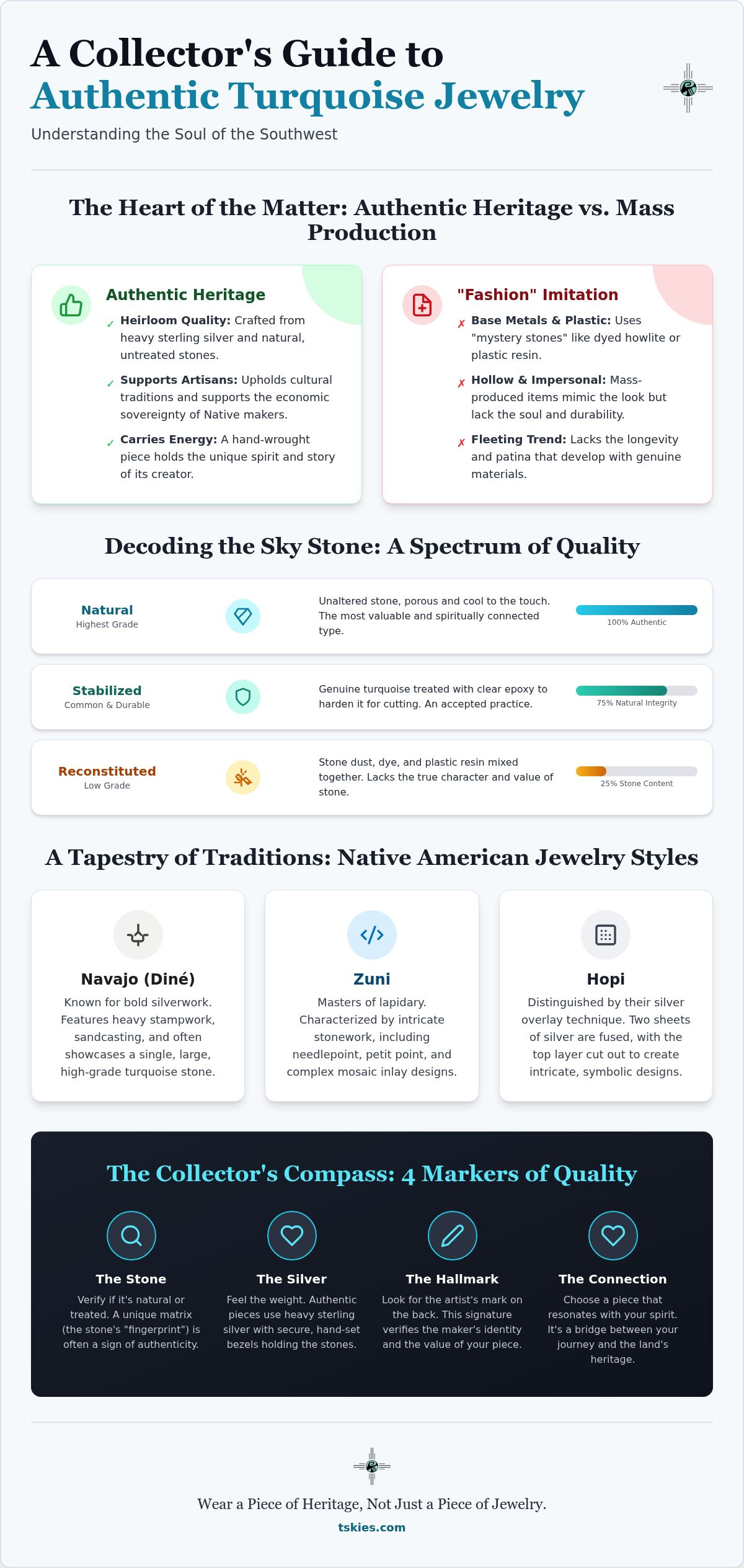
The modern marketplace is crowded with "turquoise-colored" fashion items. These mass-produced imports are often hollow. They use base metals and stabilized "mystery stones" that lack a pulse. They mimic the look of the Southwest but fail to capture its heart. Heirloom-quality jewelry is different. It's built to last generations, crafted from heavy sterling silver and natural, untreated stones. Investing in authenticity is a choice to value the human over the industrial.
- Authenticity: Genuine pieces support the economic sovereignty of Native American artists.
- Longevity: Sterling silver and natural turquoise grow more beautiful with age, developing a rich patina.
- Energy: A hand-wrought piece carries the energy of the maker, something a machine can never replicate.
It is an intentional act of cultural preservation. When you feel the cool weight of a handcrafted cuff against your skin, you know the difference. The texture of the silver and the unique matrix of the stone tell a story of grit and grace. It’s the difference between a fleeting trend and a timeless heritage that resonates with the soul.
Decoding the Sky Stone: Mines, Matrices, and Authenticity
To hold a piece of natural turquoise jewelry is to hold a stone that breathes. Unlike glass or plastic imitations, genuine turquoise is porous and alive. The most sought-after pieces are "natural," meaning the stone hasn't been chemically altered or infused with resins. You can often sense this through the fingernail test. Gently run your nail across the surface of the stone. Natural turquoise feels cool and slightly irregular, like a pebble pulled from a stream. If it feels overly slick, warm, or uniform, you might be holding a stabilized or reconstituted "mystery stone."
Stabilized turquoise is still genuine stone, but it's been treated with clear epoxy to harden it for cutting. This is common and keeps the stone from fracturing. Reconstituted turquoise, however, is a different story. It’s essentially stone dust mixed with plastic and dye. It lacks the spirit of the earth. When building a collection, look for transparency from the seller. A reputable maker will always tell you if a stone is natural or treated. This honesty is the foundation of the Indian Arts and Crafts Act, which protects both the buyer and the artisan from fraudulent claims of authenticity.
Understanding the Turquoise Matrix
The matrix is the earthly fingerprint of the stone. These intricate veins are remnants of the host rock, such as limonite, quartz, or pyrite, that surrounded the turquoise as it formed over millions of years. High concentrations of iron result in deep chocolate or black spiderweb patterns. Copper often yields a vibrant, golden-brown matrix. While some collectors seek "clean" stones, a total absence of matrix is often a red flag for synthetic materials. Each mine produces a distinct signature. Kingman turquoise is famous for its high-blue hues and water-web matrix, while Royston stones often display a stunning transition from forest green to sky blue within a single cabochon.
The Significance of Sterling Silver
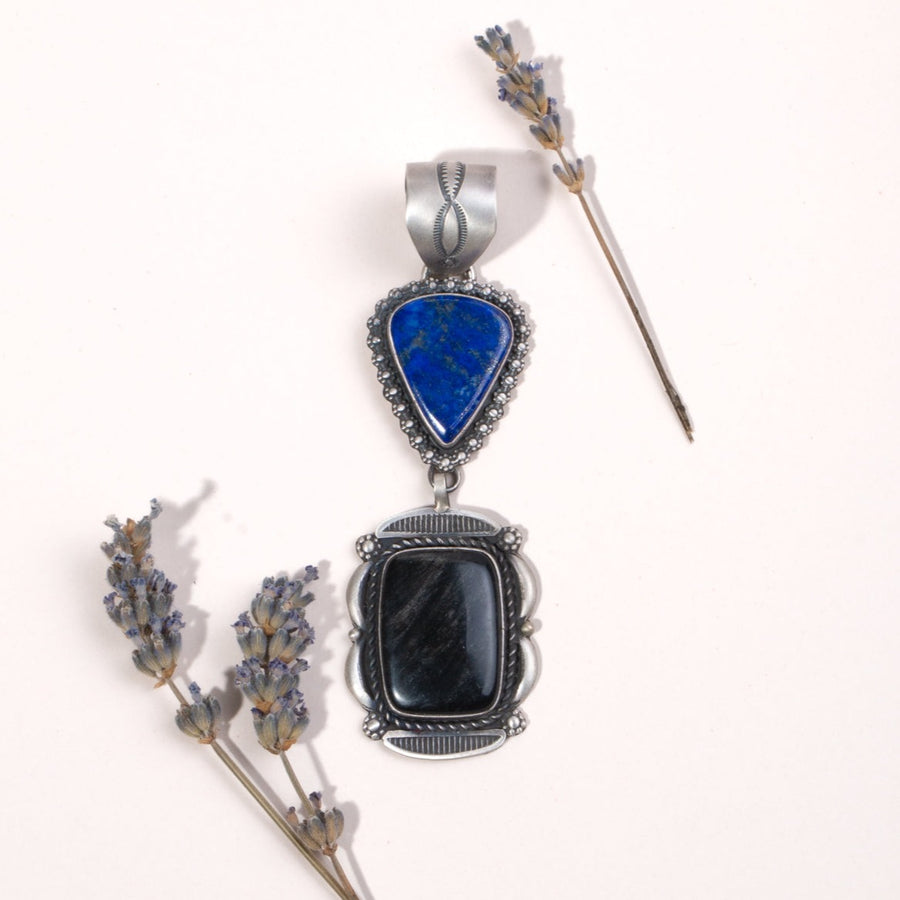
Authentic turquoise belongs in 925 sterling silver. This alloy, consisting of 92.5 percent pure silver, provides the strength needed to protect the stone for decades. Artisans often use oxidation, or a controlled patina, to darken the recessed areas of the silverwork. This contrast makes the hand-stamped details and the vibrancy of the turquoise pop. Always look for the "925" stamp alongside the artist’s unique hallmark. These signatures are a promise of quality and a connection to the maker's hand. If you’re ready to begin your journey, you can explore our curated collections to find a piece that speaks to your personal story.
A Tapestry of Traditions: Navajo, Zuni, and Pueblo Styles Compared
The Southwest landscape is a chorus of distinct cultural voices. While the historical significance of turquoise spans continents and millennia, its expression in the American Southwest is uniquely tied to the sovereign spirit of the Diné, Zuni, and Pueblo peoples. To the untrained eye, all turquoise jewelry might look similar. To the collector, each piece is a poem written in silver and stone. Understanding these distinctions is how you honor the hands that shaped the metal.
Navajo Silver and Stone
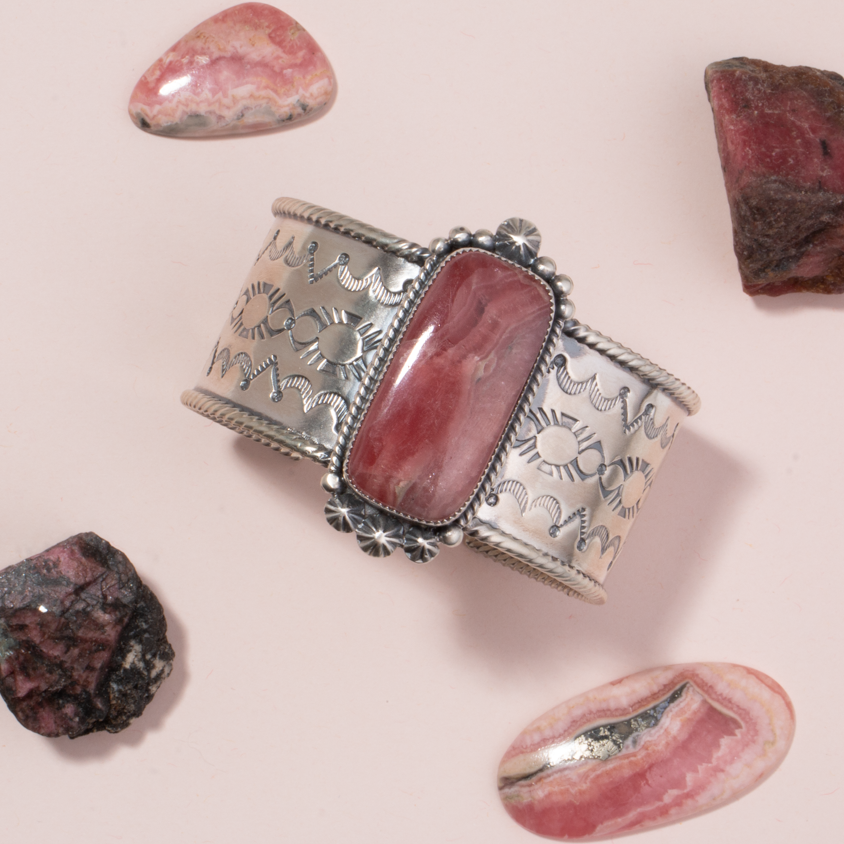
Navajo jewelry, or Diné artistry, is a celebration of strength and the raw landscape. The silver is heavy. The presence is bold. Artisans often use sandcasting, a technique where molten silver is poured into a mold carved from volcanic tuff stone. This creates a textured, organic finish that feels like the earth itself. You'll often see large, singular stones held by thick, scalloped bezels. The stones aren't hidden; they're championed.
The iconic Squash Blossom necklace is the heart of this tradition. It's a statement of abundance and protection. Navajo artists focus on the dialogue between the metal and the gem. They use deep stampwork to tell stories of the wind, the rain, and the mountains. It's an aesthetic that doesn't apologize for its weight. It's grounded. It's enduring.
Zuni Precision and Inlay
Zuni craftsmanship is a masterclass in meticulous detail. Where the Navajo celebrate the stone's raw form, the Zuni silversmith transforms it through lapidary precision. They're famous for needlepoint and petit point styles. These involve cutting turquoise into tiny, uniform slivers or teardrops and setting them in complex, radiating patterns. The result is a mosaic of light that feels more like a woven textile than a set stone.
Zuni artists also excel in stone-to-stone inlay. They fit turquoise alongside coral, mother-of-pearl, and jet with such precision that the surface feels like a single, smooth skin. These pieces often depict sacred figures like the Knifewing or the Rainbow Man. The work is delicate. It requires a steady hand and an infinite well of patience.
Pueblo Symbolism and the Zia
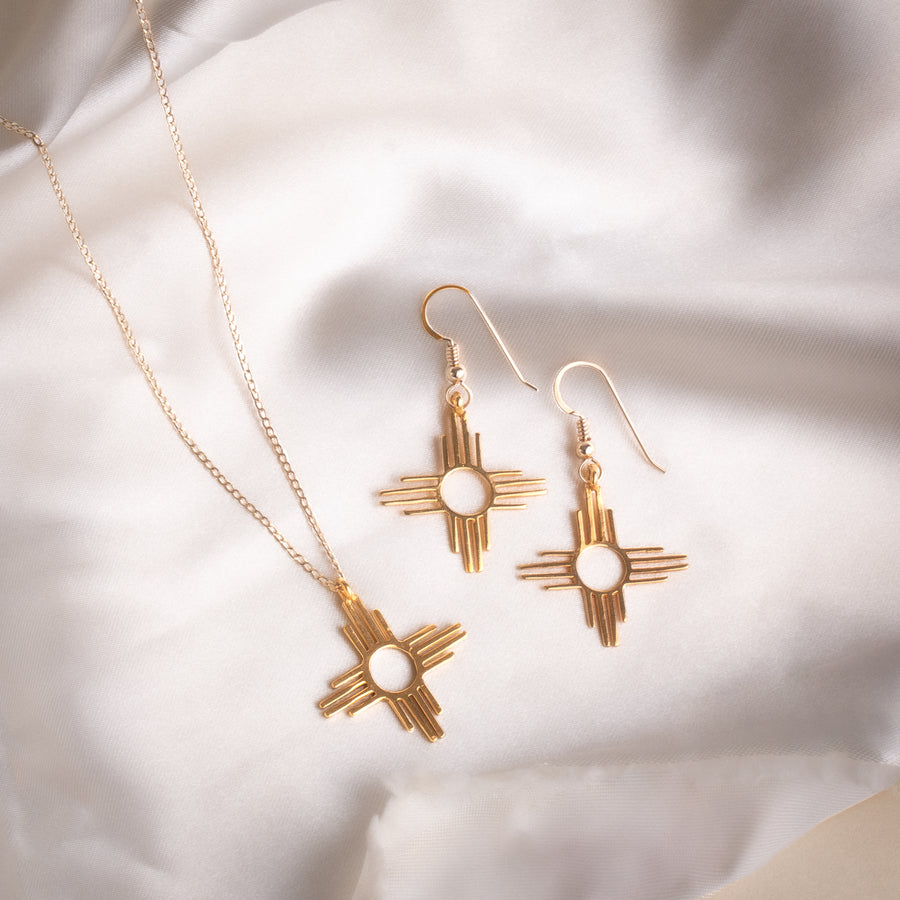
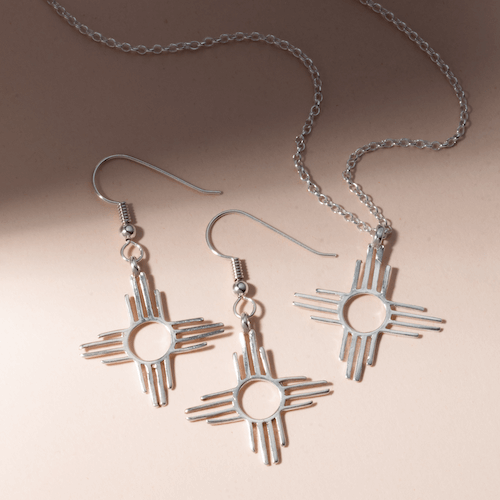
Pueblo styles, including Hopi artistry, often lean toward symbolic storytelling through silver overlay. Two sheets of silver are used; the top layer has a design cut out, while the bottom layer is darkened through oxidation. This creates a high-contrast, graphic look. You'll frequently find Zia Pendants featuring the sun symbol, representing the four directions, the four seasons, and the four stages of life. When choosing a piece, ask yourself what resonates with your own journey. Do you seek the bold protection of the Navajo or the intricate harmony of the Zuni? Your choice is a reflection of your own spirit.
The Collector’s Compass: How to Choose Your Perfect Piece
Selecting a piece of turquoise jewelry is an act of intuition. It's a search for a stone that mirrors your own spirit. But intuition must be paired with knowledge. You aren't just buying silver; you're becoming the guardian of a legacy. Check the weight. Authentic Southwest jewelry feels substantial. It has a gravity that speaks to the quality of the sterling silver. Examine the bezel. It should hold the stone in a firm, protective embrace, with no gaps or wobbles. A high-quality finish shows the hand of the maker without the sloppy shortcuts of mass production. Trust your hands to tell you what the eyes might miss.
Identifying Artisan Hallmarks
The back of a pendant or the inner band of a ring is where the story is signed. This is the hallmark. It’s more than a stamp; it's a lineage. These initials or symbols connect the work to a specific silversmith and their ancestral tradition. When you buy from a gallery that honors its artists by name, you ensure the value of the piece remains intact. A hallmark is your ultimate proof of authenticity. It transforms a beautiful object into a documented heirloom. Always look for the "925" mark alongside the maker's signature to confirm the silver's purity.
Consider the rhythm of your daily life when making a selection. If you work with your hands, a low-profile turquoise ring with a smooth cabochon is a wise choice. It offers beauty without the risk of snagging on the world around you. For those seeking a statement for sacred occasions, a bold cuff or a multi-stone necklace serves as a powerful centerpiece. Each form carries a different energy.
- Cuffs: These offer a rigid, protective feel. They are ideal for bold, singular expression.
- Link Bracelets: These provide fluid movement. They are perfect for layered, everyday wear.
- Care: Keep your stones away from harsh chemicals and perfumes. Turquoise is porous; it remembers what it touches.
Beware of the "too good to be true" price. Genuine, American-mined turquoise is a finite treasure. If a piece is priced like a trinket, it likely is one. Dyed howlite and plastic "block" turquoise are common shadows in the market. They lack the cooling touch and the vibrant pulse of the real stone. Trust your senses and the reputation of the house to guide you. If you're ready to find a stone that resonates with your journey, you can browse the T.Skies collection of handcrafted turquoise jewelry to discover a piece that truly belongs to you.
Adorning Your Spirit with the T.Skies Turquoise Collection
T.Skies is a sanctuary for the soul of the Southwest. Every piece of turquoise jewelry we offer is a testament to truth. We don't believe in mystery stones or faceless production. Our promise is simple: every stone is genuine; every maker is honored. We work directly with named Diné, Zuni, and Pueblo silversmiths. These are artists whose families have shaped silver for generations. By fostering these direct relationships, we ensure that the artist's voice is never lost to the noise of the market. This is more than a transaction. It's a shared commitment to cultural stewardship and the preservation of living history.
Our collection features the sacred Zia Pendants. These are not merely decorative items. They carry the sun symbol. A profound reminder of life’s balance and the interconnectedness of all things. The four directions. The four seasons. The four stages of existence. Wearing this symbol is an act of intentionality. For those seeking a deeper, more personal connection, we offer custom jewelry design. This allows you to collaborate with our master craftsmen to create a bespoke legacy piece. It is a chance to weave your own narrative into the metal, choosing stones and symbols that reflect your unique path. A fragment of your own journey, etched in silver and stone.
Standout Pieces for Your Collection
Handcrafted sterling silver turquoise rings are a cornerstone of our work. The blue of the Kingman stones is vibrant. The matrix is a unique map of the earth. We also feature Zuni petit point jewelry, including intricate earrings and necklaces. These pieces are a masterclass in patience and precision. Tiny, hand-cut slivers of stone are arranged in perfect harmony, creating a texture that feels like woven light. These items offer a sense of heritage that transcends fleeting trends, allowing you to carry the spirit of the desert wherever you go.
The T.Skies Difference: Transparency and Trust
We believe in the power of the hallmark. Every piece we sell is documented with the maker’s mark and the story behind the stone. Our Southwest roots give us an authentic connection to this craft. We aren't outsiders looking in. We are part of the landscape. This proximity allows us to verify every source and honor every hand involved in the process. We invite you to find the piece that resonates with your spirit. Step into a tradition of beauty and integrity. Explore our authentic turquoise collection today.
Carrying the Spirit of the Sky
Authenticity is a choice. It’s a commitment to honor a living lineage. You now hold the compass to navigate this sacred landscape with quiet confidence. You’ve learned to read the matrix as the earth’s unique fingerprint. You understand that a hallmark is a signature of truth. By choosing genuine turquoise jewelry, you ensure your collection remains a vessel of meaning rather than a fleeting accessory. It’s a bridge between the ancient and the modern.
Every piece you select provides direct support for local artisan communities. It honors the hands of named Native American silversmiths who translate the desert’s song into sterling silver and stone. This isn't just about adornment; it's about cultural stewardship. When you wear a piece shaped by human purpose, you carry the spirit of the maker and the resonance of the Southwest with you. Let your intuition guide you toward the stones that mirror your own journey. Explore the Authentic Turquoise Collection at T.Skies and find a piece of heritage that resonates with your soul.
Common Questions About Authentic Turquoise
How can I tell if my turquoise jewelry is real or fake?
Real stones feel naturally cool to the touch and possess a weighted presence that plastic imitations lack. You can perform a simple test by examining the color under a magnifying glass. If the blue appears concentrated only in the cracks of the stone, it is likely dyed howlite. Authentic pieces show organic color variations and a structural depth that reflect the mineral's deep, earthly origins and unique geological history.
What is the difference between stabilized and natural turquoise?
Natural turquoise remains exactly as it was pulled from the earth, with no chemical alterations. Because it is porous, it can be fragile. Stabilized stones undergo a process where clear, pressure-infused epoxy fills the microscopic pores. This makes the stone harder and prevents it from absorbing oils. While both are genuine, natural stones are rarer and more prized by collectors who value the raw, unbridled spirit of the mineral in their turquoise jewelry.
Why does some turquoise jewelry have dark veins or spots?
These veins are known as the matrix, which is the host rock that surrounded the turquoise as it formed over millions of years. It acts as an earthly fingerprint, ensuring no two stones are ever identical. Dark brown or black veins often indicate iron or limonite, while golden hues suggest the presence of copper. Many collectors seek out these patterns because they prove the stone's natural origin and add soulful character.
Is turquoise jewelry from T.Skies made by Native American artists?
Yes, every piece in our collection is handcrafted by named Native American artisans from the Diné, Zuni, Hopi, and Pueblo communities. We believe in transparency and cultural stewardship. We work directly with these silversmiths to ensure their ancestral traditions are honored and their stories are told. When you choose a piece from us, you aren't just buying an accessory; you're supporting the economic sovereignty and artistic legacy of indigenous craftsmen.
How should I clean and care for my sterling silver turquoise jewelry?
Turquoise is a living stone that requires gentle care. Avoid harsh chemicals, ultrasonic cleaners, or soaking your jewelry in water, as the porous stone can absorb liquids and change color. Simply wipe the silver with a soft polishing cloth to remove tarnish. If the stone needs cleaning, use a damp, soft cloth and dry it immediately. Store your turquoise jewelry in a cool, dry place away from direct sunlight to preserve its vibrant hue.
What does the "925" mark on my turquoise ring mean?
The "925" stamp is a global standard for sterling silver. It signifies that the metal consists of 92.5 percent pure silver and 7.5 percent other metals, usually copper, for added strength. Pure silver is too soft for daily wear, so this alloy ensures your jewelry remains durable for generations. In authentic Southwest pieces, you'll often find this mark alongside the artist's unique hallmark, serving as a dual promise of material quality and artisan origin.
Can turquoise change color over time?
Yes, natural turquoise is chemically active and can transition in color over many years. Because it is porous, it can absorb skin oils, perfumes, and environmental moisture, which can shift a bright sky blue toward a deeper, organic green. Many collectors cherish this change, seeing it as a beautiful record of the piece's journey with its owner. If you prefer the color to remain static, stabilized stones offer more resistance to these factors.
What is a hallmark and why is it important for jewelry collectors?
A hallmark is the artist's signature, stamped or engraved into the silver. It is the ultimate proof of a piece's lineage and authenticity. For collectors, the hallmark connects the jewelry to a specific master silversmith and their tribal tradition. It ensures the piece is an original work of art rather than a mass-produced imitation. Understanding these marks allows you to build a collection with confidence, knowing each item carries the documented legacy of its creator.


