



Native American Jewelry
Native American jewelry at T.Skies is made by the artists named on each listing, among them Diné (Navajo) silversmiths. A piece is listed here only when maker and nation are named.


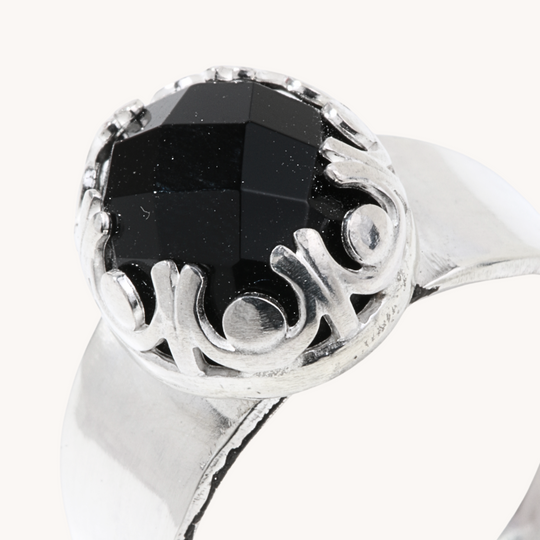


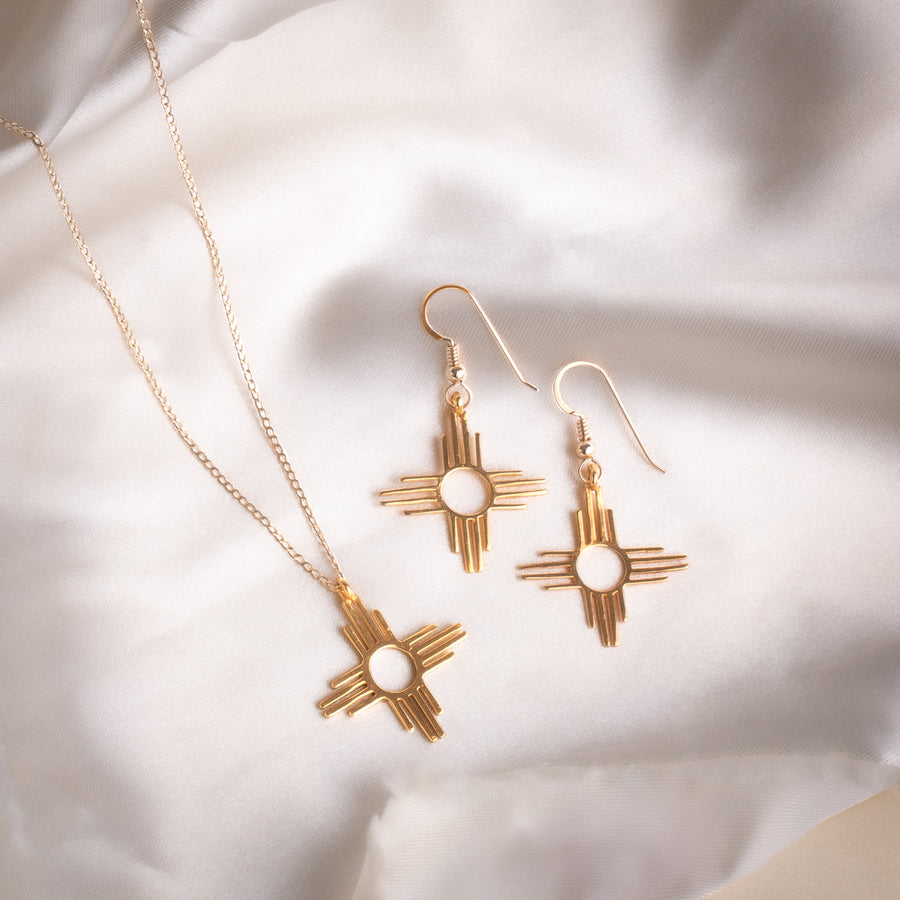
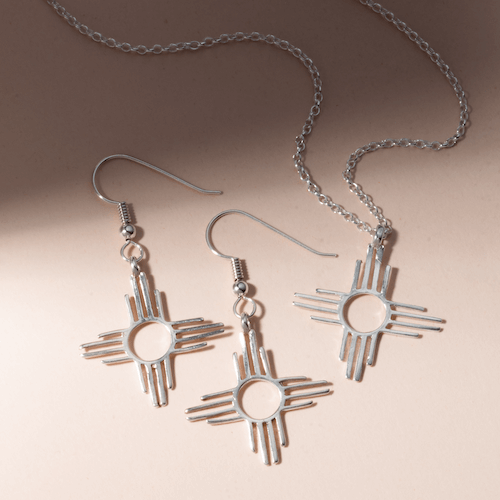
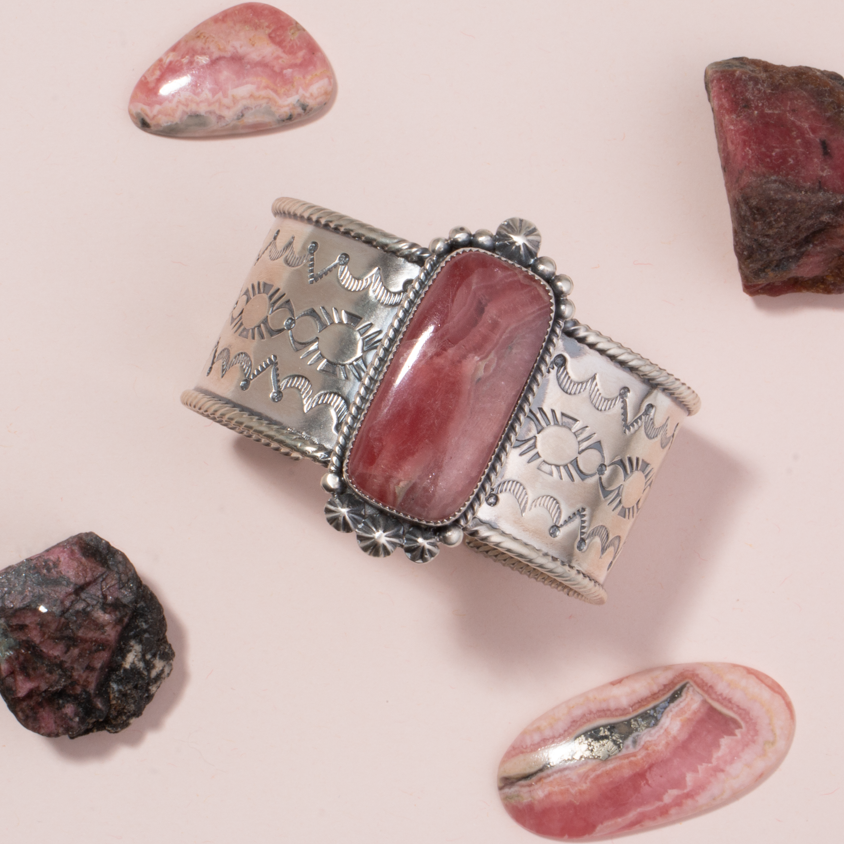
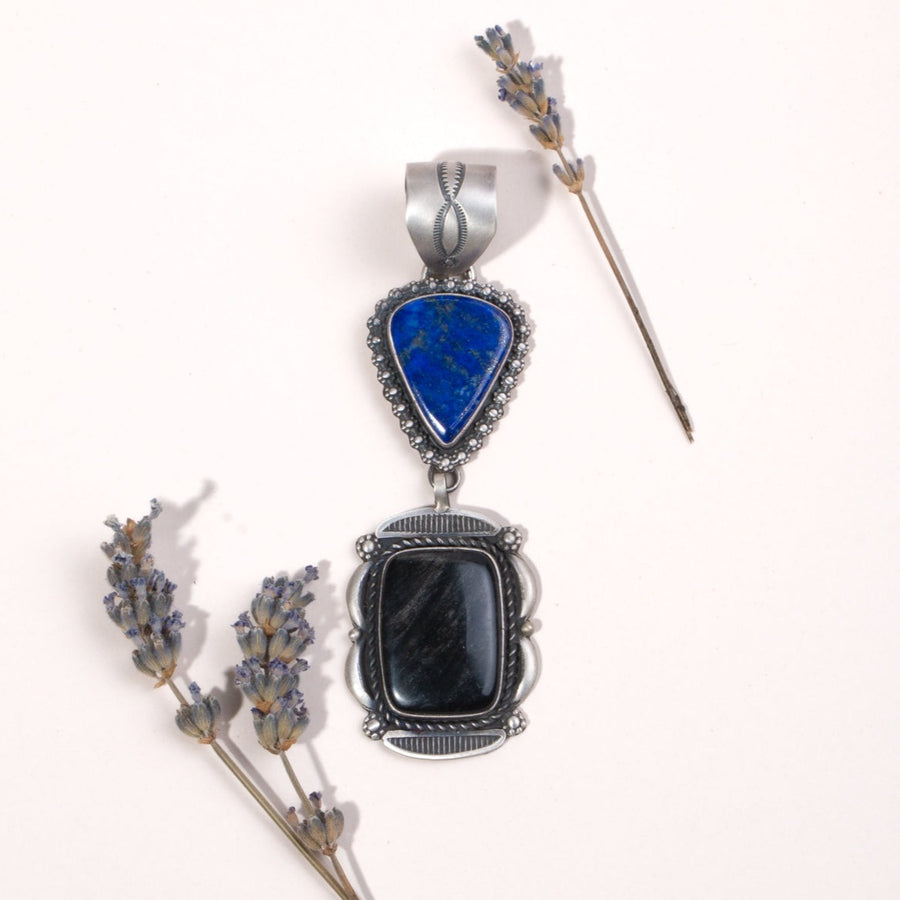
These are Native American jewelry pieces from our extended family of Native American artists — the vintage, one-of-a-kind, and small-batch work that comes through our doors from the makers we know by name.
This isn’t a production line — it’s a rotating gallery of the special things: a vintage squash blossom, a one-of-a-kind tufa-cast cuff, a small run of needlepoint earrings. When a piece is gone, it’s gone.
Learn how to tell if turquoise is real, meet the silversmiths behind the work, or read up on reading a hallmark.
Before you buy, learn how to tell Navajo, Zuni and Hopi jewelry apart and what makes Native American jewelry authentic.
Turquoise and sterling silver carry most of the gallery, alongside spiny oyster, mother of pearl, onyx, sugilite, labradorite, silver sheen obsidian and jet heishi.
Native American Jewelry: Common Questions
How do I know a piece is Native-made?
Ask who made it, and get the answer in writing. Under the federal Indian Arts and Crafts Act, the test is labor: a piece is Native-made when Native hands did the artistic work. Style, materials and “look” don’t count. The Indian Arts and Crafts Board recommends a receipt that lists the artist’s name and Tribal affiliation.
What does a hallmark tell me?
A hallmark is the maker’s stamp in the metal, often their initials. It links a piece to a person, though many artists share the same initials, so a mark is a lead, not proof on its own. Our Native Silversmith Directory documents marks with photographs and links each one to the maker’s page.
Which nations are the artists from?
Mostly Diné (Navajo) silversmiths, with Pueblo makers among them. Each listing names the artist’s nation. But a nation is a fact about a person, not a style, so it belongs next to the artist’s name, never on a category.
Is the turquoise natural?
Natural turquoise is cut and polished with nothing added, and it’s roughly 15% of the world’s supply. Most of the rest is too soft to use as mined, so it’s stabilized. Treated turquoise is still turquoise, not a fake. Check each listing for its turquoise’s treatment. If one doesn’t say, ask us and we’ll tell you.
Is an unsigned piece a fake?
Not necessarily. Artists signing their work with a hallmark didn’t become common practice among Native American jewelry artists until the late 1970s, so an older piece may carry no mark at all. An unsigned piece needs other documentation: who made it, where it came from, and a seller who will put that in writing.