



Mike Bird-Romero — Ohkay Owingeh Silversmith

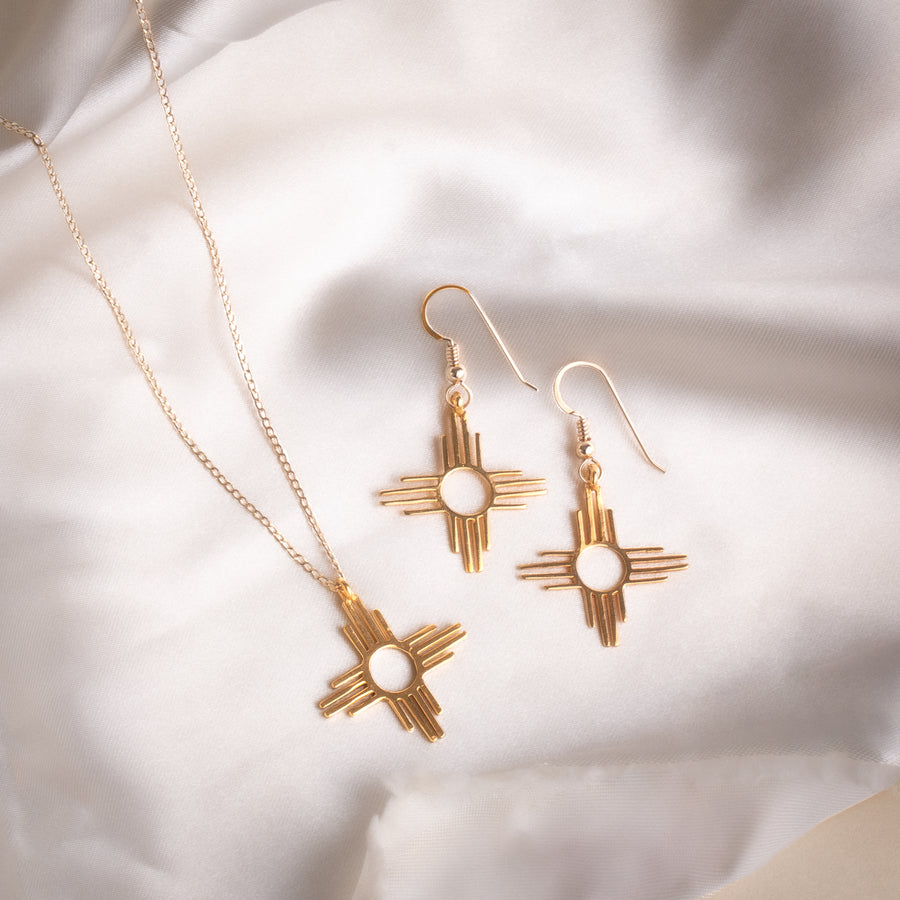
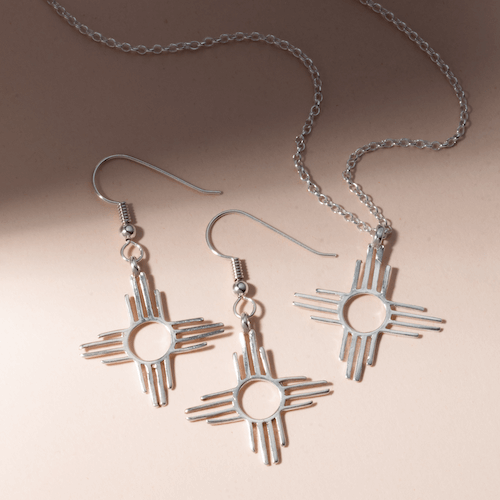
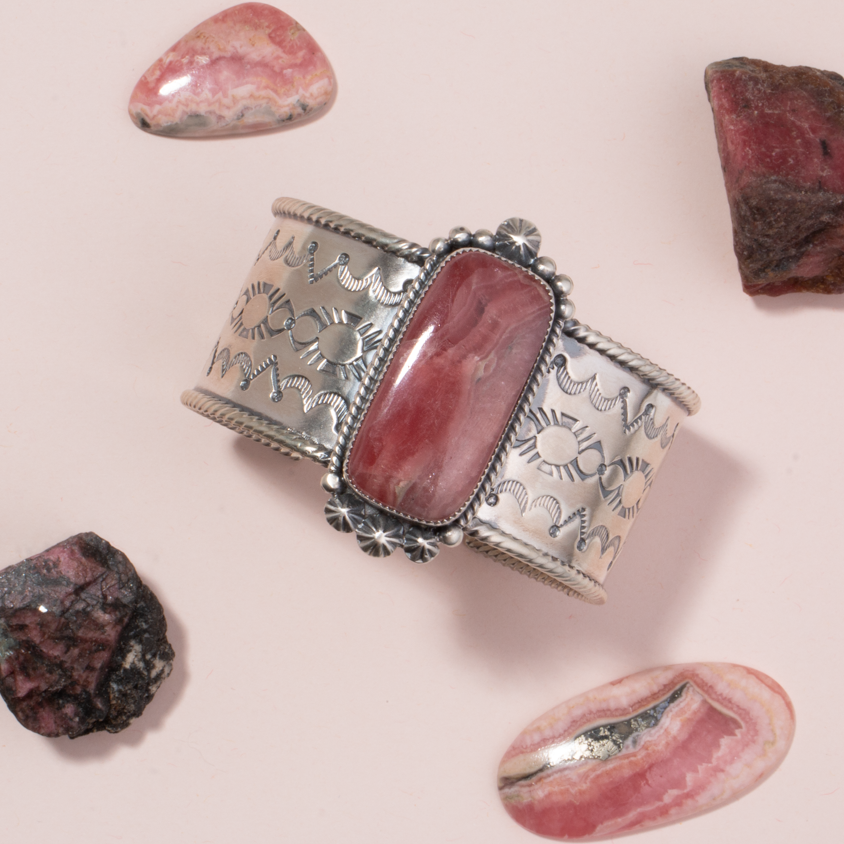
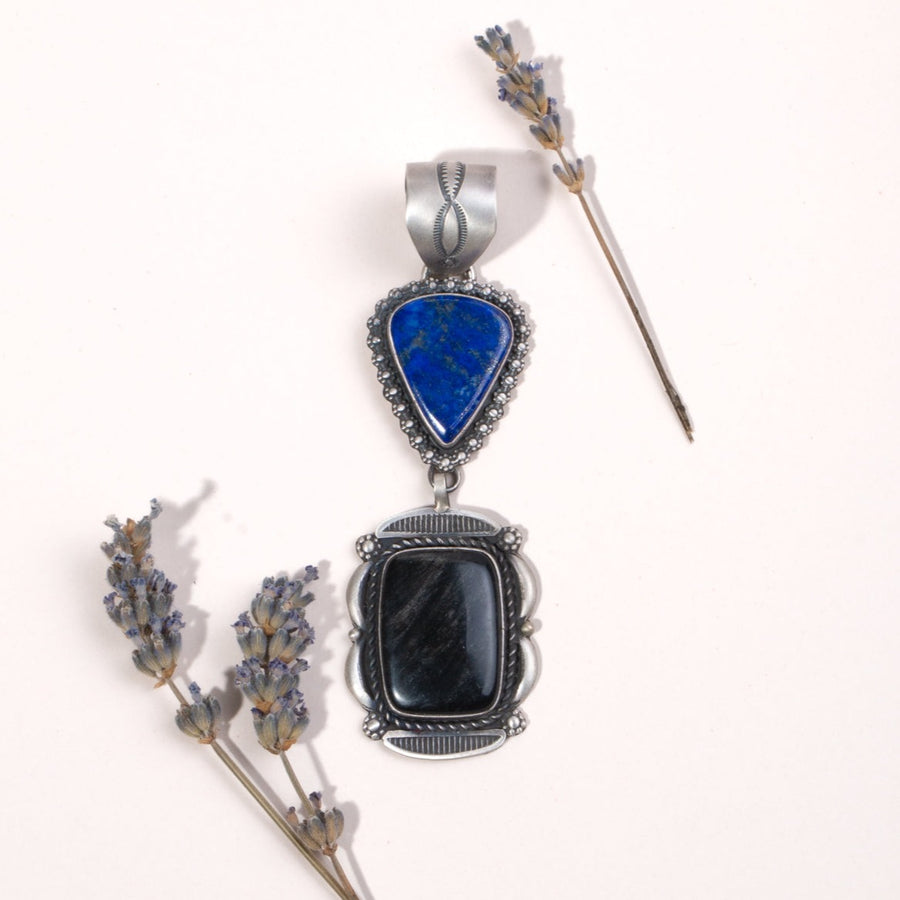
Mike Bird-Romero (Mike Bird) (1946–; Ohkay Owingeh, formerly known as San Juan Pueblo) works in hand-wrought and tufa-cast jewelry in silver and gold, with set stones including turquoise and coral. His work encompasses jewelry, service ware, purses, and spurs. Mike Bird-Romero was influenced early in his career by Julian Lovato and Mark Chee.
He moved away from the contemporary style promulgated by Charles Loloma and others, gravitating toward a classic style reflective of traditional imagery and stamp work. He is a multiple award winner at Santa Fe Indian Market. He is married to author Allison Bird (1949–2015).
Note on name: Hougart's entry uses "Mike Bird (Romero)" — the parenthetical indicating the full surname Bird-Romero. Hougart confirms the full canonical name is Mike Bird-Romero with Bird-Romero the preferred form in the silversmithing literature.
"Mike Bird (Romero) (1946-; Ohkay Owingeh, formerly known as San Juan Pueblo). Hand wrought; tufa casting; silver, gold; set stones, turquoise, coral; jewelry, service ware, purses, spurs. Mike Bird-Romero was influenced early by Julian Lovato and Mark Chee. He moved away from the contemporary style promulgated by Charles Loloma and others to a classic style reflective of traditional imagery and stamp work. Multiple award winner at Santa Fe Indian Market. Married to author Allison Bird (1949-2015). Mark: Marie Abird (one or two; may be on an attached tag)" — Hougart, Bille. Native American and Southwestern Silver Hallmarks, 5th ed. (2022).
The mark recorded is Marie Abird (one or two elements; may appear on an attached tag). This mark variant — using a different first name — is noted by Hougart and may reflect a period or context-specific marking practice. The tag-attached mark is a format associated with Pueblo silversmithing where paper or metal tags supplement stamped marks.
Know more about Mike Bird-Romero or his traditional stamp-work style? Contact T.Skies.
From the Library: Baxter, Encyclopedia of Native American Jewelry (2000)
2000 primary source. Anything described as current here describes 2000, not today.
Baxter, writing in 2000, recorded the family he came from:
“Mike Bird-Romero was born in San Juan into a family of noted artists that included his mother, Lorencita Bird (1916-1995), an influential embroiderer and educator.”
— Baxter (2000), p. 14 [1]
According to Baxter (2000, p. 14), he changed his last name to Bird-Romero in 1995, became interested in jewelry-making after watching, among others, the Santo Domingo silversmith Julian Lovato (born 1925) while Lovato was living at San Juan Pueblo, and did not make jewelry full-time until 1979. [1]
According to Baxter (2000, p. 14), he had researched the forms and techniques of early Pueblo and Navajo jewelry and tourist silverwork extensively, and that knowledge showed in his reproductions of a wide variety of silver cross pendant styles. [1]
Baxter (2000, p. 15) also credited him with reviving swedged, or ridged, silver armlets, and recorded his sterling silver and 14-karat gold petroglyph pins modeled on rock-art figures from New Mexico and Utah. [1]
Baxter (2000, p. 15) listed his work in museums including the American Craft Museum in New York City, the Heard Museum in Phoenix, the Millicent Rogers Museum in Taos, the School of American Research and the Wheelwright Museum in Santa Fe, and the Museum of Mankind at the British Museum in London. [1]
From the Library: Schaaf, American Indian Jewelry I (2003)
2003 primary source. Anything described as current here describes 2003, not today.
Schaaf (2003, p. 87) recorded Mike Bird-Romero as self-taught, inspired by Julian Lovato, Antonio Duran, Mark Chee and Wilfred Jones, and as having served in the U.S. Marines from 1965 to 1969. [2]
According to Schaaf (2003, p. 87), the dragonfly cross pendants studied by his wife, Allison, helped inspire his revival of classic dragonfly necklaces, and he made more than 150 versions of the motif. [2]
Schaaf (2003, p. 87), drawing on Cirillo, wrote that he poured his own ingot silver and made his own stamps and dies from push rods and valve stems from old car engines. [2]
From the Library: Dubin, North American Indian Jewelry and Adornment (1999)
1999 primary source. Anything described as current here describes 1999, not today.
According to Dubin (1999, p. 504), beginning in 1990 Bird-Romero and his wife, Allison, made extensive studies of turn-of-the-century Southwestern cross necklaces, and he went on to create more than 140 cross pendant designs. [3]
Sources
- Baxter, Paula A., with Allison Bird-Romero. Encyclopedia of Native American Jewelry: A Guide to History, People, and Terms. Phoenix: Oryx Press, 2000. Cited by printed page. Statements describe conditions as of 2000.
- Schaaf, Gregory, with Angie Yan Schaaf. American Indian Jewelry I: 1,200 Artist Biographies, ca. 1800-present. American Indian Art Series, Vol. 5. Santa Fe: CIAC Press, 2003. Cited by printed page. Statements describe conditions as of 2003.
- Dubin, Lois Sherr. North American Indian Jewelry and Adornment: From Prehistory to the Present. Original photography by Togashi, Paul Jones, and others. New York: Harry N. Abrams, 1999. Cited by printed page. Statements describe conditions as of 1999.
This profile is maintained in support of Native American silversmiths and compiled from published references. See something inaccurate, or want to add to it? Contact us.
Name card shown; hallmark photo to come.