



Zuni Craftsmen Cooperative (ZCCA): History & the Knifewing Mark
The Zuni Craftsmen Cooperative Association (ZCCA) was "started in 1967 as a co-op to provide quality supplies for Zuni artists, to offer technical assistance and teaching programs and to assist in marketing and promotion of artist products at its facilities in Zuni, NM" (Hougart 2022, p. 374). The Zuni tribal government launched it with an economic development grant (Hougart 2022, p. 19). Its mark, "ZCCA (on a knifewing)" (Hougart 2022, p. 374), is a registered trademark "owned by the tribe" (Hougart 2022, p. 19). Like a trader's stamp, it doesn't identify the artist. The artist's own mark beside it does.
Founding
Bille Hougart explains why the co-op was needed: "In the 1960s a few unscrupulous dealers were supplying sub-par craft supplies to artists at Zuni. The Zuni tribal government received an economic development grant to launch the organization." (Hougart 2022, p. 19; also Hougart 2020, p. 144). His chronology lists it under 1967: "The Zuni Craftsmen Cooperative Association (ZCCA) is created." (Hougart 2022, p. 31).
A Zuni tourism site tells the same story in more detail: "Some dishonest traders brought poor-grade turquoise into the village in the 1960s to be used in jewelry, misrepresenting its quality. The Tribal Government responded by passing an ordinance to stop this degradation of Zuni jewelry." The co-op was established in 1967 "with the help of a grant from the Office of Economic Opportunity", and "'The Co-op,' as everyone in Zuni calls it" (zunitourism.com, accessed 2026-09-28).
Hougart records two later milestones: "The co-op was reorganized in 1975 and eventually incorporated in 1984." It "was included in the U.S. Department of Agriculture's directory of U.S. Arts and Crafts Associations", and it "also sold products at the Indian Pueblo Cultural Center in Albuquerque, New Mexico" (Hougart 2022, p. 19). Our sources don't say what changed in 1975 or 1984, how many members it had, or who owns the co-op itself. The tribe owns the trademark (Hougart 2022, p. 19).
Its place among the mark-issuing organizations
Hougart places the co-op last in a line of organizations that first stamped Native silver "with quality and identity marks", set up "to further the design integrity and artisan-ship … and to enhance the economic returns to the silversmiths and the tribes": the Indian Arts and Crafts Board (1935), the Navajo Arts and Crafts Guild (1941), the United Indian Traders Association, the Hopi Silver Craft Guild (1949), "and in 1967, the Zuni Craftsmen Cooperative Association" (Hougart 2022, p. 8).
Writing in the late 1980s, William and Sarah Turnbaugh reported: "Today, the Zuni Craftsman Cooperative plays an important role in helping to market these beautiful creations in stone and silver and in guiding individual craftsmen in traditional and new directions." (Turnbaugh 2007, p. 56).
People
Hougart names these artists in connection with the co-op. Our sources give no dates for their roles.
- Edward A. Beyuka (Zuni): "He was the registered agent for the Zuni Craftsmen Cooperative Association (ZCCA)." (Hougart 2022, p. 60; also Hougart 2020, p. 15).
- Fred Bowannie (Zuni), "Primary silversmith in the mid-1950s at The Zuni Shop in Gallup, NM … Served as an officer in ZCCA." (Hougart 2022, p. 69). The Zuni Shop in Gallup was a separate business.
- Peter Gasper (Zuni) "Taught silversmithing at ZCCA." (Hougart 2022, p. 126).
Marks and what to look for
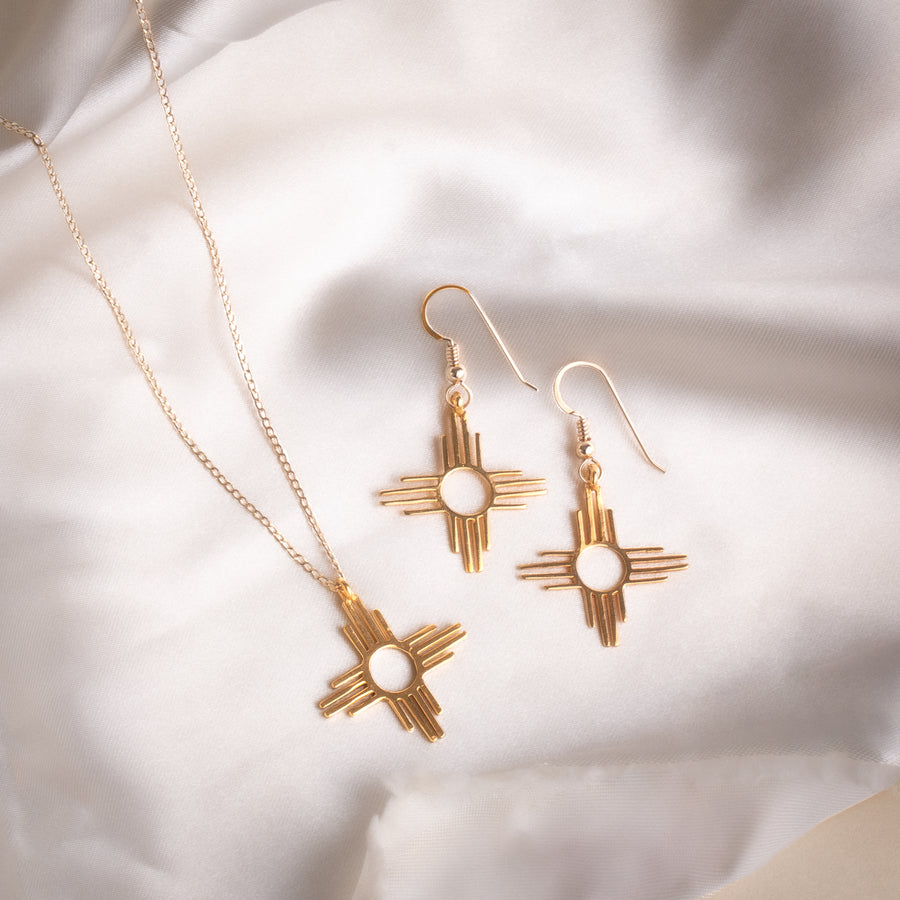
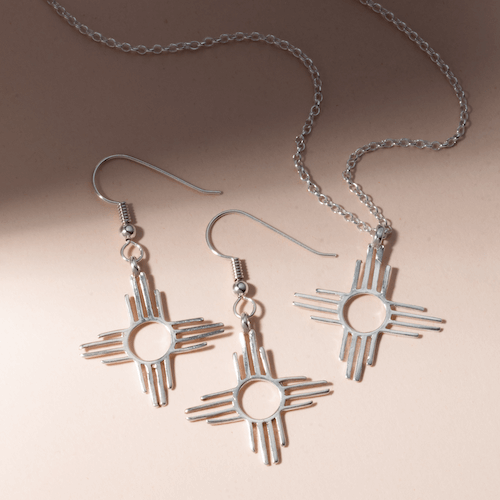
- The ZCCA mark. Hougart describes it as "ZCCA (on a knifewing)" (Hougart 2022, p. 374), and captions it "ZCCA registered trademark and stamp". "The trademark shown below, created and registered in 1967, is owned by the tribe. Its users are certified by the tribe before using the mark. It is uncertain how long, or how extensively, this mark was used on Zuni jewelry." (Hougart 2022, p. 19).
- The artist's mark beside it. Hougart notes the co-op mark alongside several artists' own marks:
- Augustine Panteah and his wife Lorie: "May be marked with the Zuni Cooperative Craftsmen Association (ZCCA) stamp. Marks: GUS & LORIE PANTEAH" (Hougart 2022, p. 236). - Shirley Bellson: "Mark: J S BELLSON (may be with Zuni Craftsmen Cooperative Association mark)" (Hougart 2022, p. 56). - Maria and Stewart Tucson: "S TM (may be with ZCCA Guild mark)" (Hougart 2022, p. 321).
In each case, the personal mark names the maker. The ZCCA mark by itself can't tell you which artist made a piece.
- Co-op, not guild. Hougart files the ZCCA as an institution and a co-op. One of his entries says "ZCCA Guild mark" (Hougart 2022, p. 321), but it is the same co-op mark, not a separate guild.
Legacy
The co-op was the Zuni answer to a problem in the trade: poor materials sold into the village (Hougart 2022, p. 19). Its tribe-owned mark joined the Navajo and Hopi guild marks as one of the first organized efforts to vouch for Native silver (Hougart 2022, p. 8). Our sources don't give a current, dated account of the co-op, so we don't say whether it is open today. For the wider story, see our history of trading posts.
A note on accuracy. We strive for accuracy, and this page is continuously updated with new information from the artists, their families, and the community. Corrections welcome.
← Back to the Southwest Jewelry Guide
Sources
- Hougart, Bille. 100 Collectible Native American Silversmiths and Their Hallmarks. 2020. pp. 15, 144.
- Hougart, Bille. Native American and Southwestern Silver Hallmarks. 5th ed., 2022. pp. 8, 19, 31, 56, 60, 69, 126, 236, 321, 374.
- Turnbaugh, William A., and Sarah Peabody Turnbaugh. Indian Jewelry of the American Southwest. 2007 ed. (text written in the late 1980s). p. 56.
- Zuni tourism site. "Galleries." zunitourism.com, accessed 2026-09-28. (The 1960s ordinance and the grant source.)
- Bassman, Theda, and Michael Bassman. Zuni Jewelry. Revised and Expanded 3rd Edition. Photographs by Gene Balzer. Atglen, Pennsylvania: Schiffer Publishing, 2006 (first published 1992). Cited by printed page. Statements describe conditions as of 2006.
- Hodge, Frederick Webb, ed. Handbook of American Indians North of Mexico, Part 1 (A–M). Smithsonian Institution, Bureau of American Ethnology, Bulletin 30. Washington: Government Printing Office, 1907. Public domain (U.S. government publication). Cited by printed page. Statements describe conditions as of 1907.
Part of our Southwest Jewelry Business Directory.
From the Library: Bassman and Bassman, Zuni Jewelry (2006)
2006 primary source. Anything described as current here describes 2006, not today.
Writing in the early 1990s (text carried into the 2006 edition), Bassman and Bassman (2006) reported how many Zuni people made jewelry:
“Of this number, approximately sixty-five percent of the tribal members, or 5,250, are involved in handcrafting jewelry. This activity provides their principal source of income.”
— Bassman and Bassman (2006), p. 5 [5]
Bassman and Bassman (2006, p. 5) put the tribal membership at the time at 8,084 and the reservation at 409,182 acres, and listed the other livelihoods: livestock, agriculture, other arts and crafts, tribal government work, limited local industry and some off-reservation employment. [5]
From the Library: Hodge, Handbook of American Indians North of Mexico, Part 1 (1907)
1907 primary source. Anything described as current here describes 1907, not today.
Long before the co-op, Otis T. Mason described the trade as of 1907, writing in Hodge (ed., 1907):
“The Zuñi and some of the Rio Grande pueblos use shell beads and turquoise, trading largely with the Navaho.”
— Hodge (1907), p. 332 [6]
Writing in Hodge (ed., 1907), beside a drawing captioned 'Use of Pump Drill by a Zuni', J. D. McGuire noted:
“The pump drill, although long in common use among the Pueblo Indians, is probably of foreign origin.”
— Hodge (1907), p. 403 [6]