



Perry Shorty

Hallmark documented in: Hougart, Schaaf (1200 Bios), Dubin (Glittering World), art-amerindien.com. Rendered from the documented mark, not a photograph.
Overview
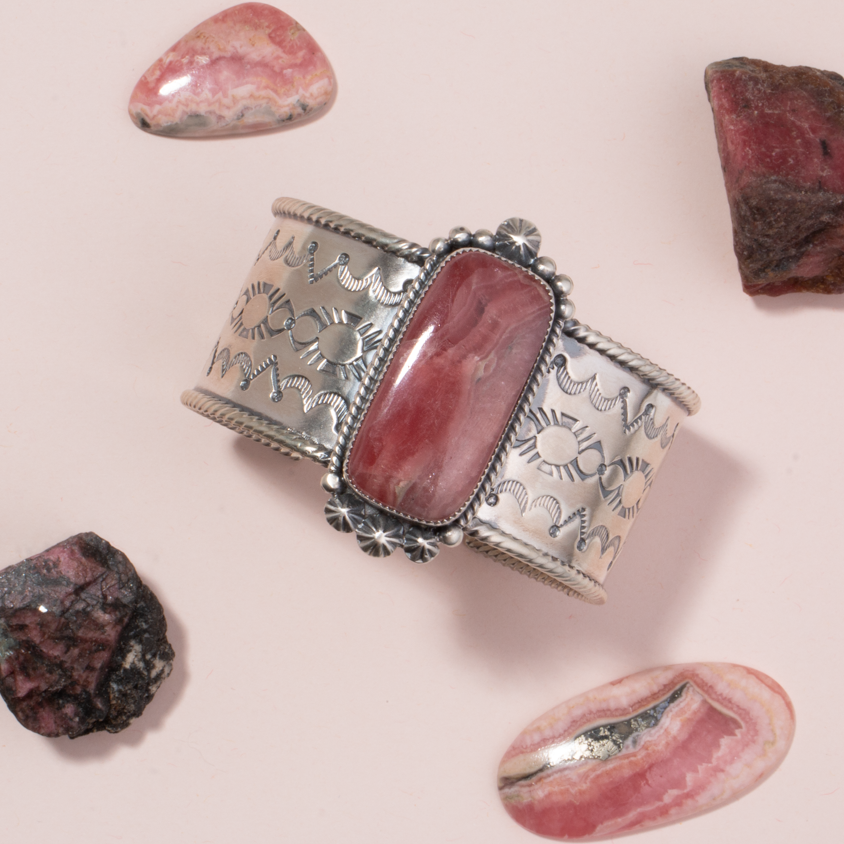
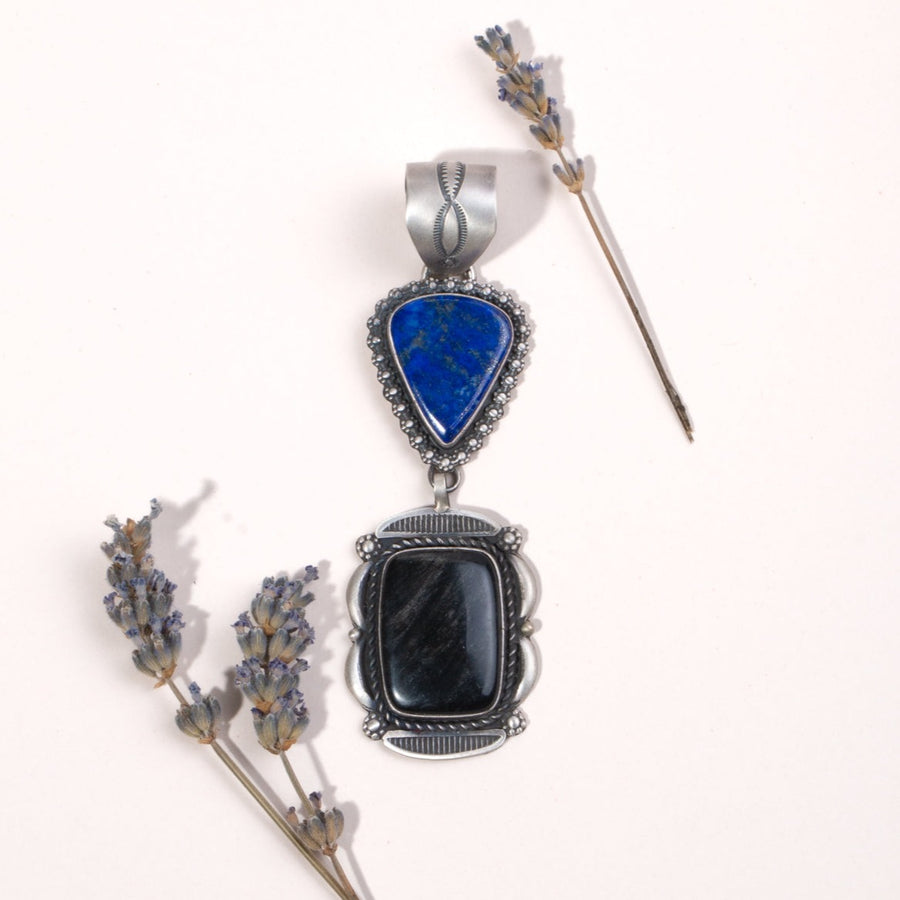
Perry Shorty (born 1964) is a Navajo silversmith active since the 1980s, working hand-wrought and traditional: ingot silver, appliqué, stamp- and file-work, and set stones. Hougart describes him as a maker of traditional Navajo jewelry using old, classic techniques, and a multiple award winner.
His documented marks are P. SHORTY and a P Sh form — it appears alongside 'Coin Silver'. Work may also be marked for Christopher's Enterprises, Inc. Hougart lists other Shorty silversmiths (Dooley, Pearl, Randy) but states no family relation for Perry, so we record none.
The Mark
"Perry Shorty (1964-; Navajo). Active since 1980s. Hand wrought; traditional; ingot; applique; stamp- and file-work; set stones. Perry Shorty is a maker of traditional Navajo jewelry using old, classic techniques.17 Multiple award winner. Marks: P. SHORl Y P Sh (s · t f 'th Coin Silver); may be marked for Christopher's Enterprises, Inc."
— Hougart, Bille. Native American and Southwestern Silver Hallmarks, 5th ed. (2022).
The mark as documented in Hougart's hallmark reference: P. SHORTY; P Sh (appears alongside 'Coin Silver'); may be marked for Christopher's Enterprises, Inc..
References
- Hougart, Bille. Native American and Southwestern Silver Hallmarks, 5th ed. Washington, DC: BilleHougartBooks, 2022.
- Bassman, Theda. The Beauty of Navajo Jewelry. Photography by Gene Balzer. Walnut, California: Kiva Publishing, 1997. Cited by printed page. Statements describe conditions as of 1997.
- Jacka, Lois Essary. Navajo Jewelry: A Legacy of Silver and Stone. Photographs by Jerry Jacka. Flagstaff: Northland Publishing, 1995. Cited by printed page. Statements describe conditions as of 1995.
- Baxter, Paula A., with Allison Bird-Romero. Encyclopedia of Native American Jewelry: A Guide to History, People, and Terms. Phoenix: Oryx Press, 2000. Cited by printed page. Statements describe conditions as of 2000.
- Schaaf, Gregory, with Angie Yan Schaaf. American Indian Jewelry I: 1,200 Artist Biographies, ca. 1800-present. American Indian Art Series, Vol. 5. Santa Fe: CIAC Press, 2003. Cited by printed page. Statements describe conditions as of 2003.
Know more about this artist? Contact T.Skies.
From the Library: Bassman, The Beauty of Navajo Jewelry (1997)
1997 primary source. Anything described as current here describes 1997, not today.
Bassman (1997, p. 8) pictured an unfinished concha belt by Perry Shorty with traditional Navajo stamp and repoussé work, set with McGinnis turquoise. [1]
Bassman (1997, p. 9) pictured a finished silver box by Perry Shorty with repoussé work, a Chinese Mountain turquoise stone and forty-two silver dangles on the front and sides. [1]
Bassman (1997) pictured earrings by him:
“Stamped oval with a Blue Gem turquoise stone made by Perry Shorty.”
— Bassman (1997), p. 31 [1]
Bassman (1997, p. 38) pictured a 14-karat gold ring by Perry Shorty with a twisted wire border scalloped on two sides and a natural Turquoise Mountain stone. [1]
Bassman (1997) pictured a gold piece of his:
“Gold reversible brooch/pendant with filigree wire work and a Chinese Spider Web turquoise stone, made by Perry Shorty.”
— Bassman (1997), p. 49 [1]
Bassman (1997, p. 68) pictured two squash blossom necklaces by Perry Shorty: a variation with Liberty coins dated 1919-1935 and Globe turquoise on the cast naja, and one with 109 Blue Gem turquoise stones and cast corn. [1]
From the Library: Jacka, Navajo Jewelry: A Legacy of Silver and Stone (1995)
1995 primary source. Anything described as current here describes 1995, not today.
Lois Essary Jacka, writing in 1995:
“To make his work as true to the past as possible, he studied old jewelry in museums and took notice of what the older people wore at fairs and other social gatherings.”
— Jacka (1995), p. 60 [2]
A 1995 caption on his tools:
“Shown here are just a few of the stamps that he makes himself, some from cut concrete nails.”
— Jacka (1995), p. 60 [2]
From the Library: Baxter, Encyclopedia of Native American Jewelry (2000)
2000 primary source. Anything described as current here describes 2000, not today.
Baxter (2000) placed him among the Navajo revival makers:
“Pride in the earlier period of Navajo silver is another theme explored by some artists, such as Thomas Curtis, Sr., Harry Morgan, and Perry Shorty (b. 1964), who consciously make revival-style pieces.”
— Baxter (2000), p. 117 [3]
According to Baxter (2000, p. 160), Perry Shorty apprenticed with his brother-in-law from 1986 to 1990. [3]
As of 2000, Baxter described his stones:
“Shorty’s jewelry is marked by carefully matched high-quality stones, often with strong matrix markings, such as that found in Morenci and Blue Gem turquoise; he chooses these materials because he feels they balance well with stamped silver.”
— Baxter (2000), p. 160 [3]
Baxter (2000, p. 160) recorded that he had exhibited at the Heard Museum Guild Fair in Phoenix and won awards at the Gallup Inter-tribal Indian Ceremonial in 1988 and the SWAIA Indian Market in 1995. [3]
From the Library: Schaaf, American Indian Jewelry I (2003)
2003 primary source. Anything described as current here describes 2003, not today.
Schaaf (2003, p. 216) named Perry Shorty, with Steven Tiffany, as a student of the ingot-silver smith Ernie Lister, his brother-in-law. [4]
Schaaf (2003) entered him as
“Perry Shorty (stamps P. Shorty in Gothic and script)”
— Schaaf (2003), p. 287 [4]
Schaaf (2003, p. 287) recorded Perry Shorty as Navajo, born about 1964 and living at Ganado, active from about 1988 in traditional hand-wrought, ingot and fabricated silver, with a 1995 SWAIA Fellowship and his work in the Peabody Museum at Harvard and the British Museum in London. [4]
Schaaf (2003) wrote:
“He can make a bracelet or concha belt using the same techniques of his ancestors a century earlier.”
— Schaaf (2003), p. 288 [4]
Perry Shorty told Schaaf (2003):
“I try to work with the stones -- they dictate the style.”
— Schaaf (2003), p. 288 [4]
This profile is maintained in support of Native American silversmiths and compiled from published references. See something inaccurate, or want to add to it? Contact us.