



Larry Golsh — Pala Mission / Cherokee Jeweler & His Mark
Lawrence C. "Larry" Golsh, b. 1941. Pala Mission and Cherokee. The architect who built jewelry.
Larry Golsh didn't come to the bench from a family of silversmiths. He came from architecture. He studied it, with a sculptor's emphasis, at Arizona State, and from 1968 to 1972 he apprenticed on Paolo Soleri's Arcosanti — the visionary experimental desert city — carrying its structural, monumental sensibility with him. Then he did something almost no traditional Native jeweler of his era did: he trained in Western fine jewelry, became the first Native American to study at the Gemological Institute of America, and spent twelve years working alongside a French master goldsmith. What he built out of all that is a rare fusion — traditional tufa casting married to gemological precision — that got him grouped, in the pages of Forbes, with Charles Loloma himself.
The Smith
He was born in 1941, his father of the Pala Band of Mission Indians in Southern California, his mother Cherokee, and he grew up near the Pala reservation outside San Diego. The rock art in the hills and canyons there — ancient petroglyphs and pictographs — lodged in him early and became, decades later, the source of his designs. At ASU the sculptor Ben Goo encouraged him; on the Arcosanti project he learned to think at architectural scale. The turn to jewelry came in 1969, when he met the Hopi jeweler Charles Loloma, whom he credits as the inspiration to begin. He learned silversmithing in the early 1970s and then worked for twelve years with the French jeweler Pierre Touraine, absorbing European gemstone-setting and goldsmithing — the same Old World bench that shaped Charles Supplee and Harvey Begay.
The Work
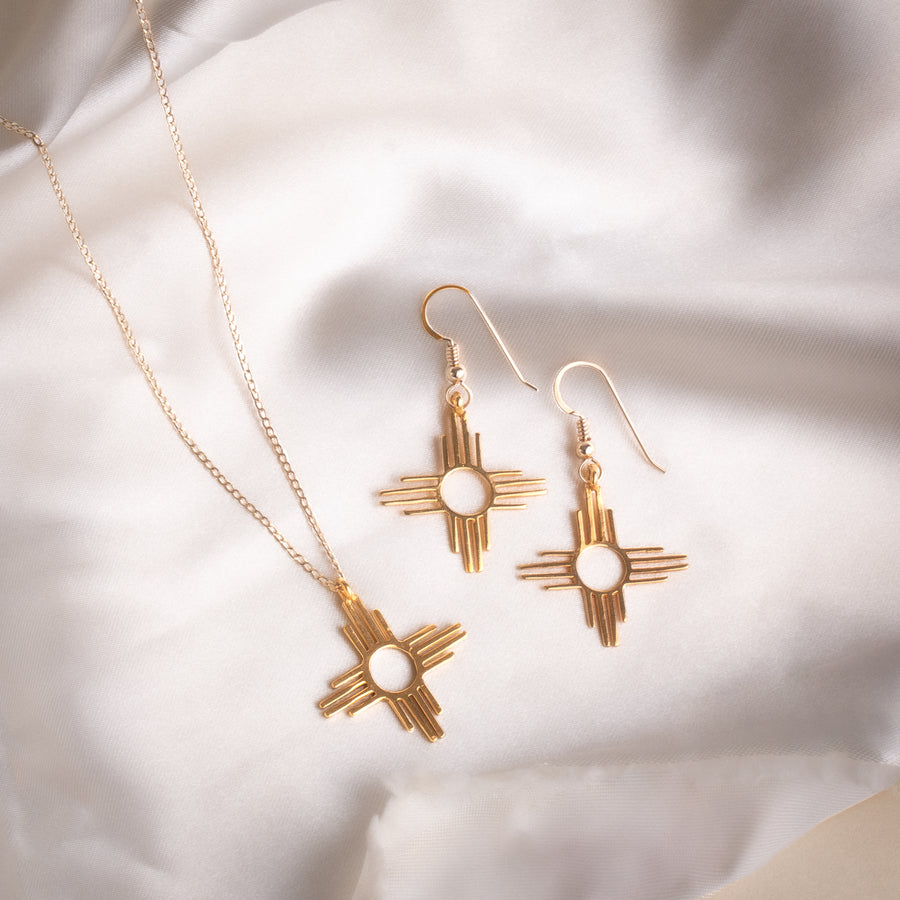
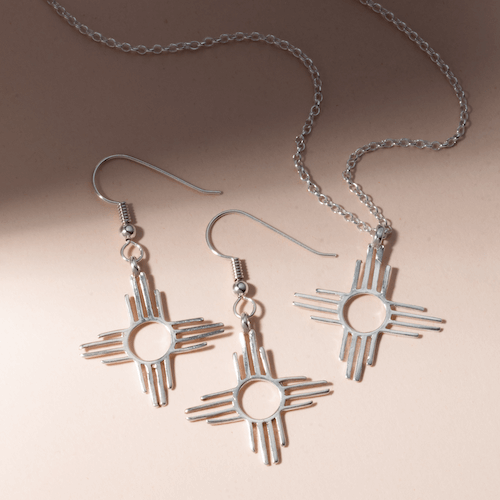
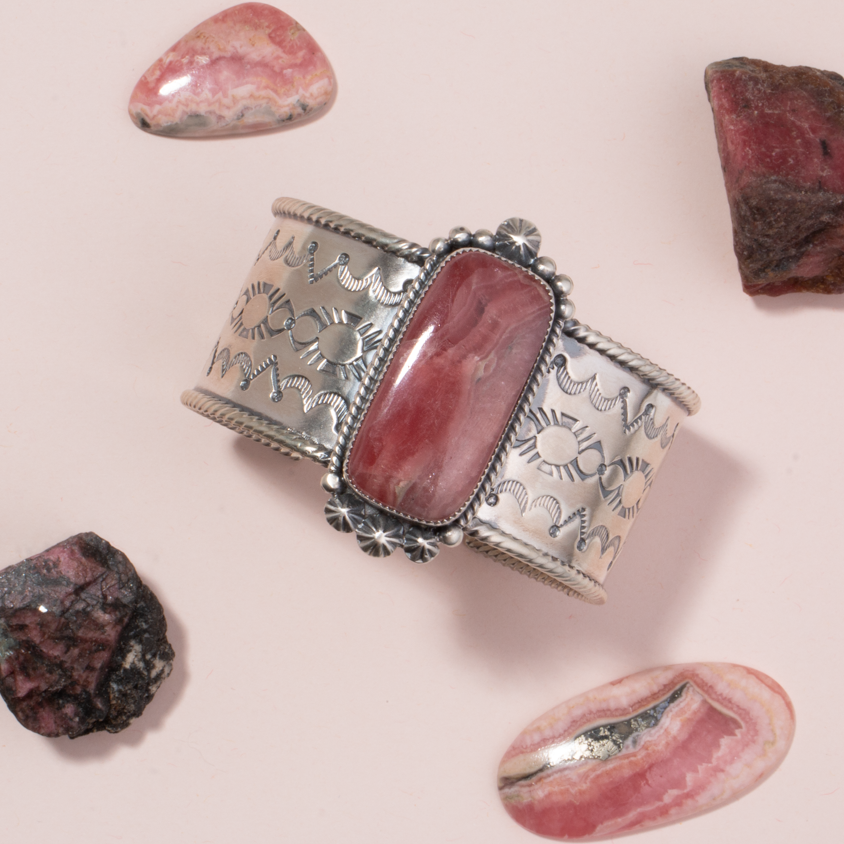
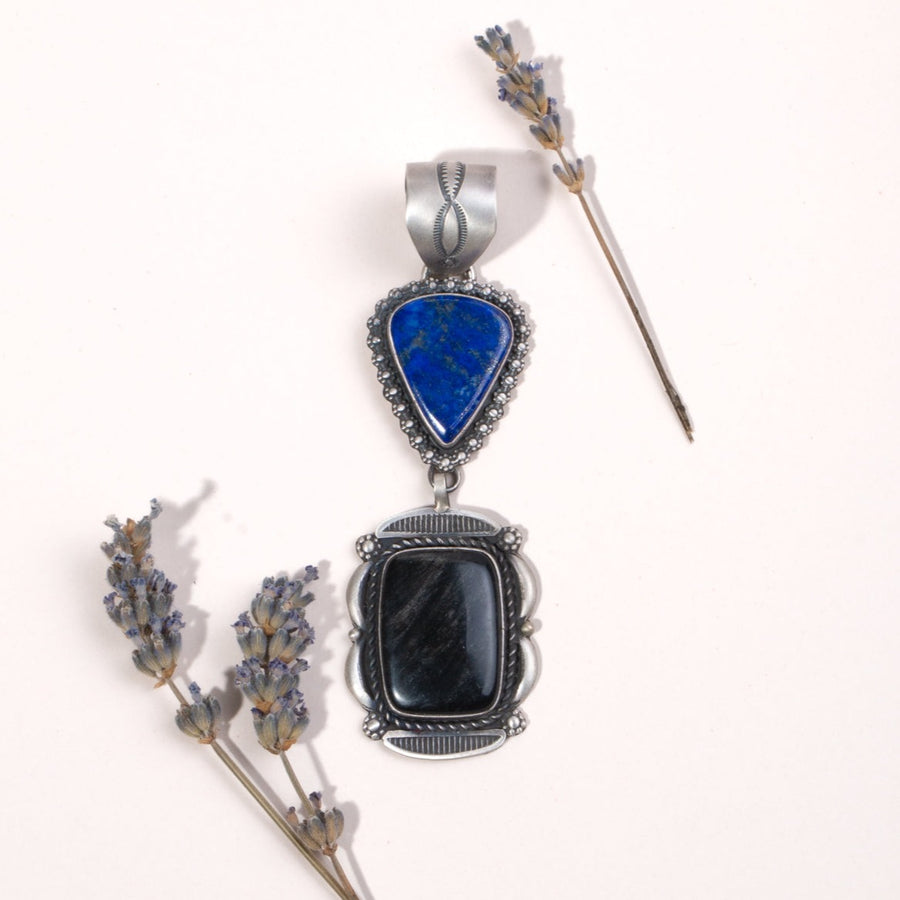
Golsh's signature is tufa casting in high-karat gold — the old Southwestern lost-form method, in which a design is carved into volcanic stone and molten metal poured in, but worked in 18k gold as often as silver and set with serious gemstones: diamonds, lapis, coral, onyx, and a favorite, Russian charoite. His forms are abstract and sculptural, drawn from the rock art of his childhood canyons — the architect's structural eye and the gemologist's precision brought to a traditional casting technique. It's that combination that sets him apart: not turquoise-and-silver in the old vocabulary, but cast, gem-forward, fine-jewelry work with a Native casting method at its heart. Forbes, in a piece titled "American Fabergé," said of Golsh and Loloma that they had "attained a whole new aesthetic level… their style is now fully international."
The Standing
Golsh has received two National Endowment for the Arts grants and was the subject of a PBS documentary on his work. His tufa-cast, natural-turquoise bracelets made the cover of American Indian Art Magazine in 1976, and his jewelry is documented in the standard references of the field — Dexter Cirillo's Southwestern Indian Jewelry, Jerry Jacka's Beyond Tradition, and Lois Dubin's North American Indian Jewelry and Adornment. His work is held at the Wheelwright Museum of the American Indian. Among the generation that carried Native jewelry onto the international stage, Golsh is the one who came in through architecture and gemology — and made the tufa cast speak that language.
Know more about Larry? Contact T.Skies.
- Pardue, Diana F. Contemporary Southwestern Jewelry + Bahti, Mark. Silver + Stone.
- Larry Golsh — official studio site
- Larry Golsh — Mahnaz Collection
- Larry Golsh — Shiprock Santa Fe
- Larry Golsh — Faust Gallery
- Golsh, Lawrence G. (Larry) hallmark index — Medicine Man Gallery
From the Library: Baxter, Encyclopedia of Native American Jewelry (2000)
2000 primary source. Anything described as current here describes 2000, not today.
Baxter (2000, p. 62) gave Larry Golsh's birth date as January 31, 1942, and his heritage as Pala Mission/Cherokee. [1]
As of 2000, Baxter described his technical work:
“Golsh works steadily on technical innovations that incorporate such processes as tufa casting, and his “seashell effect,” achieved by cuttlebone casting.”
— Baxter (2000), p. 62 [1]
According to Baxter (2000, p. 62), his early pieces often used Lone Mountain, Morenci and Bisbee turquoise, as well as coral, ironwood and more unusual stones. [1]
Baxter (2000, p. 63) recorded that he won 11 awards for his jewelry in 1975 alone, from Arizona institutions and art competitions. [1]
From the Library: Schaaf, American Indian Jewelry I (2003)
2003 primary source. Anything described as current here describes 2003, not today.
Schaaf (2003, p. 163) recorded Larry Golsh as Pala Mission/Cherokee, born in 1942, and wrote that he learned jewelry making in 1971 from the Hopi jeweler Manfred Susunkewa at the Kiva Craft Center in Scottsdale, naming Pierre Tourraine, Lloyd Kiva New and Paolo Soleri as further teachers. [2]
Golsh told Schaaf (2003):
“It's good to hold onto the tradition, but you must go beyond it for your personal development.”
— Schaaf (2003), p. 163 [2]
Schaaf's 2003 hallmark index gives LG to two makers:
“LG (Lorencita Garcia, Larry Golsh)”
— Schaaf (2003), p. 156 [2]
From the Library: Dubin, North American Indian Jewelry and Adornment (1999)
1999 primary source. Anything described as current here describes 1999, not today.
In Dubin's 1999 book, Golsh said of his work:
“I always consider jewelry as miniature sculptures.”
— Dubin (1999), p. 456 [3]
Dubin (1999, p. 456) wrote that the geometric forms of a 1993 Golsh necklace were adapted from southern California basketry and rock art, recalling his Mission background. [3]
Field Notes by Mateo James
Our profile gives 1941 for Larry's birth. Baxter's 2000 encyclopedia prints January 31, 1942 (p. 62). The two are a year apart, and I've shown both rather than choose.
Sources
- Baxter, Paula A., with Allison Bird-Romero. Encyclopedia of Native American Jewelry: A Guide to History, People, and Terms. Phoenix: Oryx Press, 2000. Cited by printed page. Statements describe conditions as of 2000.
- Schaaf, Gregory, with Angie Yan Schaaf. American Indian Jewelry I: 1,200 Artist Biographies, ca. 1800-present. American Indian Art Series, Vol. 5. Santa Fe: CIAC Press, 2003. Cited by printed page. Statements describe conditions as of 2003.
- Dubin, Lois Sherr. North American Indian Jewelry and Adornment: From Prehistory to the Present. Original photography by Togashi, Paul Jones, and others. New York: Harry N. Abrams, 1999. Cited by printed page. Statements describe conditions as of 1999.
This profile is maintained in support of Native American silversmiths and compiled from published references. See something inaccurate, or want to add to it? Contact us.