



Pueblo Pottery Design: How the Potters Built a Pattern
In the summers of 1924 and 1925, the anthropologist Ruth Bunzel sat with potters at Zuni, Acoma, Laguna, the Hopi mesas and San Ildefonso, and asked them how they decided what to paint. Her book, The Pueblo Potter (1929), is the record of their answers. It is still the best study we own of how a Pueblo design is put together, and almost everything on this page comes from it. Page numbers are Bunzel’s unless another book is named.
What she found is not a dictionary of symbols. It is a set of working rules about space, line and rhythm, held in the potters’ heads and different in every village.
Why a jewelry house writes about pottery
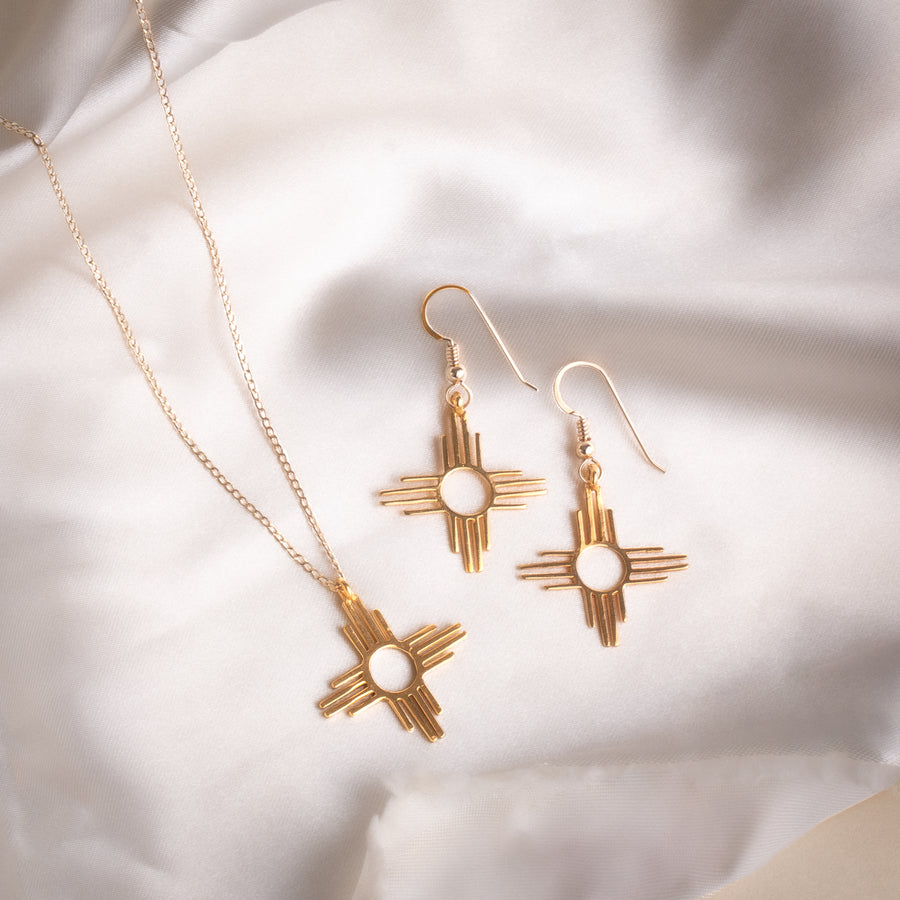
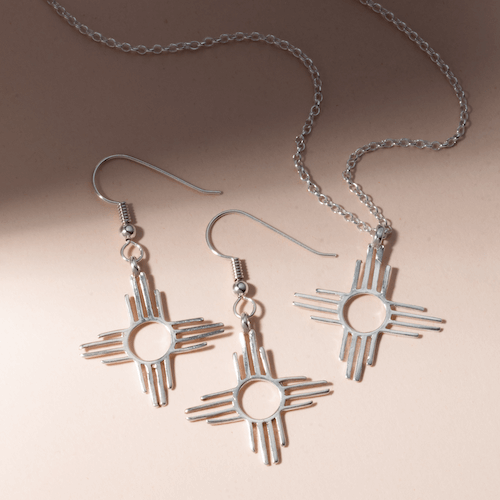
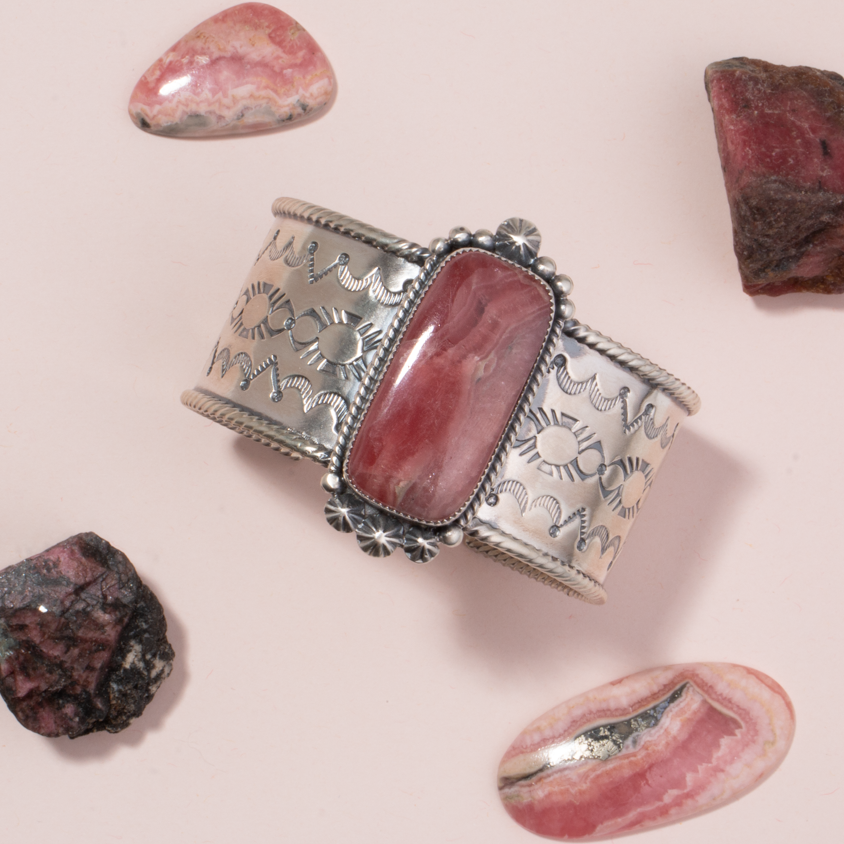
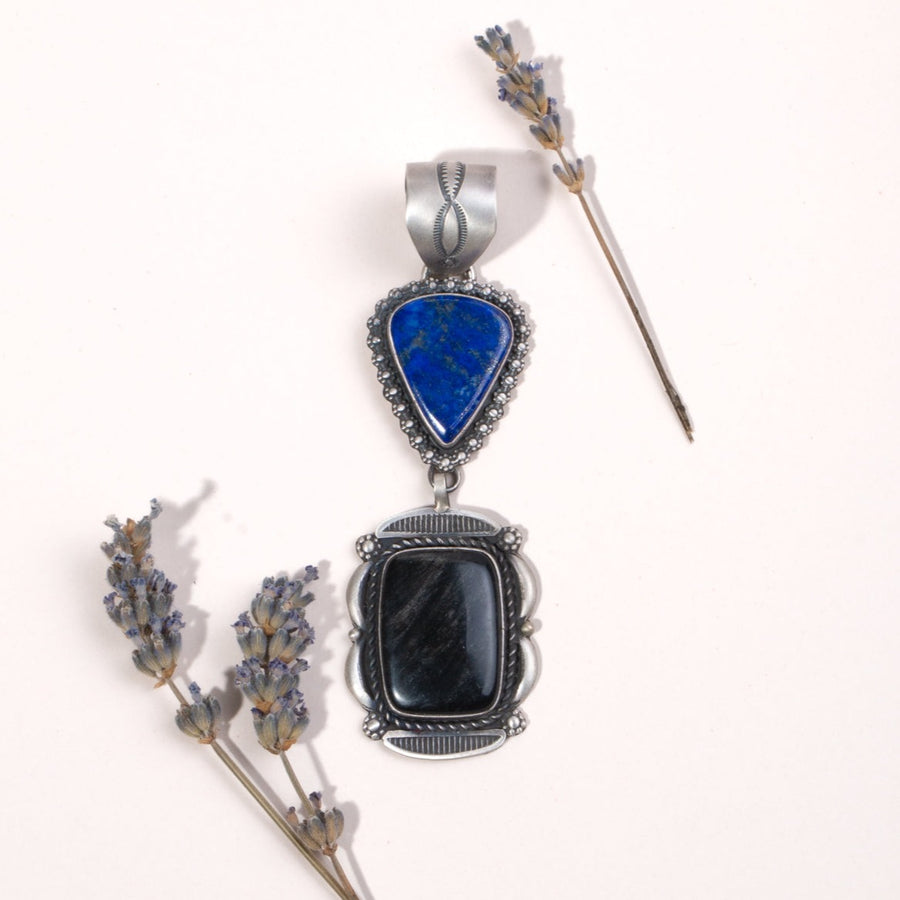
Pottery came first, and at Hopi the debt is on record. Margaret Wright’s history of Hopi silver tells how Virgil Hubert, Assistant Curator of Art at the Museum of Northern Arizona, created jewelry designs for Hopi smiths. As he worked, he “found that the basketry and pottery designs lent themselves especially well to the appliqué technique” (Wright 2003, p. 32). The line on the bowl came before the line on the silver.
The pot decides the field
Bunzel’s first lesson is structural: the shape of the vessel draws the boundaries of the design.
“At Zuni there is a definite break between neck and body, and another between body and base.”
(p. 10)
At Zuni, each of those breaks became the edge of a separate field. The potters had names for them: the upper field was “the ‘neck’ (sometimes the ‘lips’ …), and the lower and larger field, the ‘stomach’” (p. 13). Neck and stomach designs never traded places. Bunzel put it this way: “A neck design can never rise to the dignity of a stomach design, and no stomach design would demean itself to the extent of adorning a neck” (p. 16).
Acoma worked the other way. Where the vessel’s curve runs unbroken, “the whole surface is treated as a single decorative field” (p. 10). Same clay country, a different reading of the same form.

The line that stays open
At Zuni, the first stroke of paint on any jar or bowl was the heavy line between neck and body (p. 13). It was also the one line the potter always left unjoined. A Zuni potter explained why:
“It is called onane, road, the usual Zuni term for the span of life. It is identified not with the life of a being inhabiting the pot, as Cushing claims, but with the life of the potter. For this reason, it is always left unjoined. ‘When I finish it, I shall finish my road,’ i. e. end my life.”
(p. 69)
Bunzel called it “a true symbol, the only one in Zuni art” (p. 69). The rest, in her reading, was design. Hopi potters kept a broad black band at the edge of the bowl’s field that “corresponds to the Zuni life line, and, like it, is always broken” (p. 38). Nampeyo built her bowls from it:
“For the bowl I always use a one-line design. It must start from the ‘road line,’ and come back into it again.”
Nampeyo, p. 42
On the Zuni and Hopi pots Bunzel studied, that gap was deliberate.
Four villages, four ways of seeing
Zuni: line and space. Zuni design was clear and boxed off, with heavy structural lines and white space used as a design element in its own right (p. 32). Its rhythms were simple repeats, which Bunzel wrote out as letters: a, a, a; a, b, a, b; a, b, b, a, b, b (p. 29).
Acoma: the jar is the unit. “For the Acoma artist the unit of design is the jar. It is an indivisible whole; and no smaller units are recognized” (p. 35). The pattern did not follow the vessel’s structural lines (p. 35), and it filled the surface “without break … from rim to base” (p. 32). Bunzel’s summary: “Whereas Zuni patterns are largely a handling of line, Acoma patterns are primarily a treatment of surfaces” (p. 35). Acoma kept two styles strictly apart, one representational and one geometric (p. 29), and its bird was always drawn in profile, with a curved beak and a single pointed wing (p. 32).
Hopi: masters of line. The Hopi style Bunzel saw was “a revival of the ancient type exemplified by the Sikyatki ware” (p. 38). On a bowl the design hung from the road line, with “no recognition of the center of the bowl” (p. 41), and bird forms led (p. 42). Her verdict: “The Hopi potters are the pre-eminent masters of line, and like all masters, are well aware of the importance of simplicity” (p. 42).
San Ildefonso: the polish is the design. At San Ildefonso, painted wares had “recently been superseded” by “an all black ware which depends for decorative effect upon the manipulation of surface finish alone” (p. 44). “The outstanding characteristic of San Ildefonso design is its restraint and brevity of expression” (p. 46). Its most frequent design was the avanyu, the horned serpent (p. 46).
In the potters' own words
In one chapter, Bunzel let the potters speak. Some of what she heard:
“Anyone can make a good shape, but you have to use your head in putting on the design.”
(heard, she wrote, “from many women in many different villages,” p. 49)
“I am always thinking about designs, even when I am doing other things, and whenever I close my eyes, I see designs in front of me.”
Hopi, p. 51
“I try to paint all my thoughts on my pottery.”
Laguna, p. 51
“It is hard to learn how to paint well, — harder than making the pot.”
Zuni, p. 61
“I am the only person who makes a checkerboard design around the rim, so I can always tell my bowl by looking at the edge.”
Zuni, p. 65
And on copying: “It would not be right to use another woman’s design without asking” (Zuni, p. 52). Bunzel found “the condemnation of copying the designs of other women is unanimous” (p. 52).
That last rule is one we take seriously in jewelry. A design belongs to the person who made it, and the polite move is the same in silver as in clay: ask.
Two turns that changed the work
Bunzel saw “two such revolutions in recent years” in the villages she studied, “and in each case the revolution in style can be traced to a striking personality” (p. 88).
At Hano, “Nampeyo … revived and adapted the ancient ware of Sikyatki” (p. 88). She told Bunzel she learned by going to the ancient village, picking up pieces of pottery and copying the designs. “But now I just close my eyes and see designs and I paint them” (p. 56). Bunzel was careful about what she had done: “She did not copy Sikyatki patterns, her imagination recreated the Sikyatki sense of form” (p. 88).
At San Ildefonso, the change was technical. Bunzel dated it to 1921, when Maria Martinez began applying designs “in dull black paint to the polished surface immediately before firing” (p. 82), and she wrote of Maria and Julian that “together they invented a new technical process” (p. 88). Tryk’s book on the Santa Fe Indian Market gives an earlier date and credits both: “Around 1918, Maria and Julian Martinez of San Ildefonso Pueblo developed a new technique” (Tryk 1993, p. 97). The sources differ on the year. Both put the black-on-black ware in the hands of Maria and Julian.
Reading Bunzel today
Bunzel wrote nearly a century ago, from two summers of fieldwork. Her “always” and “never” describe what she was told in 1924 and 1925, not a rule for every potter since. Styles moved even then: she noted that Acoma pottery collected fifty years before her visit was decorated “according to entirely different principles” (p. 36). And meaning belongs to the people who hold it. Where a design’s meaning is kept within the community, this page leaves it there.
From The Pueblo Potter


Sources
- Bunzel, Ruth L. The Pueblo Potter: A Study of Creative Imagination in Primitive Art. Columbia University Contributions to Anthropology, vol. VIII. New York: Columbia University Press, 1929. pp. 10, 13, 16, 29, 32, 35, 36, 38, 41, 42, 44, 46, 49, 51, 52, 56, 57, 61, 65, 69, 82, 88. Public domain.
- Tryk, Sheila. Santa Fe Indian Market: Showcase of Native American Art. Photography by Mark Nohl, introduction by Allan Houser. Santa Fe: Tierra Publications, in cooperation with the Southwestern Association on Indian Affairs, 1993. p. 97.
- Wright, Margaret Nickelson. Hopi Silver: The History and Hallmarks of Hopi Silversmithing. Rev. ed. University of New Mexico Press, 2003. p. 32.