



Lone Mountain Turquoise: Field Guide to One of Nevada's Best
Lone Mountain turquoise comes from the Tonopah area of Nevada and is one of the few American deposits repeatedly singled out by the specialist literature. Oscar Branson calls it plainly "one of the leading producers of fine turquoise in Nevada."1 Its documented history runs from a 1920 claim through a mid-century stretch when it was the only American turquoise production anyone reported at all.
More Lone Mountain turquoise examples
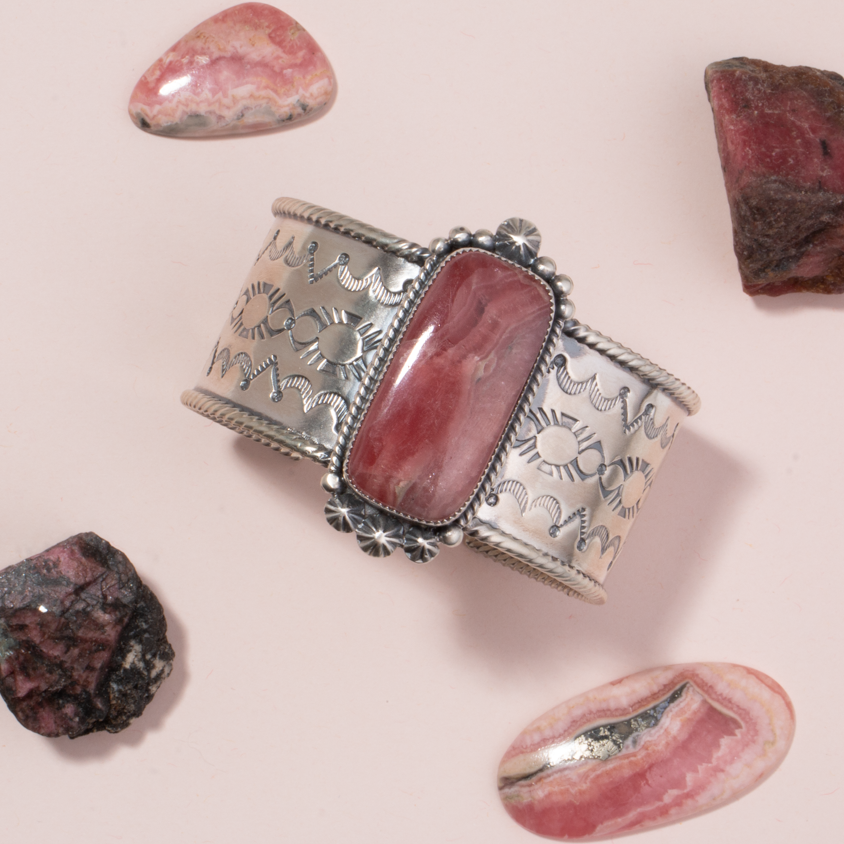
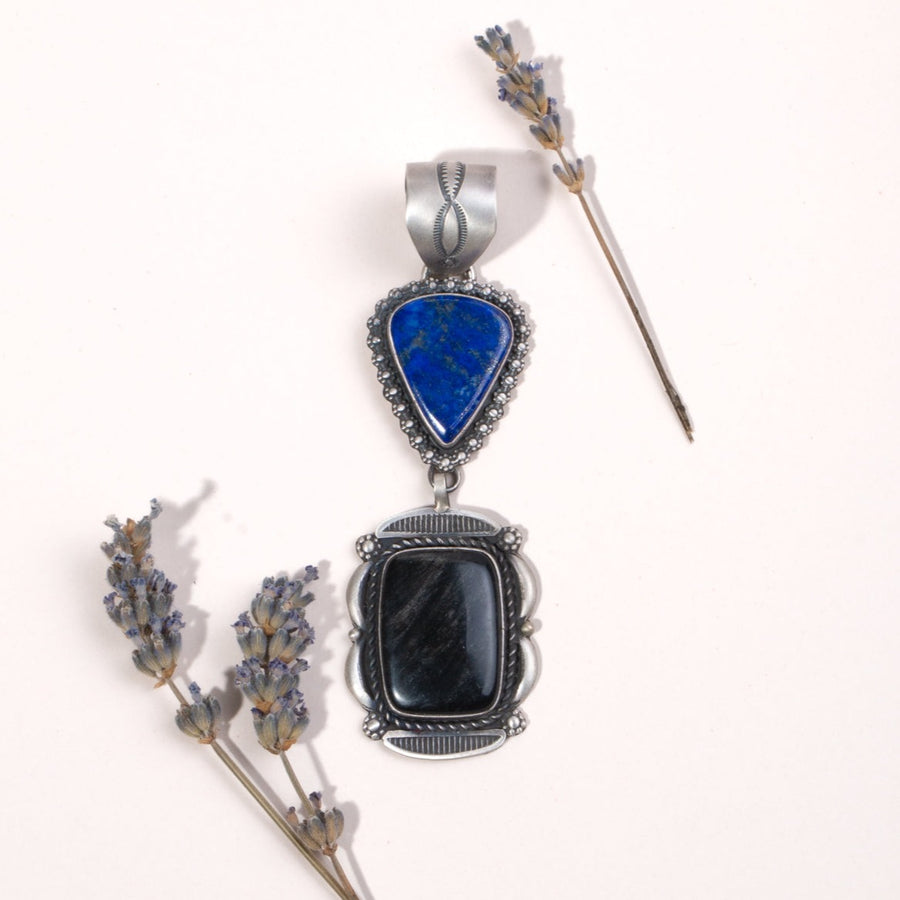
Real Lone Mountain turquoise from the T.Skies archive, photographed by us. Tap these stones to see it up close.


From the Library: Chambless & Ryan, Turquoise in America, Part One (2021)
2021 primary source. Anything described as current here describes 2021, not today.
Chambless & Ryan (2021) add a later owner:
“The Waddell family was involved in mines in Arizona and Nevada and became owners of the Lone Mountain mine in Nevada.”
— Chambless & Ryan (2021), p. 187 [3]
Jacka (1995, p. 81) also described Gene Waddell, of Waddell Trading Company in Scottsdale, as "co-owner of the Lone Mountain Mine in Nevada" as of 1995. [12]
From the Library: Lowry, Turquoise: The World Story of a Fascinating Gemstone (2010)
2010 primary source. Anything described as current here describes 2010, not today.
According to Lowry (2010, p. 140), Lone Mountain produced a limited amount of turquoise compared with the enormous size of its tailing piles, mainly small nuggets with a few larger 1- to 2-inch nuggets or veins. [5]
According to Lowry (2010, p. 140), in the 1970s, when some of the mine's best-quality turquoise was sold by size and grade, owner Menless Winfield required buyers to purchase three pounds of small rough to get one pound of bigger rough. [5]
Lowry (2010) dates the modern claim:
“It was in 1920 that Lee Hand claimed the deposits under the name of the Blue Jay Mining Lode.”
— Lowry (2010), p. 222 [5]
According to Lowry (2010, p. 222), the Moser brothers from Germany were said to be the first miners in the area, and Lee Hand was led to the deposits by a man who owed him money and hoped the debt would be forgiven, which it was; Hand later sold out to Doc Wilson. [5]
On the mine's peak years, Lowry (2010) wrote:
“This area has produced turquoise for generations, with the largest production during the 1970s when Menless Winfield owned the mine.”
— Lowry (2010), p. 222 [5]
According to Lowry (2010, p. 222), decades of unorganized tunneling weakened the hillside, so Menless Winfield used heavy equipment to collapse the old tunnels and build a small open-pit operation, which ran until he judged it too dangerous and expensive to keep mining. [5] Lowry (2002, p. 49) also describes the mine as a series of haphazard tunnels that became increasingly dangerous to operate. [9]
As of 2010, Lowry (2010, p. 222) reported that owner Chris Lott was still mining pockets of turquoise, working closely with mining engineers to develop the site safely. [5]
From the Library: Bahti, Silver + Stone: Profiles of American Indian Jewelers (2007)
2007 primary source. Anything described as current here describes 2007, not today.
According to Bahti (2007, p. 175), Navajo silversmith Jack Tom credited the success of his early pieces, shown from 1974, to fine turquoise, naming really good Lone Mountain spiderweb and Bisbee as stones he said you no longer found as of 2007. [6]
From the Library: Schiffer, Turquoise Jewelry (2008)
2008 primary source. Anything described as current here describes 2008, not today.
Schiffer (2008, p. 41) illustrated a ring of curved Lone Mountain spider web turquoise by Lee Yazzie, Navajo, 1980; her bead-necklace pages also showed Lone Mountain chunks and nuggets from the 1970s-1980s. [2]
From the Library: Bassman, The Beauty of Navajo Jewelry (1997)
1997 primary source. Anything described as current here describes 1997, not today.
Bassman (1997, p. 10) pictured a five-row bracelet set with eighty-eight Lone Mountain turquoise stones among a group of bracelets she dated to the 1920s, artists unknown. [7]
Bassman (1997, p. 13) pictured a 1960s variation of a squash blossom necklace by Charles Chee Long, with a shadow box design and nugget-cut Lone Mountain turquoise, with a matching bracelet, earrings and ring. [7]
Bassman (1997) pictured Lone Mountain spiderweb in 14-karat gold:
“Cast gold bracelet with a Lone Mountain Spider Web turquoise stone, made by Della and Francis James.”
— Bassman (1997), p. 49 [7]
On the same page, Bassman (1997) showed:
“Gold ring with scalloped bezel work and a Lone Mountain Spider Web turquoise stone, made by Sam Begay.”
— Bassman (1997), p. 49 [7]
From the Library: Ryan & Chambless, Turquoise in America Part Two: 1910–1990 (2020)
2020 primary source. Anything described as current here describes 2020, not today.
According to Ryan & Chambless (2020, p. 71), silver was mined first in the Lone Mountain district, and the first recorded turquoise claim there was the Turquoise Queen, located March 19, 1913 by R. L. Sloan; their research indicates it was worked by the Marcher brothers of the Pacific Gem Company of Los Angeles. [8]
According to Ryan & Chambless (2020, p. 71), the Blue Jay claim was first located on March 8, 1923 by J. D. Montgomery, A. L. Stephenson, Lee F. Hand and John Reynolds as equal one-quarter owners; they note that Stephenson is often mistakenly called Al Stevens. [8]
According to Ryan & Chambless (2020, p. 71), Morrissey recorded that in 1927 the claim was leased to Bert Kopenhaver, who sank a shaft 40 feet along the vein and found the first spiderweb turquoise, which became the mine's signature stone. [8]
According to Ryan & Chambless (2020, p. 75), Morrissey also credited Kopenhaver with the screening and washing technique used at the mine ever since. [8]
According to Ryan & Chambless (2020, p. 76), a March 1929 newspaper report had Kopenhaver working five men at the Lone Mountain property, with the mine then 142 feet deep and its turquoise in matrix selling for five dollars a pound delivered in Los Angeles (the era's price). [8]
According to Ryan & Chambless (2020, p. 72), Lee Hand bought out his three partners during 1928, beginning when J. A. Reynolds sold his quarter interest on January 20, 1928, and on July 8, 1928 sold a one-half interest in the Blue Jay to Doc Wilson; by 1929 the Blue Jay and the surrounding Blue Jay Numbers 1 to 4 were known as the Lone Mountain Turquoise Mine. [8]
According to Ryan & Chambless (2020, p. 72), the Wilsons continued to own and work Lone Mountain until they sold it to Menless Winfield in 1967. [8]
According to Ryan & Chambless (2020, p. 72), Doc Wilson built a vertical network around the mine, with his American Gem Company controlling the mining, the processing and cutting, and the wholesale distribution to the growing market for Native American jewelry. [8]
According to Ryan & Chambless (2020, p. 74), Ted Johnson said lapidary Paul Kley taught Doc Wilson to cut, and the authors judge that Kley probably cut most of the Lone Mountain turquoise sent to the American Gem Company in the 1930s. [8]
Ryan & Chambless (2020) on the Navajo silversmith Fred Peshlakai, one of Doc Wilson's top customers:
“Lone Mountain turquoise became the signature stone in his work and helped define the distinctive Lone Mountain look.”
— Ryan & Chambless (2020), p. 73 [8]
Interview recollections below are the speaker's memory, published by Ryan & Chambless (2020); they describe the 1940s-1970s.
Ryan & Chambless (2020) on the mine's reputation in the 1940s-1960s:
“Lone Mountain continued as one of the premier turquoise mines in Nevada, developing a reputation as one of the most desirable mines, especially for the very high-grade dark web.”
— Ryan & Chambless (2020), p. 139 [8]
According to Ryan & Chambless (2020, p. 139), Doc Wilson developed a working relationship with the Navajo silversmith Fred Peshlakai, who often used high-grade Lone Mountain turquoise in his jewelry. [8]
According to Ryan & Chambless (2020, p. 139), the Wilsons bought Lee Hand's interest in 1940 and worked the mine through the 1940s and 1950s; after Doc Wilson died in 1965, the mine was sold in 1967 to Menless Winfield, who had recently sold the Villa Grove and was then working claims at Courtland, Arizona. [8]
Robert Winfield recalled, in an interview published by Ryan & Chambless (2020, p. 140), that his father bought the Blue Jay claims from Bill and Dorothy Wilson in 1967, while Robert was still in high school, staked more claims nearby, and that the deed reads 1974 only because that was when the purchase was paid off. [8]
According to Ryan & Chambless (2020, p. 168), Menless and Grace Winfield bought Lone Mountain in 1967. [8]
Robert Winfield recalled, in an interview published by Ryan & Chambless (2020, p. 143), that Lone Mountain was still worked through tunnels when his family took it over, which they judged no way to mine turquoise; his father ran a Caterpillar while Robert walked behind to signal when the blade cut turquoise, and they then worked it out by hand. [8]
Danny Otteson recalled, in an interview published by Ryan & Chambless (2020, p. 151), that Lee Hand took a liking to his father, Lynn Otteson, in the 1950s and leased to him, saying Lynn was one of the few lessees who made his payments on time, and that Lynn had the Lone Mountain lease for four years. [8]
Grace Winfield recalled, in a letter published by Ryan & Chambless (2020, p. 145), that in her Villa Grove years the Lone Mountain Mine and the Number 8 were the competition, and that both closed down when huge turquoise strikes in the Arizona copper mines sold for as little as five dollars a pound. [8]
According to Ryan & Chambless (2020, p. 180), Menless Winfield worked briefly with Lionel Herget on the Avalon claim at Courtland in 1966, before Winfield bought the Lone Mountain Mine. [8]
According to Ryan & Chambless (2020, p. 186), Native American art trader Francis Ardath Farr contracted on July 25, 1974 to buy the Lone Mountain mine (the Blue Jay claim and Blue Jay Numbers 1 through 6) from Menless and Grace Winfield, but he could not keep up the payments and the claims went back to the Winfields, probably in 1975. [8]
Ryan & Chambless (2020) explain why Lone Mountain could not match Kingman's boom-era volume:
“In contrast, Lone Mountain, while known for being a steady producer, had never produced large amounts and was known for high-grade rather than chalk.”
— Ryan & Chambless (2020), p. 186 [8]
According to Ryan & Chambless (2020, p. 186), on September 19, 1978 the Winfields signed a sales contract for the Blue Jay claims plus the Winfair Numbers 1 through 10, buffer claims added after 1974, with Warren and Virginia Hendrix and Stanley and Rosalie Remick. [8]
According to Ryan & Chambless (2020, p. 187), within a year the Hendrix and Remick families sold the claims on to Gene Waddell and his partners. [8]
As of 2020, Ryan & Chambless (2020, p. 186) reported that Gary Godfrey, who had once worked the underground workings on shares, was mine manager at Lone Mountain, then owned by Trisine and Nick Smith. [8]
Gene Waddell recalled, in an interview published by Ryan & Chambless (2020, p. 187), visiting Menless Winfield around 1973 and seeing him tumble some of the bluest nuggets he had ever seen, which Winfield priced at a dollar a carat even as rough. [8]
Gene Waddell recalled, in an interview published by Ryan & Chambless (2020, p. 188), that he and the King family of Texas bought the mine in November 1979, and that he had been a part owner ever since. [8]
Wayne Nelson recalled, in an interview published by Ryan & Chambless (2020, p. 189), that Lone Mountain was one of the deepest mines worked strictly for turquoise, with a two-hundred-foot inclined shaft that was filled in when the mine was sold to the Winfields. [8]
Wayne Nelson, in an interview published by Ryan & Chambless (2020), described why the stone was hard to spot at the mine:
“At Lone Mountain turquoise has a white coating on it, so they'd scoop up the gravel because they couldn't see the turquoise.”
— Ryan & Chambless (2020), p. 189 [8]
Wayne Nelson recalled, in an interview published by Ryan & Chambless (2020, p. 189), that the gravel was run in a large cement mixer, passed over a shaker screen and raked across a sorting table, where workers picked out the turquoise into coffee cans. [8]
Wayne Nelson recalled, in an interview published by Ryan & Chambless (2020, p. 189), that in the 1970s Winfield was getting four hundred dollars a pound for good-grade graded nuggets and a thousand dollars a pound for spider web. [8]
Gene Waddell recalled, in an interview published by Ryan & Chambless (2020, p. 220), that his Texas partners, the King family, lost interest in the mine as their Santa Fe gallery business grew, and that John van Itallie bought into it; Waddell and van Itallie were fifty-fifty partners for several years in the late 1980s. [8]
Gene Waddell recalled, in an interview published by Ryan & Chambless (2020, p. 220), that from around 1982-83 he was selling Lone Mountain turquoise while working with Lee Yazzie and his sister Mary Marie. [8]
From the Library: Lowry, Turquoise Unearthed: An Illustrated Guide (2002)
2002 primary source. Anything described as current here describes 2002, not today.
As of 2002, Lowry (2002, p. 49) ranked Lone Mountain, in Esmeralda County, Nevada, second in value among the Southwestern classics, behind only Lander Blue. [9]
According to Lowry (2002, p. 49), the mine produced a great variety of turquoise, including some of the finest spiderweb as well as clear, deep-blue stones. [9]
From the Library: Stacey, Turquoise Blue Book and Indian Jewelry Digest (1975)
1975 primary source. Anything described as current here describes 1975, not today.
A 1975 caption on a Tanner collection necklace:
“Fossilized Lone Mountain spider web, three strand choker style necklace. Very rare from the only known fossil turquoise mine.”
— Stacey (1975), p. 46 [10]
Preston Monongye, in his own words in the 1975 Turquoise Blue Book, on where his stones came from:
“Most of the turquoise being used comes from the Morenci and Bisbee mines in Arizona; Lone Mountain spider web from Tonopah, Nevada; deep jade green from Battle Mountain, Nevada; and various shades of blue and green from the Blue Gem Mine, also in Nevada. Most of these mines, I might add, are not now in operation.”
— Stacey (1975), p. 75 [10]
From the Library: Manley, Collecting Southwestern Indian Arts & Crafts (1979)
1979 primary source. Anything described as current here describes 1979, not today.
A 1979 caption in Ray Manley's Collecting Southwestern Indian Arts & Crafts described a Lone Mountain necklace from Santo Domingo:
“The mosaic-covered ring, and the style of the companion earrings, add a modern touch to this otherwise traditional Pueblo-style necklace of hand-worked natural Lone Mountain turquoise by José Reano of Santo Domingo.”
— Manley (1979), p. 41 [11]
According to Manley (1979, p. 46), Joe and Terry Reano made a jocla-type necklace of natural Lone Mountain turquoise. [11]
From the Library: Jacka, Navajo Jewelry: A Legacy of Silver and Stone (1995)
1995 primary source. Anything described as current here describes 1995, not today.
As of 1995, Gene Waddell of Waddell Trading Company, who then held part of the Lone Mountain Mine, told Jacka (1995, p. 81) that most of the good Nevada mines, Lone Mountain among them, were closed. [12]
From the Library: Schiffer, Indian Jewelry on the Market (1996)
1996 primary source. Anything described as current here describes 1996, not today.
In 1996 Schiffer dated a Lone Mountain set to the 1920s:
“A set of good Lone Mountain turquoise stones set on silver make up this exquisite set of necklace, ring and earrings, all with twisted wire overlay around the stones, 1920s.”
— Schiffer (1996), p. 45 [13]
From the Library: Woodward, A Brief History of Navajo Silversmithing (1946)
1946 primary source. Anything described as current here describes 1946, not today.
In his 1938 list of Nevada mines supplying the Indian trade, Woodward (1946) placed it:
“Lone Mountain, sixteen miles west of Tonopah.”
— Woodward (1946), p. 45 [14]
As of 1938, Woodward (1946) reported what buyers preferred:
“the gem dealers report that the Indians prefer the stones taken from the Lone Mountain Mine, which run to a purer, cleaner, grade with less matrix.”
— Woodward (1946), p. 46 [14]
Field Notes by Mateo James
The mine's origin is well documented and consistent across two independent sources. Branson records that it was discovered by Lee Hand in 1920 and filed under the name Blue Jay Mining Lode — at first called the Blue Jay Mine on Lone Mountain, later just Lone Mountain.1 Nancy Schiffer gives the same year and the same origin: in 1920, the Blue Jay mine on Lone Mountain.2 Two sources, written thirty-three years apart, agreeing on a date is worth more than either one alone.
Branson also records the shift in method that shaped the deposit's output: "as with most mines it was at first a tunnel and shaft project, but when Menless Winfield bought the mine it was made an open pit operation."1
The single most striking datum sits in Chambless and Ryan's production history. Discussing the collapse of the American turquoise industry, they write that production in 1940 was reported at $20,000, and that "by 1955, the only amount reported, $20,000, was from the Lone Mountain mine in Nevada, owned by Doc Wilson."3
Read that carefully, because it is easy to inflate. It says the Lone Mountain figure was the only amount reported in 1955 — a statement about what was reported to the survey, not a measurement of everything mined in the United States that year. That is still remarkable. It is not the same claim as "Lone Mountain was the entire American turquoise industry," and the source does not support the stronger version.

I notice the start date moves when you read the claim records. Branson, Schiffer and Lowry all give 1920 and credit Lee Hand alone, while Ryan & Chambless (2020) date the first Blue Jay location to March 8, 1923, with Hand as one of four equal partners, and put an earlier turquoise claim, the Turquoise Queen, on the mountain in 1913. I tend to side with Ryan & Chambless here, because they cite the filings themselves, but I have left the 1920 date on the page with its sources.
I notice the 1975 caption calls this necklace fossilized and Lone Mountain the only known fossil turquoise mine. Ryan & Chambless (2020) carry Richard M. Shull's explanation that turquoise is called 'fossil' because of the fossils in its host rock, which is a different claim from the stone itself being fossilized. I have quoted the caption as it was printed.
Fossil turquoise: the mine's genuine oddity
Branson describes an unusual occurrence at this mine that is worth knowing about, because it is specific rather than promotional. Turquoise formed in the moulds left when parts of fossil plants were dissolved out of a harder rock; the result is called "fossil turquoise."1 That is a formation story, not a grade — but it is the kind of detail that distinguishes a documented deposit from a marketing name.
On the ordinary output, Branson notes it is mostly good to high grade, usually in the form of nuggets, though there is a quantity of vein material as well.1 Schiffer's summary is compatible: good to high quality turquoise of light to medium colour.2

A much older link
Lone Mountain also appears in the archaeological record by way of isotope provenancing. Chambless and Ryan discuss turquoise recovered from Chaco Canyon sites including Pueblo Bonito, where analysis linked artifacts to a small number of source deposits — Lone Mountain and Crescent Peak among them.4 That places the deposit in use long before any 1920 filing.

Collector's Handbook
What the sources actually support: a 1920 origin as the Blue Jay Mining Lode under Lee Hand, corroborated independently by Branson and Schiffer;12 a shift from tunnel-and-shaft to open pit under Menless Winfield;1 and grading into golden matrix, black matrix and spider web.1
Ownership timeline, as documented: Doc Wilson at the 1955 report;3 Menless Winfield at the change to open-pit working;1 Joe Dan Lowry and Joe P. Lowry name Chris Lott as owner at the time of their 2010 writing.5 Test any provenance story against that sequence.
Be careful with the 1955 statistic. It is the only production figure reported that year, which is a statement about reporting, not a census of American mining. Sellers who round it up to "the only turquoise mined in America" are overstating the source.3
Honest status hedge: current production status is not established by the sources cited here. The most recent ownership statement we hold is from 2010.5
Related mine guides: pages for Bisbee, Sleeping Beauty, Number Eight, Cerrillos, Royston, Kingman, Lander Blue and Morenci are in progress for this field guide.
We strive for accuracy. This field guide entry is compiled from the published references cited below and is continuously updated with new information from the artists, their families, and the community. See something inaccurate, or hold documentation on this mine's ownership history? Get in touch — corrections are welcomed and credited.
Sources
- Branson, Oscar T. Turquoise: The Gem of the Centuries. Treasure Chest Publications, Santa Fe, 1975. Printed pp. 46–47 (Lone Mountain entry: Lee Hand's 1920 discovery and the Blue Jay Mining Lode filing; tunnel-and-shaft to open pit under Menless Winfield; "one of the leading producers of fine turquoise in Nevada"; grading into golden matrix, black matrix and spider web; nugget and vein material; "fossil turquoise" formed in the moulds of dissolved plant fossils). Page span confirmed from the book's own illustrated mine map, which indexes this entry as "LONE MT. PP, 46-47."
- Schiffer, Nancy N. Turquoise Jewelry, revised 4th edition, 2008. Printed pp. 11–12 (the Blue Jay mine on Lone Mountain, 1920; quality and colour range).
- Chambless, Philip, and Mike Ryan II. Turquoise in America, Part One: The Great American Turquoise Rush 1890–1910. Callais Press, 2021. Printed p. 176 (1940 production reported at $20,000; "by 1955, the only amount reported, $20,000, was from the Lone Mountain mine in Nevada, owned by Doc Wilson").
- Chambless, Philip, and Mike Ryan II. Turquoise in America, Part One. Callais Press, 2021. Printed p. 29 (isotope provenancing of Chaco Canyon material, including Pueblo Bonito, linking artifacts to Lone Mountain and Crescent Peak among other sources).
- Lowry, Joe Dan, and Joe P. Lowry. Turquoise: The World Story of a Fascinating Gemstone. Layton, UT: Gibbs Smith, 2010. Cited by printed page. Statements describe conditions as of 2010.
- Bahti, Mark. Silver + Stone: Profiles of American Indian Jewelers. Tucson: Rio Nuevo Publishers, 2007. Cited by printed page. Statements describe conditions as of 2007.
- Bassman, Theda. The Beauty of Navajo Jewelry. Photography by Gene Balzer. Walnut, California: Kiva Publishing, 1997. Cited by printed page. Statements describe conditions as of 1997.
- Ryan, Mike, II, and Philip Chambless. Turquoise in America, Part Two: 1910–1990. Callais Press, 2020. Cited by printed page. Statements describe conditions as of 2020.
- Lowry, Joe Dan, and Joe P. Lowry. Turquoise Unearthed: An Illustrated Guide. Photography by Mark Nohl. Tucson, AZ: Rio Nuevo Publishers, 2002. Cited by printed page. Statements describe conditions as of 2002.
- Stacey, Joseph, ed. Turquoise Blue Book and Indian Jewelry Digest. Arizona Highways Collectors Series. Phoenix: Arizona Highways (Arizona Department of Transportation), 1975. Cited by printed page. Statements describe conditions as of 1975.
- Manley, Ray. Ray Manley's Collecting Southwestern Indian Arts & Crafts. Text by Clara Lee Tanner and others; photography by Naurice Koonce, Ray Manley and Alan Manley. Tucson: Ray Manley Photography, 1979. Includes Clara Lee Tanner, "Southwest Indian Silverwork," pp. 39–41. Cited by printed page. Statements describe conditions as of 1979.
- Jacka, Lois Essary. Navajo Jewelry: A Legacy of Silver and Stone. Photographs by Jerry Jacka. Flagstaff: Northland Publishing, 1995. Cited by printed page. Statements describe conditions as of 1995.
- Schiffer, Peter N. Indian Jewelry on the Market. Text and photography by Peter N. Schiffer. Atglen, PA: Schiffer Publishing Ltd., 1996. Cited by printed page. Statements describe conditions as of 1996.
- Woodward, Arthur. A Brief History of Navajo Silversmithing. With field notes by Richard Van Valkenburgh. Museum of Northern Arizona Bulletin 14, 2d ed. Flagstaff: Northern Arizona Society of Science and Art, December 1946 (first edition 1938). Cited by printed page. Statements describe conditions as of 1946.
Related Entries
Southwest Jewelry Guide · Turquoise Mines · Royal Blue Mine · King's Manassa Mine
Shop the T.Skies turquoise jewelry collection →
Compare this mine with every other: Turquoise Mines Identifier, a documented stone study, mine by mine.