



Godber Turquoise: Field Guide to Nevada's Dry Creek / Burnham Mine
Part of the Turquoise Mines field guides and The Southwest Jewelry Guide.
Oscar Branson’s 1975 book placed the Godber mine, also worked as Dry Creek and Burnham, east of Austin, Nevada. Every statement below is quoted or paraphrased from that book, with page numbers, so you can check each one. Branson wrote in 1975; anything he describes as current describes 1975, not today.
More Godber-Burnham turquoise examples
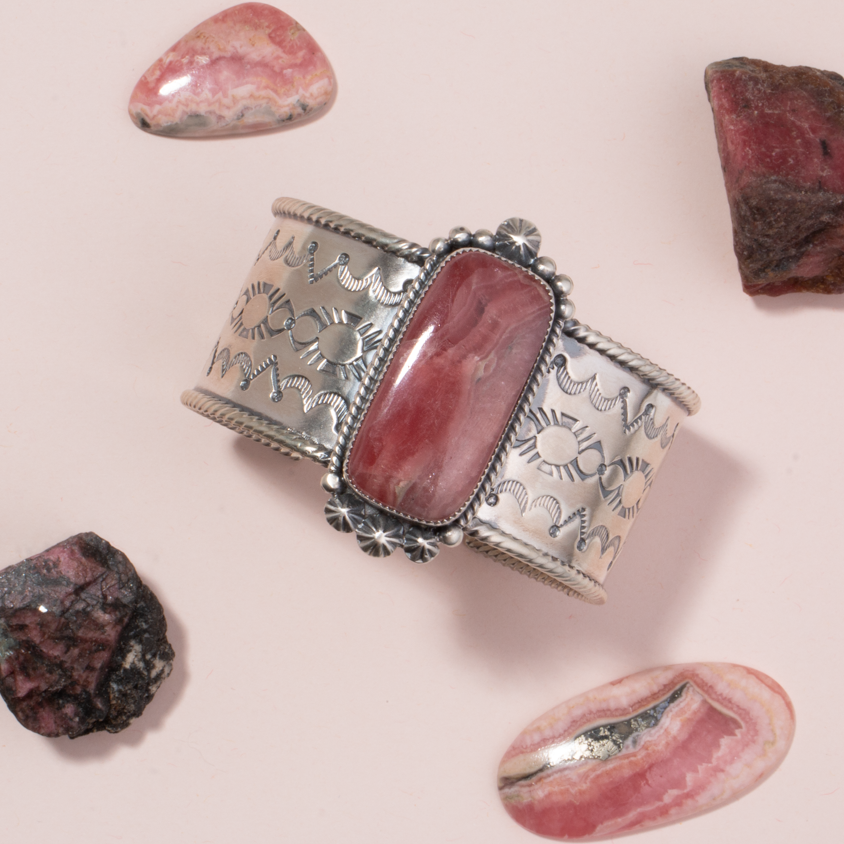
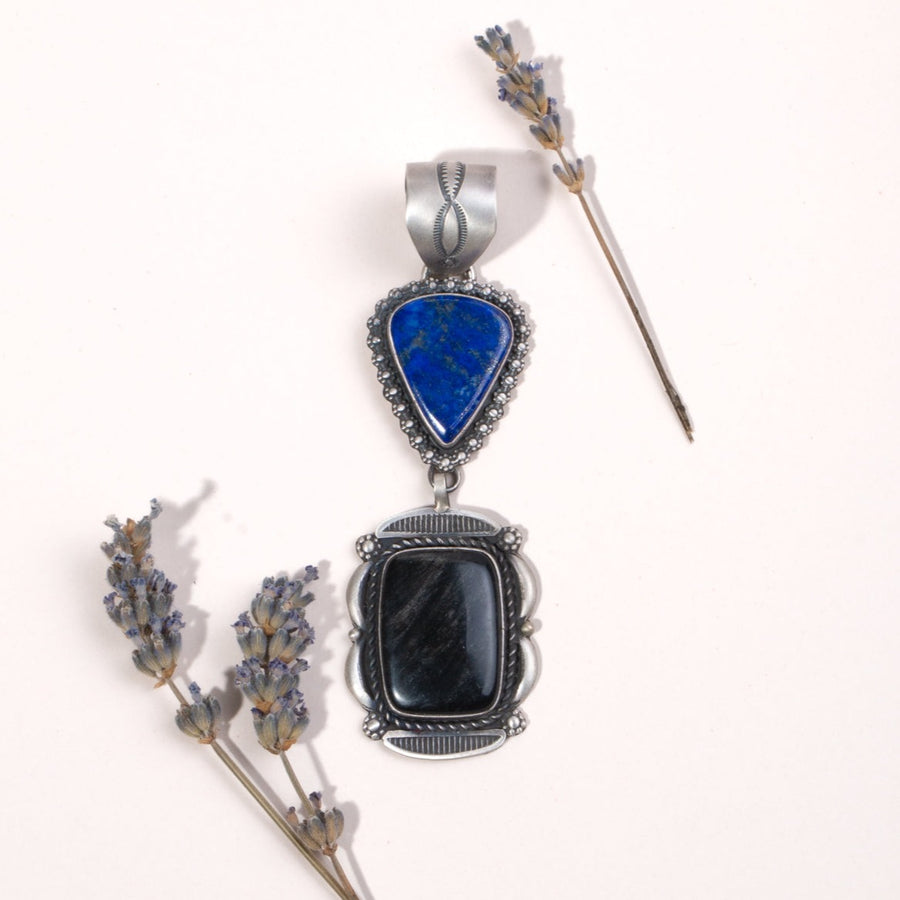
Real stones from the T.Skies archive, photographed by us. Tap any stone to see it up close.


What Branson recorded
Branson (1975) summed up the mine:
“This mine east of Austin, Nevada was discovered in 1932 and has intermittently produced some of the finest turquoise in Nevada.”
— Branson (1975), p. 28 [1]
According to Branson (1975, p. 28), the claim had been worked by many people under many names, including Last Chance, Blue Stone, Homesite, Dry Creek, Burnham and Godber. [1]
As of 1975, Branson (1975, p. 28) reported that the Godber family of Scottsdale and Phoenix owned the mine. [1]
On the stone, Branson (1975) wrote:
“The turquoise is produced in seams and nuggets, ranging from light to dark blue.”
— Branson (1975), p. 28 [1]
Branson (1975, p. 28) singled out a very dark or black mottling that formed blotches and veins through the stone, and sometimes a spider web. [1]
Branson (1975, p. 28) added that some stones were so vividly blue they looked treated, but that the material was too hard and compact to treat. [1]
See all the turquoise mines we profile, including the other Nevada mines.
How this page is sourced. We strive for accuracy: every factual statement above is quoted from or credited to the printed work listed below, with page numbers, and this page is continuously updated with new information as we read more of our library. See something we should correct? Contact us.
From the Library: Lowry, Turquoise: The World Story of a Fascinating Gemstone (2010)
2010 primary source. Anything described as current here describes 2010, not today.
According to Lowry (2010, p. 221), Bob Burton and Joe Potts discovered the deposits in 1932 at an elevation of 6,900 feet, first naming the claim Last Chance and later filing two more, Homesite and Blue Stone. [2]
According to Lowry (2010, p. 221), the claims lie about thirty miles east of Austin in the Bullion District and later became known as Dry Creek. [2]
According to Lowry (2010, p. 221), Burton and Potts sold the claims to Frank Burnham in 1934, Burnham sold them to the Godber family, and Bruce and Jeri Woods became the owners in 1999. [2]
Lowry (2010) uses the mine to explain how Nevada mines collect names:
“Naming and renaming turquoise mines has created some long genealogies for certain turquoise mines.”
— Lowry (2010), p. 221 [2]
From the Library: Ryan & Chambless, Turquoise in America Part Two: 1910–1990 (2020)
2020 primary source. Anything described as current here describes 2020, not today.
Ryan & Chambless (2020), on the Frank Burnham who bought the 1901 Watts or Pinto claim:
“This is probably the same Frank Burnham who later owned the Godber Burnham Mine for a short while.”
— Ryan & Chambless (2020), p. 67 [3]
According to Ryan & Chambless (2020, p. 59), Walter Lawrence Godber also bought Carl Riek's Oriental Blue claims in the Candelaria district in 1936; those claims later became the Ajax. [3]
According to Ryan & Chambless (2020, p. 79), the story of the mine begins with Bob Burton, a Shoshone prospector living in Austin, Nevada; as of 2020 they named Bruce Woods and his wife Jeri as the owners of the Godber Burnham Mine. [3]
According to Ryan & Chambless (2020, p. 81), the Burnhams worked the Last Chance and Blue Stone claims for a brief period in the summer and fall of 1937, and the Godbers became half owners of the two claims in 1938; a May 19, 1938 proof of labor names W. E. Godber and Frank Burnham as owners. [3]
According to Ryan & Chambless (2020, p. 81), the Godbers' Western Gem & Jewelry Company was a family operation, with records in the names of W. F. Godber, his son W. L. Godber, his brother G. R. Godber and later the grandsons; G. R. Godber located the Homesite claim on February 1, 1939 and the Homesite 1 on February 18, 1939. [3]
Ryan & Chambless (2020) on where the stone actually came from:
“These locations completed the claims known as Godber Burnham, although almost all the turquoise mined came from the original two claims.”
— Ryan & Chambless (2020), p. 81 [3]
Interview recollections below are the speaker's memory, published by Ryan & Chambless (2020); they describe the 1940s-1970s.
According to Ryan & Chambless (2020, p. 113), the Godbers bought the Taubert claims in 1932 and the Riek claims in 1936, then bought the Blue Stone and Last Chance from Frank Burnham in 1938. [3]
According to Ryan & Chambless (2020, p. 112), the Godbers kept working their Lyon and Mineral County claims but put more resources into the higher-grade claims outside Austin that became known in the trade as Godber Burnham. [3]
According to Ryan & Chambless (2020, p. 113), the Reno Gazette-Journal reported in February 1954 that Jimmy Godber was running the Godber mine at Dry Creek by both underground and open-pit methods, and that the family's Western Gem and Jewelry cut and processed most of its stone rather than selling rough. [3]
Ryan & Chambless (2020) quote the same 1954 newspaper on who bought Godber stone:
“Most of their customers are Indian traders (white men) who buy the stones and have Indian craftsmen do the silver work in making them into finished jewelry. The business of the Godber firm is all wholesale.”
— Ryan & Chambless (2020), p. 113 [3]
According to Ryan & Chambless (2020, p. 113), even while running the family turquoise business Jimmy Godber worked for Lockheed for about 25 years, which the authors take as a sign of how often a turquoise mine depended on a second, steady income. [3]
Ken Godber recalled, in an interview published by Ryan & Chambless (2020, p. 114), that most of the turquoise in the family's Scottsdale workshop jewelry came from the Arizona copper pits (Morenci, Sleeping Beauty, Bisbee and Kingman), later joined by Number 8, Blue Gem and Persian stone, so a Godber-made piece is not necessarily set with Godber turquoise. [3]
According to Ryan & Chambless (2020, p. 114), other notable claims sit next to Godber Burnham, including the Paiute and Damele, with Nevada Blue the best known of the lesser mines, and many mines in the area lie above 8,000 feet, where altitude limits access and the mining season. [3]
Frank Patania Jr. recalled, in an interview published by Ryan & Chambless (2020, p. 157), that Lawrence Godber, his father's turquoise dealer, either owned or had a franchise to sell the Number 8 and also owned the Burnham (Dry Creek) claims at the time; his father bought parcels labeled Gold Acres, Number 8 and Burnham from him. [3]
Frank Patania Jr. recalled, in an interview published by Ryan & Chambless (2020, p. 158), that those parcels sold for fifty cents to two dollars a carat, against the sixty to eighty dollars a carat he said such turquoise brought when he was interviewed. [3]
According to Ryan & Chambless (2020, p. 190), after the Godbers' Western Gem and Jewelry moved from Los Angeles to Scottsdale in the mid-1950s, Walter Godber Jr. ran the jewelry business while Jim Godber ran the mining and made the required annual assessment filings. [3]
According to Ryan & Chambless (2020, p. 190), Clyde Wright of Fallon leased the claims through the 1970s and 1980s, and his son John continued the lease after Clyde died in the late 1980s. [3]
According to Ryan & Chambless (2020, p. 190), Wright set up washing plants at Godber to clean and sort turquoise on site, which suited a nugget mine whose nuggets were encased in clay. [3]
According to Ryan & Chambless (2020, p. 190), after Jim Godber died in 1991 no one filed the annual assessment, the claims the Godber family had held since 1938 lapsed, and Chris Rose relocated them in his own name on August 2, 1991. [3]
Bruce Woods recalled, in an interview published by Ryan & Chambless (2020, p. 192), that the Godbers once asked Clyde Wright three hundred thousand dollars for the mine, that Chris Rose later sold it to Larry and Janet Everett, and that he and his wife Jeri bought it from the Everetts. [3]
From the Library: Stacey, Turquoise Blue Book and Indian Jewelry Digest (1975)
1975 primary source. Anything described as current here describes 1975, not today.
David L. Neumann, a Santa Fe dealer reprinted in Stacey (1975, pp. 68, 71), named stones from Godber's Dry Creek mine among the few American turquoise he rated very good against the Persian standard. [4]
Neumann (reprinted in the 1975 Turquoise Blue Book) on the family business:
“Several formerly leading miners and cutters have become wholesale jewelers, notably the Zacherys of Albuquerque, and the Godbers, formerly of Los Angeles and now of Scottsdale, Arizona. The latter also have entered and ambitiously pursue the retail jewelry business.”
— Stacey (1975), p. 71 [4]
From the Library: Baxter, Encyclopedia of Native American Jewelry (2000)
2000 primary source. Anything described as current here describes 2000, not today.
As of 2000, Baxter (2000) wrote of Nevada:
“Nevada has the largest concentration of mines, including Blue Gem, Godber’s Dry Mine, Fox, Lone Mountain, Royston, Royal Blue, and Spider Web #8. These mines have been worked on an irregular basis, with many playing out and being periodically closed, and then reopened upon discovery of a new vein of mineral.”
— Baxter (2000), p. 182 [5]
Sources
- Branson, Oscar T. Turquoise: The Gem of the Centuries. Santa Fe: Treasure Chest Publications, 1975. Cited by printed page. Statements describe conditions in 1975.
- Lowry, Joe Dan, and Joe P. Lowry. Turquoise: The World Story of a Fascinating Gemstone. Layton, UT: Gibbs Smith, 2010. Cited by printed page. Statements describe conditions as of 2010.
- Ryan, Mike, II, and Philip Chambless. Turquoise in America, Part Two: 1910–1990. Callais Press, 2020. Cited by printed page. Statements describe conditions as of 2020.
- Stacey, Joseph, ed. Turquoise Blue Book and Indian Jewelry Digest. Arizona Highways Collectors Series. Phoenix: Arizona Highways (Arizona Department of Transportation), 1975. Cited by printed page. Statements describe conditions as of 1975.
- Baxter, Paula A., with Allison Bird-Romero. Encyclopedia of Native American Jewelry: A Guide to History, People, and Terms. Phoenix: Oryx Press, 2000. Cited by printed page. Statements describe conditions as of 2000.