



Courtland Turquoise: Field Guide to Arizona's Turquoise Mountain
Part of the Turquoise Mines field guides and The Southwest Jewelry Guide.
Philip Chambless and Mike Ryan’s 2021 history places Turquoise Mountain near Courtland, Arizona, sixteen miles east of Tombstone. Every statement below is quoted or paraphrased from their book, with page numbers, so you can check each one. Their book was published in 2021; anything described as current describes 2021.
More Courtland turquoise examples
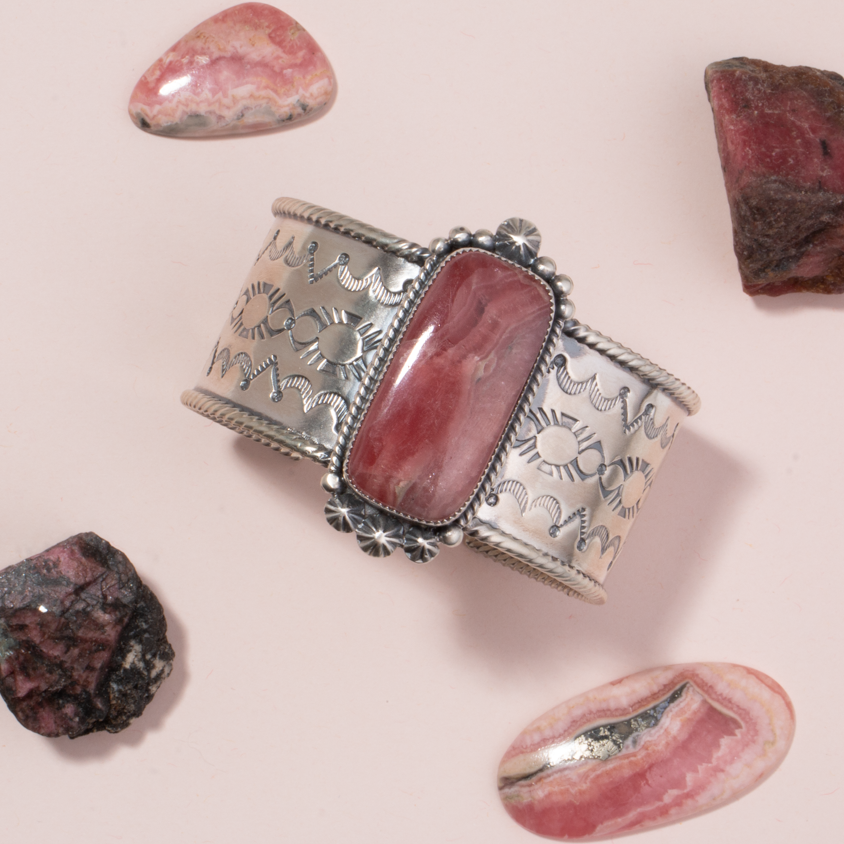
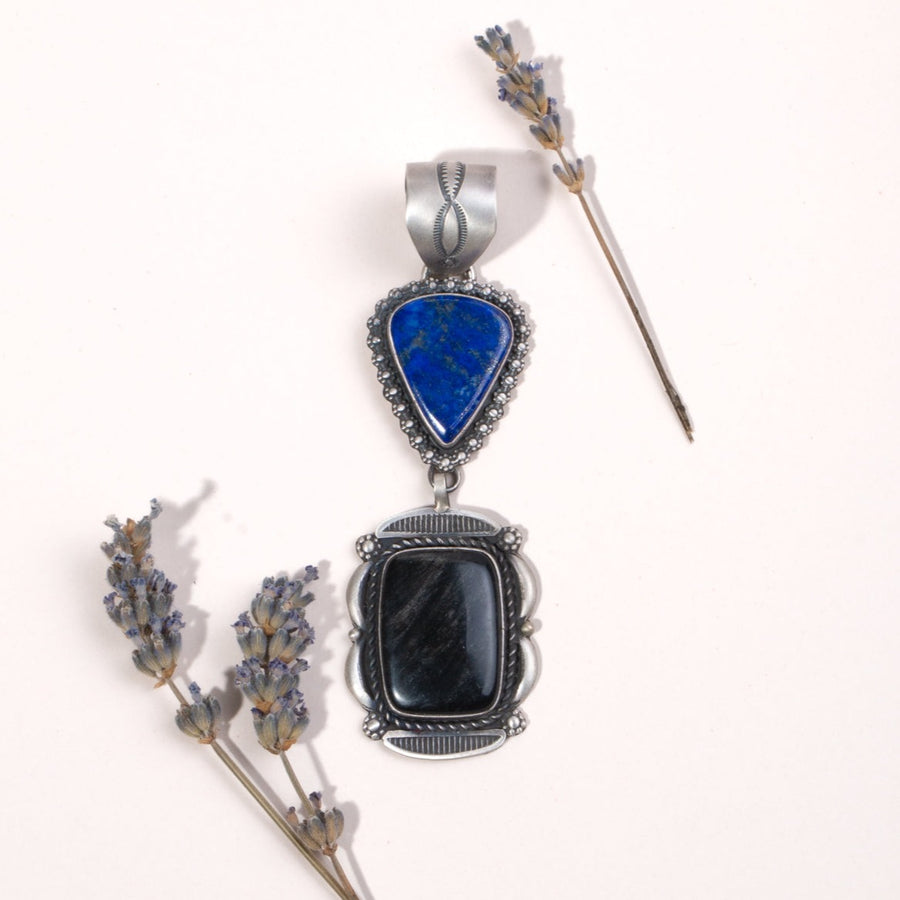
Real stones from the T.Skies archive, photographed by us. Tap any stone to see it up close.


Turquoise Mountain in the Great American Turquoise Rush
According to Chambless & Ryan (2021, p. 119), no area mined during the Great American Turquoise Rush played such an important role yet stayed as unknown as Turquoise Mountain near Courtland, Arizona, sixteen miles due east of Tombstone and about 150 miles overland from the Burro Mountains claims in New Mexico. [1]
Chambless & Ryan (2021) quote William P. Blake's 1882 report on the ancient workings he called Turquois Mountain:
“The excavations are not as extensive as at Los Cerrillos and it is more difficult to find specimens of the mineral.”
— Chambless & Ryan (2021), p. 119 [1]
According to Chambless & Ryan (2021, p. 121), after selling his Burro Mountains claims to Gyulo Armeny of the Azure Mining Company in 1891, the prospector Nicholas C. Rascom returned to Courtland and in February 1892, with S.H. Bryant, located the Azure claim on Turquoise Mountain, like every turquoise claim of the period at an ancient Native working. [1]
According to Chambless & Ryan (2021, p. 122), Rascom deeded his half interest in the Turquoise, Azure and Asia claims to Armeny for $5,000 on March 31, 1892, and Armeny passed the Courtland group on through his old associate Adam Herlich. [1]
Chambless & Ryan (2021, p. 122) reject an earlier account that a Henry Durant made the first Courtland turquoise claim, finding no record of any claim in that name and concluding the person meant was S.H. Bryant. [1]
According to Chambless & Ryan (2021, p. 125), the Azure Mining Company's first seven months in the Burro Mountains only paid expenses, which explains why it also acquired claims at Courtland, Arizona in 1892: it wanted a backup source of turquoise in case the Burro claims did not produce. After the Elizabeth Pocket was found, it no longer needed one. [1]
According to Chambless & Ryan (2021, p. 126), on April 26, 1895 Rascom deeded eight Turquoise Mountain claims to Lippman Tannenbaum for $1 each, giving Tannenbaum the turquoise position he had long sought after his dispute with Armeny. [1]
According to Chambless & Ryan (2021, p. 127), production under Tannenbaum began at once with Rascom as superintendent, and in August 1895 the Tombstone Epitaph reported regular shipments to New York; by 1898 Tannenbaum had turned to California and most of his claims eventually lapsed. [1]
According to Chambless & Ryan (2021, p. 127), in 1903 Rascom sold a group of the former Azure Mining Company claims, including the Avalon, Azure, Nightingale and Turquoise, under a deal with Thomas S. Parker and George S. Good. [1]
Chambless & Ryan (2021) close the Courtland story this way:
“Good continued as the principal turquoise operator at Courtland for several years until the end of The Great American Turquoise Rush.”
— Chambless & Ryan (2021), p. 128 [1]
Chambless & Ryan (2021, p. 128) add that in 1906 Rascom deeded the Jewel claim to L.D. Shattuck, who went on to be the principal miner of the later turquoise era. [1]
After the rush
According to Chambless & Ryan (2021, p. 185), Joe E. Tanner recalls his uncle going with Joseph Baldwin Tanner in 1928 to mine turquoise at Courtland in what the family called the "Tanner Tunnel". [1]
According to Chambless & Ryan (2021, p. 185), Joseph Baldwin Tanner leased his Courtland claim to C.G. Wallace, probably in the early 1930s. [1]
Chambless & Ryan (2021) on Courtland's fade:
“By the 1950s, turquoise mining in Courtland was almost nonexistent and its earlier prominence largely forgotten.”
— Chambless & Ryan (2021), p. 186 [1]
As of 2021, Chambless & Ryan reported:
“Today the only turquoise to be found is from the old dumps.”
— Chambless & Ryan (2021), p. 186 [1]
From the Library: Lowry, Turquoise: The World Story of a Fascinating Gemstone (2010)
2010 primary source. Anything described as current here describes 2010, not today.
According to Lowry (2010, p. 243), the Gleeson/Courtland area was discovered in the 1890s and boomed in the early 1900s with turquoise, silver, gold and copper; John Gleeson was one of the first documented miners of the deposits on Turquoise Mountain, on the south side of the Dragoon Mountains in Cochise County. [2]
According to Lowry (2010, p. 244), Turquoise Mountain is probably the most common name given to a turquoise-bearing hillside, with hills of that name in most states and countries that have turquoise, so the name alone does not identify a mine. [2]
From the Library: Kunz, Gems and Precious Stones of North America (1890)
1890 primary source. Anything described as current here describes 1890, not today.
According to Kunz (1890, p. 60), who relied on William P. Blake, the Cochise County locality lay about twenty miles from Tombstone, was likewise worked by the ancients, and was then known as Turquoise Mountain; because there were silver deposits nearby, a mining district called the Turquoise District had been formed. [3]
Kunz (1890) described the Turquoise Mountain stone:
“In color it is light apple-green or pea-green, rather than blue.”
— Kunz (1890), p. 60 [3]
According to Kunz (1890, p. 60), the place had been worked only for a short time, and probably never by the Apaches. [3]
From the Library: Ryan & Chambless, Turquoise in America Part Two: 1910–1990 (2020)
2020 primary source. Anything described as current here describes 2020, not today.
According to Ryan & Chambless (2020, p. 105), Arizona turquoise was hampered by more profitable metals, and after 1910 the state produced little; the one exception was Courtland in Cochise County. [4]
According to Ryan & Chambless (2020, p. 106), the Gallup trader Joseph Baldwin Tanner bought his own turquoise mine at Courtland to secure a reliable supply of stone, holding a claim in the Turquoise Hill area before 1928. [4]
According to Ryan & Chambless (2020, p. 106), L. D. Shattuck sold the Avalon claim at Courtland on December 23, 1935 to T. E. Kelso and C. F. Petty of Tucson, who presumably wanted stone for their Native American jewelry business. [4]
According to Ryan & Chambless (2020, p. 106), on November 15, 1937 J. B. Tanner sold Aztec Claims 1 and 2 to W. M. McDaniel, which the authors take to be the claim Tanner had leased to C. G. Wallace. [4]
According to Ryan & Chambless (2020, p. 103), C. G. Wallace mined turquoise at Courtland in the mid-1950s, with the trader Brice Sewell assisting. [4]
According to Ryan & Chambless (2020, p. 167), L. D. Shattuck, who had become the largest owner of turquoise properties at Courtland, apparently hoped to sell a group of claims to a large company such as Phelps Dodge or Great Western and did not succeed; on May 1, 1942 he quitclaimed the Triangle, Virginia, Jewel, Azuel, Nightingale and Gem to Vincent C. Riccardi of Pearce, Arizona, for $1,000. The Jewel, Nightingale and Gem were turquoise claims. [4]
According to Ryan & Chambless (2020, p. 168), on December 1, 1954 Lionel Herget and Eugene "Pappy" Yoakum sold the Last Chance, and Herget and Glen E. Miner the Gem Number 2, to C. G. Wallace; it is the only record the authors found of Wallace owning a turquoise mine at Courtland. Herget kept the Avalon, and the Vanderwagens appear to have owned a couple of claims in the area. [4]
According to Ryan & Chambless (2020, p. 168), Wallace apparently did little mining there, though Bryce Sewell, who owned trading posts in Taos and Scottsdale, was reported to have helped; by the late 1950s turquoise from the waste dumps of the Castle Dome, Kingman, Morenci and Bisbee copper mines made hard-rock turquoise mining less attractive. [4]
According to Ryan & Chambless (2020, p. 168), Herget deeded the Gem Number 2 to Menless and Grace Winfield on September 21, 1965, keeping the right to live in the house included in the sale, and the Winfields presumably sold or abandoned the property when they bought Lone Mountain in 1967. [4]
Robert Winfield recalled, in an interview published by Ryan & Chambless (2020, p. 143), that the Turquoise Mountain mine at old Courtland his father bought had already been worked by the Vanderwagens and by Bryce Sewell for C. G. Wallace, and that his father worked it with Lionel Herget until Lone Mountain came up for sale. [4]
According to Ryan & Chambless (2020, p. 180), Lionel Herget mined the Avalon claim at Courtland for many years, including a brief joint effort with Menless Winfield in 1966, before Winfield bought the Lone Mountain Mine. [4]
According to Ryan & Chambless (2020, p. 180), there was never much production and Courtland turquoise had been largely forgotten, although during the turquoise rush of the early 1900s it was considered, along with the Azure Mine in New Mexico, the highest grade. [4]
According to Ryan & Chambless (2020, p. 180), Herget died in 1974 in a Tucson VA hospital after a beating during a second robbery, and his reported last words about thieves after his turquoise may have spurred the rumour of a lost, buried Herget turquoise stash. [4]
According to Ryan & Chambless (2020, p. 180), Pat and Judy Goosherst, jewelers from Bisbee, later bought the claims and tried, without success, to have the area made into an Arizona state park. [4]
From the Library: Hodge, Handbook of American Indians North of Mexico, Part 2 (1910)
1910 primary source. Anything described as current here describes 1910, not today.
Writing in 1910, the Turquoise entry in Hodge (ed., 1910) named this mountain as one of two places turquoise was mined before the Spanish arrived:
“It is found in various localities, notably in Colorado, New Mexico, Utah, Nevada, and California, and was mined by the natives in pre-Spanish times at Cerrillos mt., near Santa Fé, N. Mex. (Blake), and on Turquoise mt. in Cochise co., Ariz.”
— Hodge (1910), p. 840 [5]
Field Notes by Mateo James
Writing in 1915, Pogue said the Cochise County turquoise locality, which he placed on a spur of the Dragoon Mountains 20 miles from Tombstone, had never been of importance. Chambless & Ryan (2021, p. 119) argue the opposite: no area of the rush played such an important role yet stayed so unknown, and they put Courtland sixteen miles due east of Tombstone. I tend to side with Chambless & Ryan.
See all the turquoise mines we profile, across the Southwest.
Kunz (1890), following Blake, also put Turquoise Mountain about twenty miles from Tombstone, the same figure Pogue later gave, while Chambless & Ryan put Courtland sixteen miles due east of it. I tend to side with Chambless & Ryan.
Part One (2021, p. 186) says that by the 1950s turquoise mining at Courtland was almost nonexistent. Part Two (2020, p. 103), by the same authors, mentions C. G. Wallace mining turquoise at Courtland in the mid-1950s with Brice Sewell's help. The two books tell the 1950s a little differently, so I have left both on the page.
In Part One, Chambless & Ryan (2021, p. 186) wrote that Lionel Herget bought claims in 1952 and worked the area through the 1970s until his death. In Part Two, Ryan & Chambless (2020, p. 180) date his death to 1974. The two books by the same authors don't quite line up on how long he worked, so I've given both.
How this page is sourced. We strive for accuracy: every factual statement above is quoted from or credited to the printed work listed below, with page numbers, and this page is continuously updated with new information as we read more of our library. See something we should correct? Contact us.
Sources
- Chambless, Philip, and Mike Ryan II. Turquoise in America, Part One: The Great American Turquoise Rush, 1890–1910. Revised first edition. Callais Press, 2021. Cited by printed page. Statements describe conditions as of 2021.
- Lowry, Joe Dan, and Joe P. Lowry. Turquoise: The World Story of a Fascinating Gemstone. Layton, UT: Gibbs Smith, 2010. Cited by printed page. Statements describe conditions as of 2010.
- Kunz, George F. Gems and Precious Stones of North America. New York: The Scientific Publishing Company, 1890. Public domain. Cited by printed page. Statements describe conditions as of 1890.
- Ryan, Mike, II, and Philip Chambless. Turquoise in America, Part Two: 1910–1990. Callais Press, 2020. Cited by printed page. Statements describe conditions as of 2020.
- Hodge, Frederick Webb, ed. Handbook of American Indians North of Mexico, Part 2 (N–Z). Smithsonian Institution, Bureau of American Ethnology, Bulletin 30. Washington: Government Printing Office, 1910. Public domain (U.S. government publication). Cited by printed page. Statements describe conditions as of 1910.