



The Beauty of Native American Stamp Work Jewelry
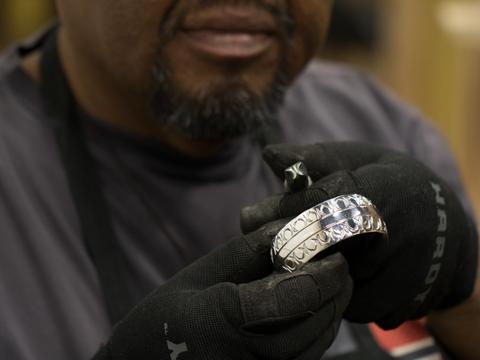
Metalworking has a long history, particularly among indigenous peoples. Creating designs by etching them into precious metals was one way of adding cultural images to items of adornment. Today, the skill of stamp work continues through Native American jewelry silversmiths. These artists used skills, techniques, and tools handed down through generations to create beautiful pieces of jewelry that reflect their culture and their artistic nature.

With the coming of the Spanish conquerors to their homeland, Navajo and Pueblo people were able to observe ways of working with silver that the Spanish used. The Navajo first adopted the designs of the Spanish, then began to create their own pieces with their own designs. Coins were an initial material to be hammered and engraved with these images. These pieces could then be used to create necklaces, bracelets, belts, and other items.
After the tragedy of the Long Walk, and their subsequent restrictions to the reservation, items like these would become trade ware, a means of using their skill to increase their income. Navajo silversmiths passed the techniques on to the Zuni and other Pueblo peoples, allowing each group to create their own unique styles.
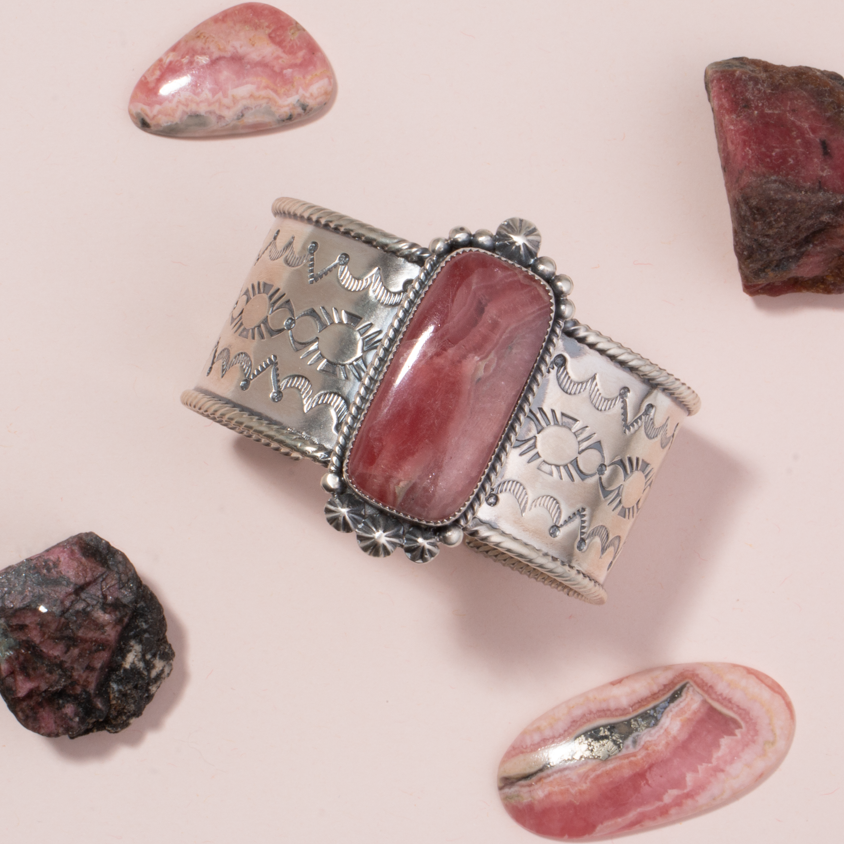
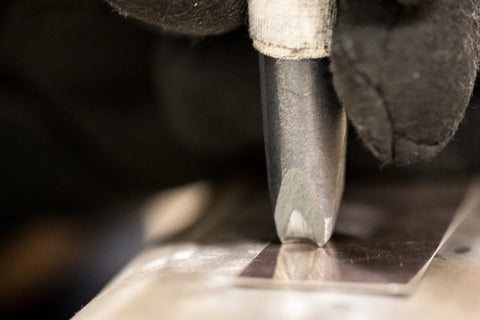
Creating a piece of quality jewelry from stamp work requires a great deal of skill. Small metal stamps form the tools for etching the design into the silver. Stamps are created with individual designs on them, to be etched around the border or used as the center image. Many silversmiths have passed stamps down in their families, allowing each generation to continue a favorite design or pattern.
Silver sheets are cut and shaped then placed on a block. Stamps are placed on the silver according to the desired design. With a hammer strike, the design is imprinted onto the silver. It can take a while to complete a design, as stamps are generally small. The artist must have the skill to ensure each imprint is the right depth and know how to place each stamp so that the completed design comes out as it is supposed to. Mistakes are not something that can be undone, so a piece with a perfect design is indeed a work of art. The recessed areas of the design may be oxidized to add contrast to the piece.
As with all types of handcrafted Native American jewelry, stamp work reflects the hours of detail the artist puts into each piece. They are also a reflection of culture, through the designs etched on them. That reflection makes a piece of stamp work an heirloom of great value, worthy of being added to any collection.

Resources:
http://www.coyotesgame.com/nasilverinfo.html
https://web.archive.org/web/20211019064130/http://www.navajosilversmith.com/types.html
https://www.garlandsjewelry.com/pages/native-american-jewelry-101
From the Library: Branson, Indian Jewelry Making, Vol. 1 (1977)
1977 primary source. Anything described as current here describes 1977, not today.
Branson (1977) placed the high point of die stamping in the years 1920 to 1940:
“The concha belt became the show piece of design and with it the art of die stamping attained its peak during this period”
— Branson (1977), p. 7 [1]
By his last period, 1940 to 1976, Branson (1977) saw the balance shift:
“The prolific use of die stamping has given way to plainer surfaces of filed or incised designs with little or no die stamping.”
— Branson (1977), p. 9 [1]
Branson (1977) called the plain die-stamped band the starting point:
“This bracelet was the type first made by the Navajo Indians of the Southwest.”
— Branson (1977), p. 22 [1]
He added (Branson, 1977):
“It was probably the first type to be set with turquoise and can be set with one or even dozens of stones.”
— Branson (1977), p. 22 [1]
Branson (1977, p. 54) called the stamps the most prized of all the Indian silversmith's tools, and wrote that they were almost always made from old tools, especially old files, which had to be softened before they could be worked. [1]
On their models, Branson (1977) wrote:
“These tools were copied from the Mexican leather stamps but had to be harder and stronger in order to stamp silver.”
— Branson (1977), p. 54 [1]
Branson (1977) on why stamped silver is darkened:
“The purpose of antiquing or darkening Indian silver jewelry is to create a contrast between the incised design and the polished surface.”
— Branson (1977), p. 60 [1]
From the Library: Branson, Indian Jewelry Making, Vol. 2 (1979)
1979 primary source. Anything described as current here describes 1979, not today.
Branson (1979) on rocker engraving, a Plains decoration:
“Rocker engraving or file engraving was the most popular method of decorating silver used by the Eastern and Great Plains Indians.”
— Branson (1979), p. 22 [2]
In the Southwest, he wrote (Branson, 1979):
“There were a few silversmiths who practiced the art, but it did not gain popularity in the Southwest.”
— Branson (1979), p. 22 [2]
Sources
- Branson, Oscar T. Indian Jewelry Making, Volume I. Tucson: Treasure Chest Publications, 1977. Cited by printed page. Statements describe conditions as of 1977.
- Branson, Oscar T. Indian Jewelry Making, Volume II. Tucson: Treasure Chest Publications, 1979. Cited by printed page. Statements describe conditions as of 1979.


