


Some Fun History on Male Jewelry

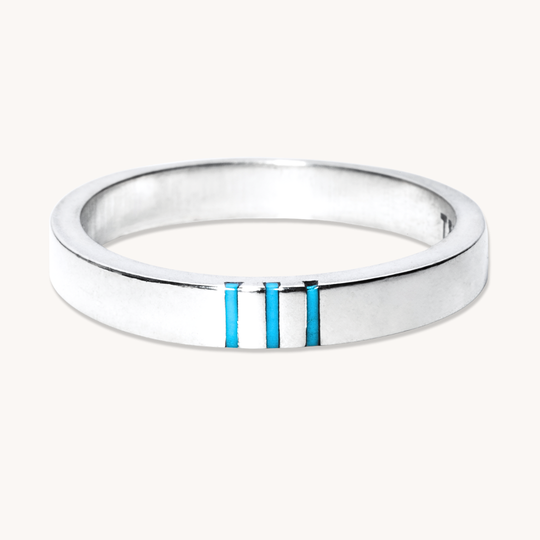
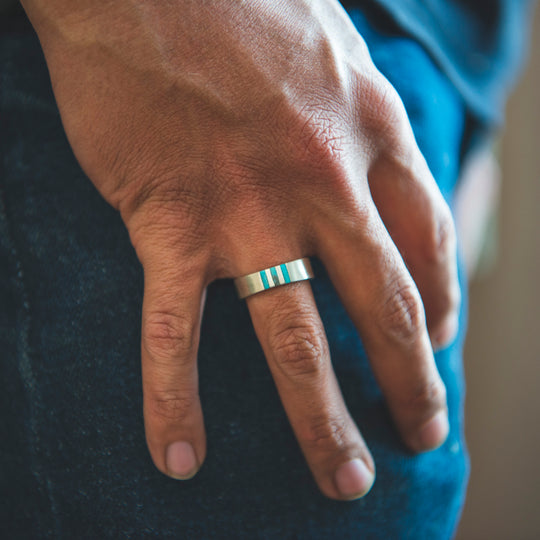
In today’s world, men wearing jewelry is making a comeback from years past. It wasn’t long ago that most men chose a wedding ring and that was pretty much it. History tells us, however, that such wasn’t always the case. As a matter of fact, wearing jewelry was not only popular among men, it was a sign of status and wealth.
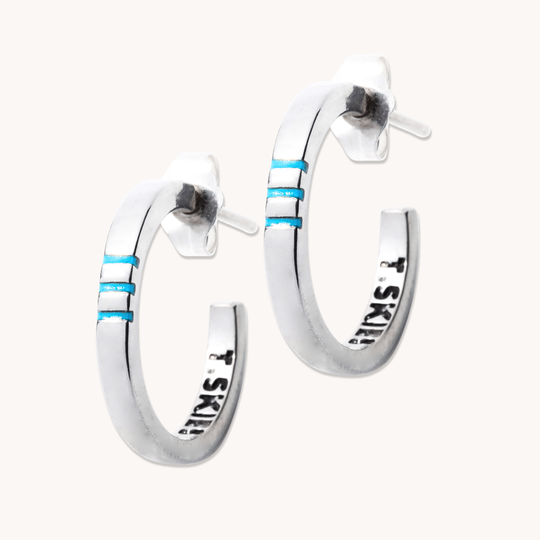
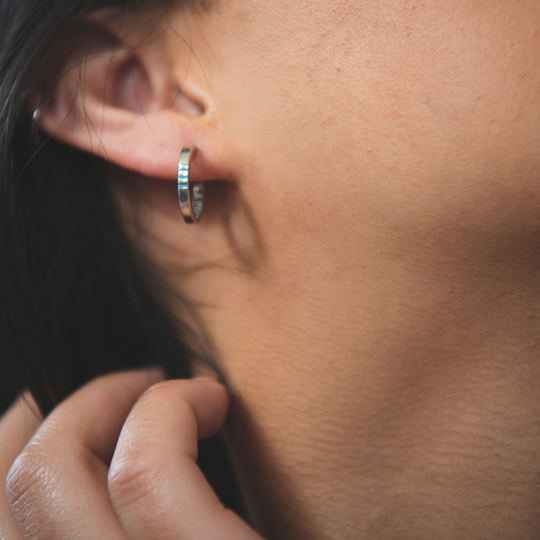
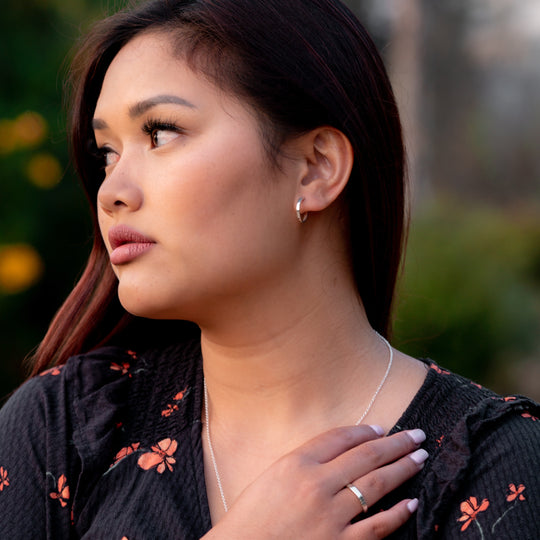
Earrings for men were a definite fashion trend during the Renaissance. They were a way of showing off wealth, but history shows there was another reason men put pearls in their ears: they felt it made them look handsome. Or perhaps a bit rakish. Either way, the popularity of dangling pearl earrings grew. There could be drawbacks to wearing them, however, if you happened to be a king who fell out of favor. Charles I insisted on wearing his pearl to his execution. History records that as soon as his head fell, there was a mad dash to see who could retrieve the earring.
One group of men in particular had a fascination for wearing earrings (and we think of them as part of their costume to this day): pirates. While noble men used them as a way of showing off wealth, pirates had an even greater motive for having those dangling hoops in their ears. The jewelry was a way to ensure the means for their friends or family to give them a proper burial when they eventually met their demise. The precious metal could be melted down after their death to pay for the funeral.
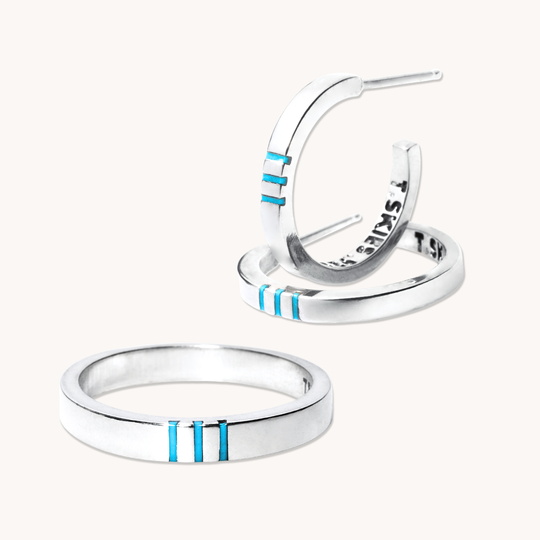
Rings were also a way to show powerful alliances. Family crests were popular on such rings and men wore them to show their powerful allies. Such rings could also be used to imprint on sealing wax for letters, giving their personal seal of approval to the communication.
The connection between jewelry and men goes back even further. Ancient Celts were fond of wearing gold torcs, or necklaces and ancient Egyptians wore not only necklaces and rings but also armbands of gold adorned with precious stones. And one of the earliest forms of male jewelry was worn by ancient Greeks: crowns made of laurel leaves.

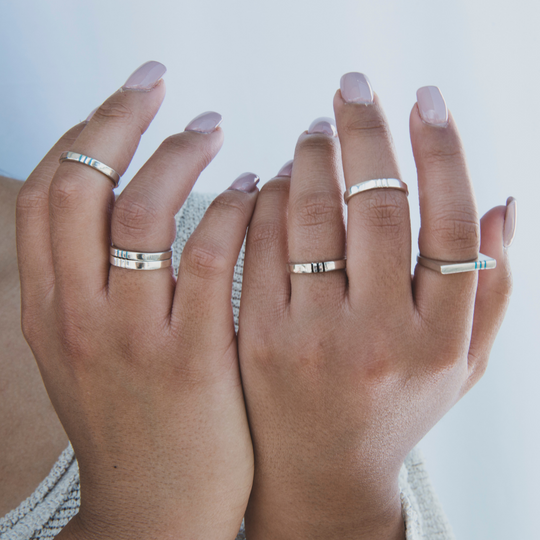
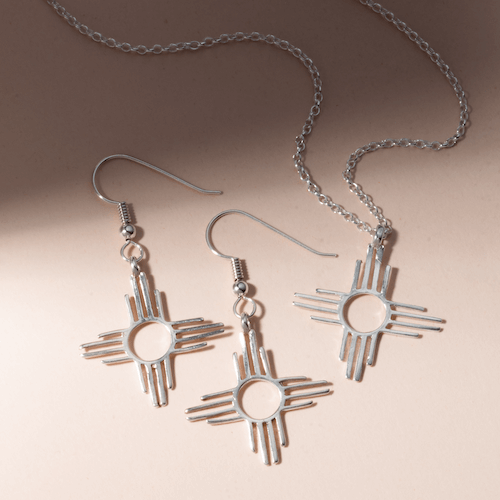
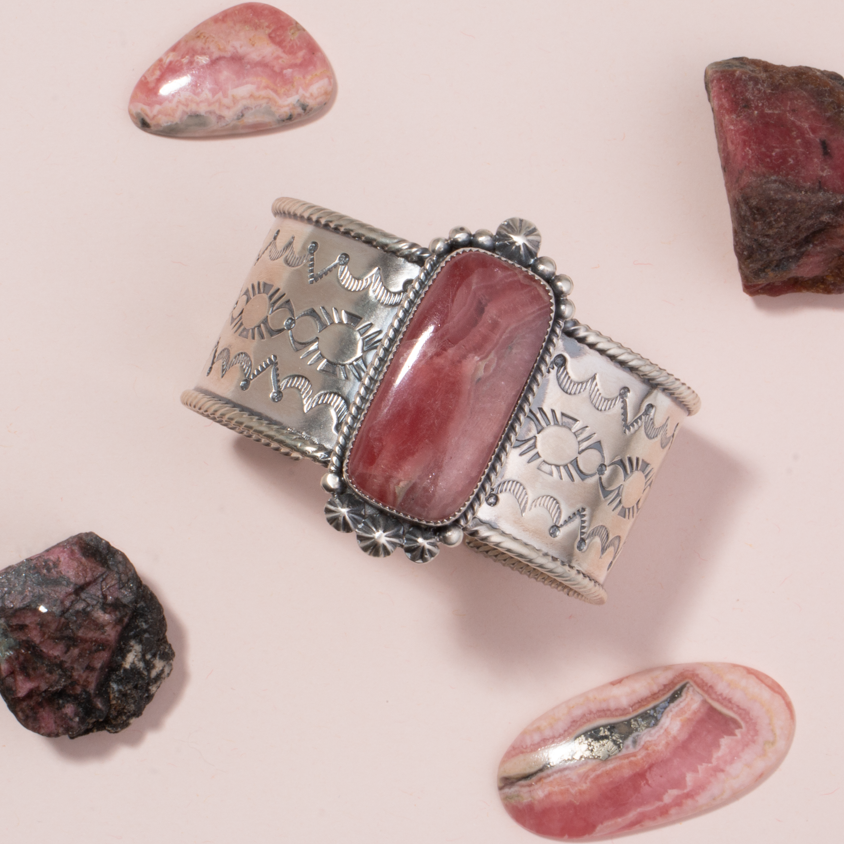
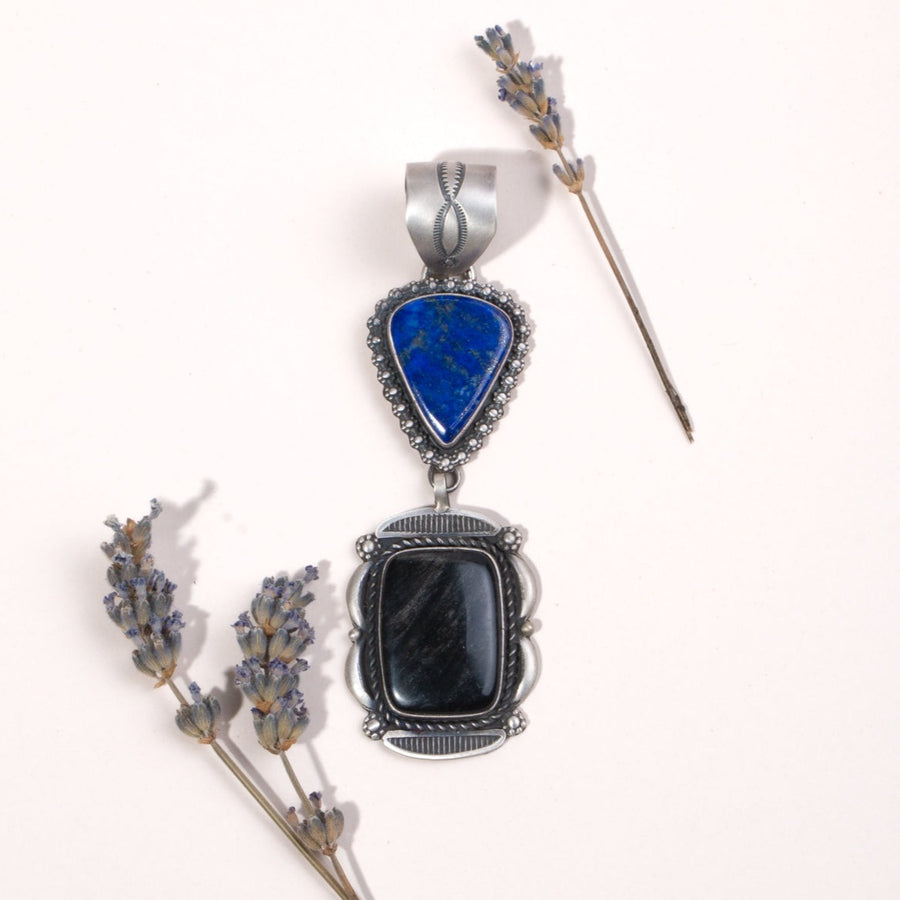
Today men have a variety of fashionable jewelry to choose from when it comes to their adornment.

From the Library: Tanner, Navajo Silver Craft (1954)
1954 primary source. Anything described as current here describes 1954, not today.

Tanner (1954, p. 30) reported that Navajo “longhairs,” men who still wore their hair in the traditional queue, wore turquoise ear pendants, the only earring style Navajo men wore by then. [1]
Writing in 1954, Tanner recalled two older men's styles:
“many years ago they sported two types, one a large hoop earring, usually with small and hollow silver balls at the bottom, and a second elongate pendant type with a pomegranate form suspended from the bottom.”
— Tanner (1954), p. 30 [1]
From the Library: Franciscan Fathers, An Ethnologic Dictionary of the Navaho Language (1910)
1910 primary source. Anything described as current here describes 1910, not today.
On rings, the Franciscan Fathers (1910) noted a difference between men and women:
“The men, as a rule, are content with one or two rings, but the women frequently wear a half-dozen on each hand.”
— Franciscan Fathers (1910), p. 283 [2]
Writing in 1910, the Franciscan Fathers described the ear ornaments of Navajo men of their day:
“They all have the lobes of their ears pierced, and from them are dangling ear-pendants, made either of a flat piece of polished turquoise, or a small string of thin disks of turquoise, or of good-sized silver rings, some of which have one or more loosely sliding beads strung upon them.”
— Franciscan Fathers (1910), p. 464 [2]
The Franciscan Fathers (1910) added a horseman's detail:
“These silver earrings are sometimes of a pretty generous size and weight, so that when riding they are often turned up over the auricle, as the jolting of the horse's gait cause them to jerk uncomfortably at the lobes.”
— Franciscan Fathers (1910), p. 464 [2]
Ornament as wealth showed in older men's headgear too. The Franciscan Fathers (1910) wrote of the warriors' caps:
“The front was decorated with a strand of abalone shell (and bayeta) without which the cap was practically worthless.”
— Franciscan Fathers (1910), p. 461 [2]
And of headbands, the Franciscan Fathers (1910) wrote:
“Headbands made of beaver, muskrat, and otter skins, were highly prized as a headgear, and profusely decorated with precious stones. These were a mark of wealth”
— Franciscan Fathers (1910), p. 462 [2]
According to the Franciscan Fathers (1910, p. 125), one of the early distinguished Navajo chiefs, remembered as the orator, was also called Mr Big Feet, and in Spanish Sarcillo Largo, 'large earrings.' [2]
Writing in 1910, the Franciscan Fathers traced an archer's gear becoming jewelry:
“To protect the wrist against the cutting sting of the bowstring a guard, or small strip of leather, was worn around it. To-day, though it still serves this purpose, it is mostly ornamental, and is often decorated with a heavy silver plate with turquoise setting.”
— Franciscan Fathers (1910), p. 319 [2]

From the Library: Branson, Indian Jewelry Making, Vol. 1 (1977)
1977 primary source. Anything described as current here describes 1977, not today.
Branson (1977) described the high-crowned hat that carried the band:
“The Natani Nez or "head man" high crown broad brimmed hat has been popular with the Navajo men since it was introduced by the Spanish and traders.”
— Branson (1977), p. 32 [3]
And the band itself (Branson, 1977):
“The silver hat band appeared around 1900 and was worn especially at dances and ceremonials on the reservation.”
— Branson (1977), p. 32 [3]
Branson (1977, p. 30) pictured a pair of old Spanish earrings as probably the first type of silver earrings the Indians saw when Spanish colonists came into the Southwest. [3]
Branson (1977) on how the watch bracelet began:
“The silver band bracelet became the watchband bracelet by the substitution of the time piece for the center turquoise setting. This piece of jewelry has become very popular with men who sometimes hesitate to wear a bracelet.”
— Branson (1977), p. 40 [3]
These passages are an outside observer's record from 1977; the nations themselves are the authority on their own customs.
Branson (1977) on what became of the bow guard:
“At present archery is almost unknown among the Indians but the Keto has endured and gained great prominence as it is being worn ceremonially in almost all Southwestern Indian dances.”
— Branson (1977), p. 50 [3]
He added (Branson, 1977):
“Ketos probably lend themselves to the greatest variety of design more than any other item of Indian jewelry.”
— Branson (1977), p. 50 [3]
On the bolo tie's origin, Baxter (2000) reported the usual attribution:
“Victor Cedarstaff, a non-native silversmith and leatherworker from Wickenburg, Arizona, is usually credited with the invention of the modern bola tie around 1948.”
— Baxter (2000), p. 17 [4]
Writing in 1977, Branson gave the same period view:
“The bolo tie is another item of jewelry developed by the white man in the late 1940's and later adopted by the Indians.”
— Branson (1977), p. 46 [3]
Baxter (2000) went on:
“Bolas have since been associated with Native American decoration, with the most varied examples produced as an offshoot of Southwestern Indian jewelry.”
— Baxter (2000), p. 17 [4]
From the Library: Branson, Indian Jewelry Making, Vol. 2 (1979)
1979 primary source. Anything described as current here describes 1979, not today.
As of 1979, Branson wrote of an older Navajo earring:
“This old style earring has almost disappeared from the reservation. It was usually a man's earring.”
— Branson (1979), p. 6 [5]
Branson (1979, p. 6) wrote that the first ear wires were very large and irregular, hand beaten from coins, while later ones were thinner and smooth, drawn through dies. [5]
Branson (1979) on the tweezer, or whisker puller:
“The Tweezer or Whisker puller is a very old personal article used by the Indians of the Americas.”
— Branson (1979), p. 10 [5]
Branson (1979, p. 11) pictured an old silver Navajo tweezer on a silver chain with a button, and wrote that such tweezers were often carried with the button inserted in a buttonhole of a coat or shirt. [5]
Branson (1979) on the western horseshoe buckle:
“The western-style horseshoe buckle has held up more pairs of Levis than any other single fastener.”
— Branson (1979), p. 54 [5]
It appeared, Branson (1979, p. 54) wrote, about the same time as western jeans and stayed popular until shortly before he wrote, when large Texas "show off" buckles became popular. [5]
Sources
- Tanner, Clara Lee. “Navajo Silver Craft.” Arizona Highways 30, no. 8 (August 1954): 16–33. Cited by printed page. Statements describe conditions as of 1954.
- Franciscan Fathers. An Ethnologic Dictionary of the Navaho Language. Saint Michaels, Arizona: The Franciscan Fathers, 1910. Public domain (U.S. publication before 1931). Cited by printed page. Statements describe conditions as of 1910.
- Branson, Oscar T. Indian Jewelry Making, Volume I. Tucson: Treasure Chest Publications, 1977. Cited by printed page. Statements describe conditions as of 1977.
- Baxter, Paula A., with Allison Bird-Romero. Encyclopedia of Native American Jewelry: A Guide to History, People, and Terms. Phoenix: Oryx Press, 2000. Cited by printed page. Statements describe conditions as of 2000.
- Branson, Oscar T. Indian Jewelry Making, Volume II. Tucson: Treasure Chest Publications, 1979. Cited by printed page. Statements describe conditions as of 1979.