







Indian Arts and Crafts Board
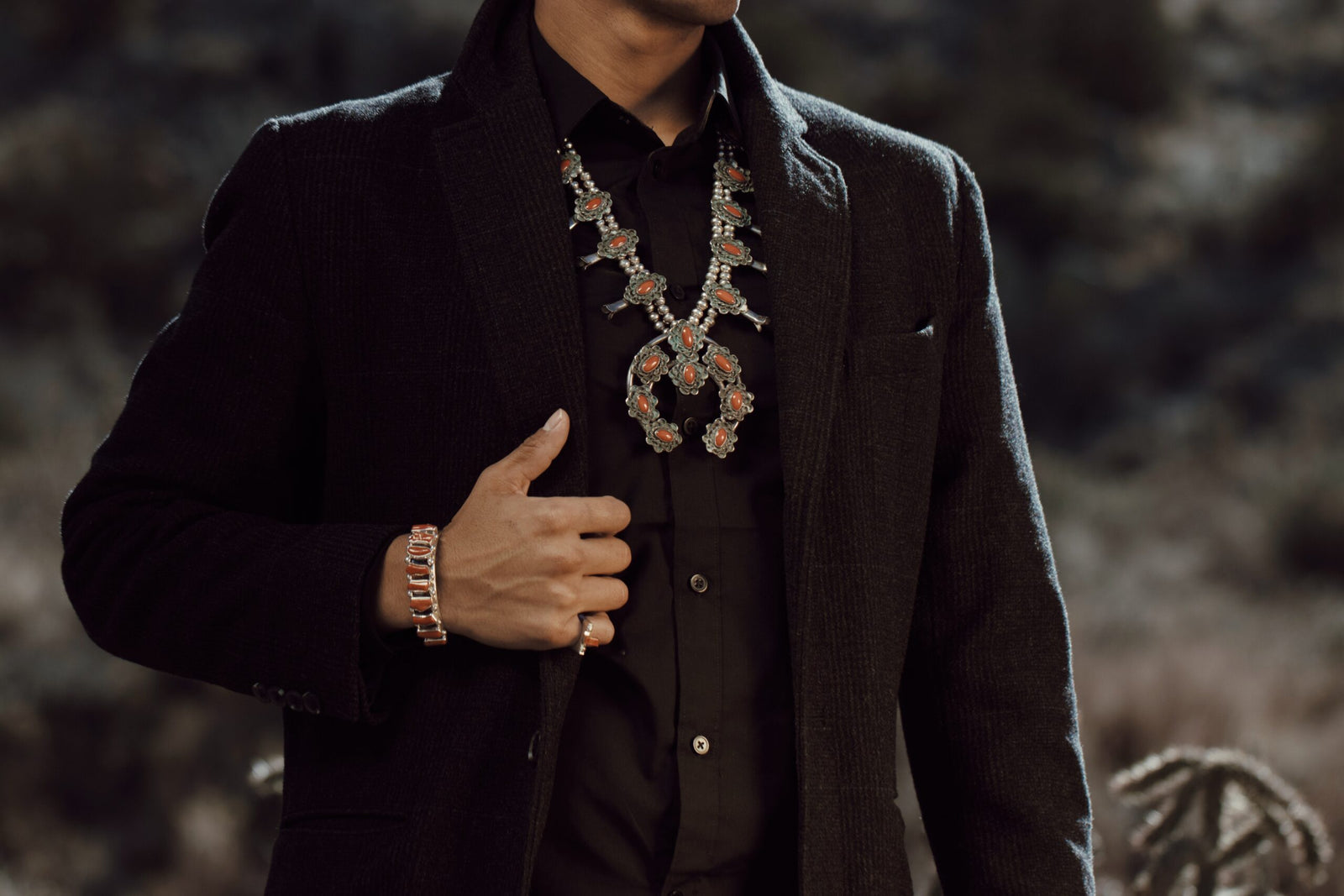
The Indian Arts and Crafts Board, established by Congress in 1935 as part of the US Department of the Interior, has the mission of promoting and protecting Native artists and their work. Knowing the difficulties Native artists face in marketing their work and receiving a fair price for it, the IACB takes a multi-pronged approach to this mission.
By investigating and prosecuting unscrupulous dealers who fraudulently manufacture, import or sell fake jewelry as Native made, the IACB deals with one of the main issues for Native artists, that of being undercut by cheap, low-quality products that are sold to unsuspecting customers as Native made. The board also addresses the issue of labeling.
To be labeled “Native made”, the work must have been created by a member of a federally recognized tribe and the appropriate artist/tribe must be on any label. This “truth-in-advertising” was enshrined into law by the Indian Arts and Crafts Act of 1990. Any who falsely label, display or sell items as “Indian Made” which are not, are subject to civil and criminal fines and penalties through this Act.
The IACB also works in positive ways to help artists market their work. The Board creates a directory of Native artists that consumers can use to ensure they are purchasing pieces that are truly handcrafted Native American work. Called The Source Directory of American Indian and Alaska Native Owned and Operated Arts and Crafts Businesses, the directory can be found on the IACB website (https://www.doi.gov/iacb/source-directory). It is regularly updated and artists belonging to federally recognized tribes are given an entry free of charge.The IACB offers information on other forms of assistance for Native artists. Grants, relief funds and other programs are listed on their website. With the economic issues created by Covid 19, they have added information on how to participate in government funding such as the CARES Act. Whether you’re looking to purchase Native jewelry or you’re an artist looking to market your work, the Indian Arts and Crafts Board are there to help.
From the Library: Woodward, A Brief History of Navajo Silversmithing (1946)
1946 primary source. Anything described as current here describes 1946, not today.
An editor's note in the 1946 edition, Woodward (1946), recorded the Board's early silver program:
“The U.S. Indian Arts and Crafts Board published "Indian Silver Work Standards" in 1937 (See Bibliography) and instituted a program, which lasted only a few years, of stamping genuine hand made silver.”
— Woodward (1946), p. 49 [1]
Sources
- Woodward, Arthur. A Brief History of Navajo Silversmithing. With field notes by Richard Van Valkenburgh. Museum of Northern Arizona Bulletin 14, 2d ed. Flagstaff: Northern Arizona Society of Science and Art, December 1946 (first edition 1938). Cited by printed page. Statements describe conditions as of 1946.


